Every time the Department of Labor prints a low initial jobless claims number, the financial media treats it like a championship parade. Headlines scream about labor market resilience. Pundits high-five over historical lows. Corporations point to steady filings to justify stagnant wages and zero-growth budgets.
It is a grand illusion built on statistical myopia.
The consensus is broken. The obsession with weekly initial filings as the definitive pulse check of the American workforce is worse than useless—it is actively misleading. I have spent two decades watching executive boards misread these exact tea leaves while their profit margins quietly hemorrhage and talent execution flatlines.
Here is the brutal truth: low jobless claims do not mean the economy is healthy. They mean the labor market is frozen in place, paralyzed by structural mismatches, cost-of-living handcuffs, and a corporate hiring philosophy that treats human capital like radioactive waste.
The Fallacy of the Fired Body
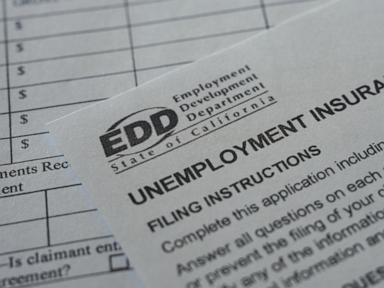
Let us look at what the metric actually measures. Initial jobless claims count people newly filing for state unemployment insurance. That is it. If you are a contractor, a gig worker, or a freelancer whose client base just vanished overnight, you do not exist in these numbers. If you quit your job because your employer dragged you back to a suburban office for five days a week of performative typing, you do not exist in these numbers. If you have been churning through short-term stints with no safety net, you do not exist in these numbers.
The entire system is designed around a mid-twentieth-century industrial model of employment. We are measuring factory assembly line retention in an era dominated by knowledge work, decentralized contracts, and algorithmic matching.
When a company freezes hiring instead of executing layoffs, zero initial claims are triggered. But the economic damage is identical. If zero people are hired and zero people are fired, the system is dead. A static labor market is a suffocating labor market. People cannot move up, innovation stalls because talent cannot migrate to disruptors, and wages flatten because nobody has leverage to jump ship for a better offer.
The Zombie Corporation Phenomenon
Let us talk about what I have seen inside corporate boardrooms over the past few cycles. When capital costs money—truly costs money, not zero percent fantasy money—companies face hard choices. They can cut fat, or they can restructure.
Instead, they chose a third option: hoarding bodies while freezing movement.
They keep headcount numbers artificially suppressed through attrition, refusing to backfill open requisitions. They stretch existing teams until burnout hits critical mass. Because they are not technically handing out pink slips, the weekly jobless claims data remains flat.
"A flat claims line is often the fingerprint of corporate paralysis, not financial strength."
Imagine a scenario where a mid-sized enterprise needs a complete overhaul of its engineering stack to survive. In a fluid, functioning market, they would shed redundant administrative layers and hire specialized talent. Instead, they freeze layoffs to keep PR metrics clean and media analysts happy. The result? No layoffs, no claims, and a slow-motion corporate collapse disguised as stability.
The High Cost of Staying Put
Look at what happens to the worker when claims stay low purely due to fear.
When people believe the broader market is too volatile or quiet to risk a move, they hunker down. They accept below-inflation pay adjustments. They swallow toxic management styles. They stay in roles where they contribute negative value because the psychological friction of finding a new job feels insurmountable.
This is not labor health. This is hostage-taking.
Economists call this the "quits rate" paradox. In a dynamic expansion, quits rise because workers know they can land somewhere better tomorrow. When claims are low because nobody dares test the waters, quits plummet. Yet policymakers cheer the low claims while ignoring the stagnant quits. They are celebrating the fact that nobody has the confidence to leave.
Dismantling the Press Release Economy
The media loves a simple narrative because complex structural rot does not fit into a graphic on morning television. It is much easier to flash a green checkmark next to a low claims print and move on to commercial.
Let us dismantle the three biggest myths propping up this obsession:
- "Low claims equal high job security." False. Security requires optionality. If your only security is that your boss hasn't fired you yet while your purchasing power erodes by four percent a year, you are not secure. You are trapped.
- "Employers are hoarding talent." Partially a myth. What looks like talent hoarding is often administrative inertia. Companies are terrified of making strategic bets, so they hold onto mediocre performers out of fear that onboarding someone new will trigger legal, cultural, or financial friction they cannot manage.
- "The labor market is soft-landing gracefully." A soft landing implies we are transitioning smoothly from an overheated engine to a stable cruise. A frozen labor market is not cruising; it is stalling out on the tarmac while the pilot tells passengers everything is fine.
What Real Strength Looks Like
A genuinely thriving workforce looks messy.
In a healthy system, claims tick up regularly because people are constantly leaving dead-end jobs to join high-growth startups, pivot industries, or launch new ventures. Friction is normal. Creative destruction is a feature, not a bug. When you engineer a system where nobody files for benefits, you haven't eliminated risk—you have just centralized it inside the employee's bank account.
Stop looking at weekly filings to tell you if your career, your portfolio, or your business strategy is safe. Watch capital allocation. Watch productivity per employee. Watch whether top-tier talent is migrating toward ambition or crawling into corporate bunkers.
The numbers are lying to you. Stop believing them.