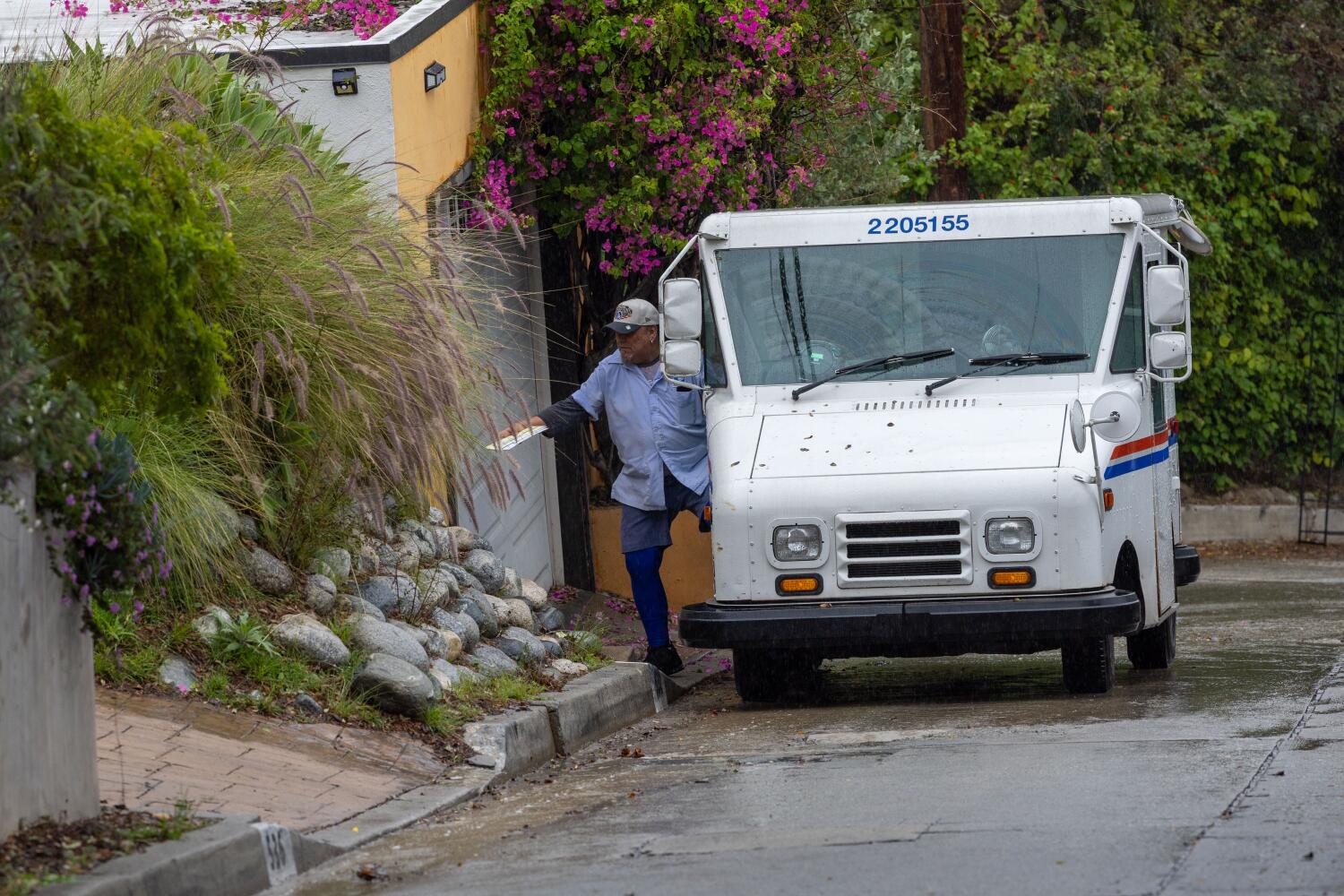
Your dog is a sweetheart. I know it, you know it, and your family certainly knows it. But to the local postal worker walking up your driveway, that furry family member is a potential threat. And if you live in Southern California, that threat is translating into some pretty ugly reality.
The U.S. Postal Service just dropped its annual data for its National Dog Bite Awareness Campaign, and the findings are a tough pill to swallow for Southern California pet owners. For the third consecutive year, Los Angeles tops nation in dog attacks on postal workers.
It is a bizarre, frustrating trend that local communities can't seem to shake. While total attacks nationwide actually dropped last year from roughly 6,000 incidents down to 5,200, the numbers in L.A. refuse to budge significantly. Postal carriers in Los Angeles suffered 70 dog attacks last year. That is a slight dip from the 77 incidents recorded the previous year, but it is still enough to comfortably keep the city at the number one spot nationwide.
Dallas took second place with 50 attacks, followed by Denver with 45. When you scale this up to the state level, the picture gets even worse. California is the undisputed capital of mail carrier dog bites, logging 673 attacks last year alone. Texas sat a distant second with 358.
Why does this keep happening here? It is easy to blame a massive population or great year-round weather that keeps dogs outside, but that excuses a deeper issue. The reality is that dog owners are failing to secure their pets, and it is costing workers their safety and homeowners their financial security.
The Real Cost Of An Attack
When a dog lunges at a letter carrier, the immediate focus is naturally on the physical trauma. Puncture wounds, torn muscles, broken bones, and permanent scarring are common. San Antonio postal worker Fiona Hudson recently shared her story through the USPS, describing an attack where a dog jumped a fence and left her with a broken bone, a severe arm sprain, and deep psychological trauma.
But there is a secondary hangover to these attacks that many people do not think about until it hits their doorstep. The financial consequences can be completely devastating for a homeowner.
According to data compiled by the Insurance Information Institute and cited by the USPS, the average insurance claim for a dog bite sits at a massive $64,555. If your dog attacks a postal worker on your property, you aren't just looking at a stern talking-to from a supervisor. You are looking at strict legal and financial liability.
- Medical Costs: Hospital bills, stitches, surgeries, and physical therapy.
- Lost Wages: You are legally responsible for covering the income the worker loses while recovering.
- Legal Protections: California Civil Code Section 3342 establishes strict liability for dog bites. This means an owner is responsible if their dog bites someone lawfully on their property, regardless of whether the dog has ever shown aggression before. There is no "one free bite" rule here.
If a federal worker is injured, their immediate medical coverage is handled under the Federal Employees' Compensation Act (FECA). However, federal investigators actively pursue third-party subrogation claims. They will come after your homeowner's or renter's insurance to recoup every single dollar spent on that carrier's medical bills and lost work hours. If your policy doesn't cover it, or if you don't have insurance, that money comes out of your pocket.
Blacklisted Neighborhoods And Missing Mail
There is another consequence that hits the whole neighborhood when owners get sloppy. The Postal Service operates on a simple policy: safety comes first. If a letter carrier feels actively threatened by an unsecured animal, they don't have to deliver your mail. They can halt service to your home instantly.
If the problem persists, or if an entire block has multiple homes with loose dogs, managers can suspend delivery for the entire street.
Imagine having to drive down to your local post office every single week, waiting in a long line just to collect your bills, packages, and birthday cards because your neighbor refuses to leash their dog. It happens more often than you think. Renting a P.O. Box because your home delivery was canceled is an expensive, annoying hassle that is entirely preventable.
What Pet Owners Get Totally Wrong
Most people think dog attacks happen because an animal is inherently vicious or trained to fight. That is a myth. Any dog can bite under the right circumstances. The problem usually stems from common mistakes owners make during delivery hours.
Trusting The Front Screen Door
You hear the mail carrier coming up the steps. Your dog runs to the door, barking furiously. You think everything is fine because the screen door is latched.
This is a massive mistake. Mail carriers regularly report dogs bursting right through flimsy screen doors or pushing through a door that wasn't completely clicked shut. If you are opening the front door to accept a package, your dog needs to be locked in another room. No exceptions.
Letting Kids Accept The Mail
It seems cute to let your child open the door to take a package from the carrier. However, dogs are naturally protective of children. If a mail carrier makes a sudden movement to hand over a box, a dog can easily misinterpret that action as an aggressive threat toward the child. The dog will attack to protect its family. Teach your children to never accept mail or packages directly from a worker while the family pet is nearby.
Assuming Fences Are Enough
Just because your dog is in the front yard behind a gate does not mean the area is secure. Dogs jump fences. They dig under gates. They squeeze through loose slats.
Furthermore, a dog watching a postal worker approach its territory every day builds up a barrier frustration. They see the worker approach, they bark, and the worker leaves. In the dog's mind, its barking successfully drove the intruder away. This daily ritual reinforces the dog's territorial aggression over time.
How Letter Carriers Are Fighting Back
Postal workers are not just walking targets; they undergo extensive defensive training to handle aggressive animals. If you watch a seasoned carrier work, you will notice they do things a normal visitor wouldn't.
- Making Noise: Carriers are trained to rattle a fence gate, click their scanner, or make a loud verbal announcement before walking into a yard to avoid startling an animal.
- The Satchel Shield: A postal worker's leather mail bag is their primary line of defense. They are taught to use it as a physical barrier, putting the heavy bag directly between their body and a lunging dog.
- Foot Bracing: When opening an outward-swinging gate or door, carriers often brace the bottom with their foot to stop a dog from shoving its way through.
- Repellent Spray: Workers carry a specialized dog repellent spray as a last resort to stop an active attack.
Even with all this training, incidents keep happening because a split-second mistake by an owner overrides all the defensive training a carrier possesses.
Your Immediate Action Plan
Fixing this trend across Southern California doesn't require a complex civic policy. It requires individual responsibility. If you own a dog, you need to implement a strict routine every single day.
First, track your deliveries. Use the free USPS Informed Delivery service to see exactly when mail and packages are scheduled to arrive at your house.
Second, create a physical barrier. If you know the mail is coming, lock your dog in a back bedroom or place them securely in a crate. Do not rely on your dog's good behavior or a simple verbal command to "sit" while you open the front door.
Third, check your perimeters. Take five minutes this weekend to look at your fences and gates. Fix any loose latches, reinforce gaps under the fence, and ensure your dog cannot clear the top of the gate if it gets excited.
Keeping your pet secured isn't just about protecting the person delivering your mail. It is about protecting your dog from being quarantined or euthanized, and protecting yourself from an absolute financial nightmare. Put the dog away before you open the door. It is that simple.