The air in the borderlands of West Bengal does not move; it weighs. It is a thick, humid curtain that smells of rotting vegetation, silt, and the salt-spray of the Bay of Bengal. Here, the map says there is a line—a geopolitical boundary separating India from Bangladesh. But the earth refuses to acknowledge it. The mangroves of the Sundarbans knit the two nations together in a chaotic green tangle of roots and tidal mud.
For decades, the solution to illegal crossings and smuggling was steel. Thousands of miles of high-tension wire, barbed and unforgiving, were rolled out across the subcontinent. But you cannot fence a swamp. You cannot drive a stake into a river that disappears twice a day with the tide. The salt eats the iron. The silt swallows the concrete. The jungle always wins.
So, the border guards are trying something older. Something with teeth.
The Failure of Iron
Imagine a young man named Rahul—a hypothetical but necessary ghost in this story. He lives in a village where the border is a literal backyard. To the planners in New Delhi, the border is a security mandate. To Rahul, it is a sieve. He sees the rust. He knows which sections of the fence have been bypassed by the relentless creep of the tides. When the monsoon hits, the fencing often collapses entirely, leaving gaping holes that are impossible to repair for months.
The Border Security Force (BSF) found themselves fighting a war against chemistry. Oxidation is a faster enemy than any infiltrator. Every year, millions of rupees were poured into maintaining these metallic scars across the land, only for the environment to spit them back out.
The problem isn't just the rust. It’s the human element. Fences are static. They are predictable. If there is a wall, someone will build a taller ladder. If there is a wire, someone will find a sharper pair of cutters. The BSF needed a deterrent that didn't just stand there. They needed a deterrent that breathed.
The Predators in the Water
The shift in strategy sounds like something out of a medieval chronicle: if the wire fails, bring in the beasts.
The Indian government began exploring the use of "bio-fencing." This isn't a metaphorical term for planting thorny bushes. It refers to the strategic conservation and introduction of Mugger crocodiles and saltwater crocodiles into the riverine stretches of the border.
Consider the psychological shift. A smuggler looking at a rusted fence sees a challenge to be overcome with a tool. A smuggler looking at a black, glassy river—knowing that four-meter-long apex predators are lurking just beneath the surface—sees a gamble with his soul.
Crocodiles are the ultimate border guards. They do not require a salary. They do not sleep on duty. They are perfectly camouflaged in the tea-colored waters of the Ichamati and Kalindi rivers. Most importantly, they are territorial. By protecting the habitats of these reptiles, the BSF is effectively outsourcing its perimeter security to an evolutionarily perfected killing machine.
But the plan didn't stop at the water’s edge.
The Serpent in the Grass
Away from the deep channels, where the land turns into a treacherous mudflat known as the char lands, the BSF looked to the ground. The border regions of Malda and Nadia are notorious for cattle smuggling—a high-stakes game of cat and mouse played in the dark.
The "fence" here is being reinforced by the Russell’s Viper and the Indian Cobra.
The BSF has begun working with local forest departments not just to stop the killing of these snakes, but to ensure they thrive in the thickets along the international boundary. It is a grim, effective synergy. In the pitch black of a moonless night, a smuggler can snip a wire in silence. He cannot, however, predict the strike of a viper hidden in the tall grass.
The fear is visceral. It is a primal deterrent that reaches into the lizard brain of every human being. The message is clear: the border is no longer a line on a map. It is a living, predatory zone.
The Invisible Stakes
There is a terrifying elegance to this, but we must be honest about the cost. The people caught in the middle are rarely the kingpins of smuggling rings. They are the Rahuls of the world—the local villagers, the honey collectors, and the fishermen who have navigated these waters for generations.
When you weaponize nature, you lose the ability to distinguish between a threat and a neighbor.
A "smart fence" equipped with sensors and cameras can be programmed to ignore a local woman washing clothes. A saltwater crocodile makes no such distinctions. The stakes for the local population have been raised from a risk of arrest to a risk of dismemberment. This is the dark heart of bio-fencing. It creates a "no-man's-land" that is truly uninhabitable for any human, regardless of their intent.
The BSF argues that this is simply returning the land to its natural state. They claim that by bolstering the populations of these endangered and threatened species, they are performing a dual service: national security and environmental conservation. It is a convenient narrative. It paints the soldier as a park ranger.
But the reality is more jagged.
The Evolution of the Barrier
We are witnessing a strange reversal in the history of civilization. For centuries, humans fought to push the wilderness back, to build walls that kept the beasts at bay so we could trade and move in safety. Now, we are inviting the wilderness back in to act as our jailer.
The shift toward biological deterrents marks a moment of desperation and profound realization. We have realized that our technology—our sensors, our drones, our high-grade steel—is fragile. It breaks. It requires a constant heartbeat of electricity and maintenance.
Nature, however, is self-sustaining.
A crocodile in the Sundarbans is a 200-million-year-old design. It has survived mass extinctions and climate shifts. It is the perfect "cutting-edge" technology because it never needs a software update.
This transition isn't just happening in India. From the "Great Green Wall" in Africa to the use of honeybees to deter elephants in rural corridors, we are increasingly looking to the biological world to solve human logistical problems. But the India-Bangladesh border is perhaps the most extreme example of this trend. It is where geopolitics meets the food chain.
The Weight of the Green Wall
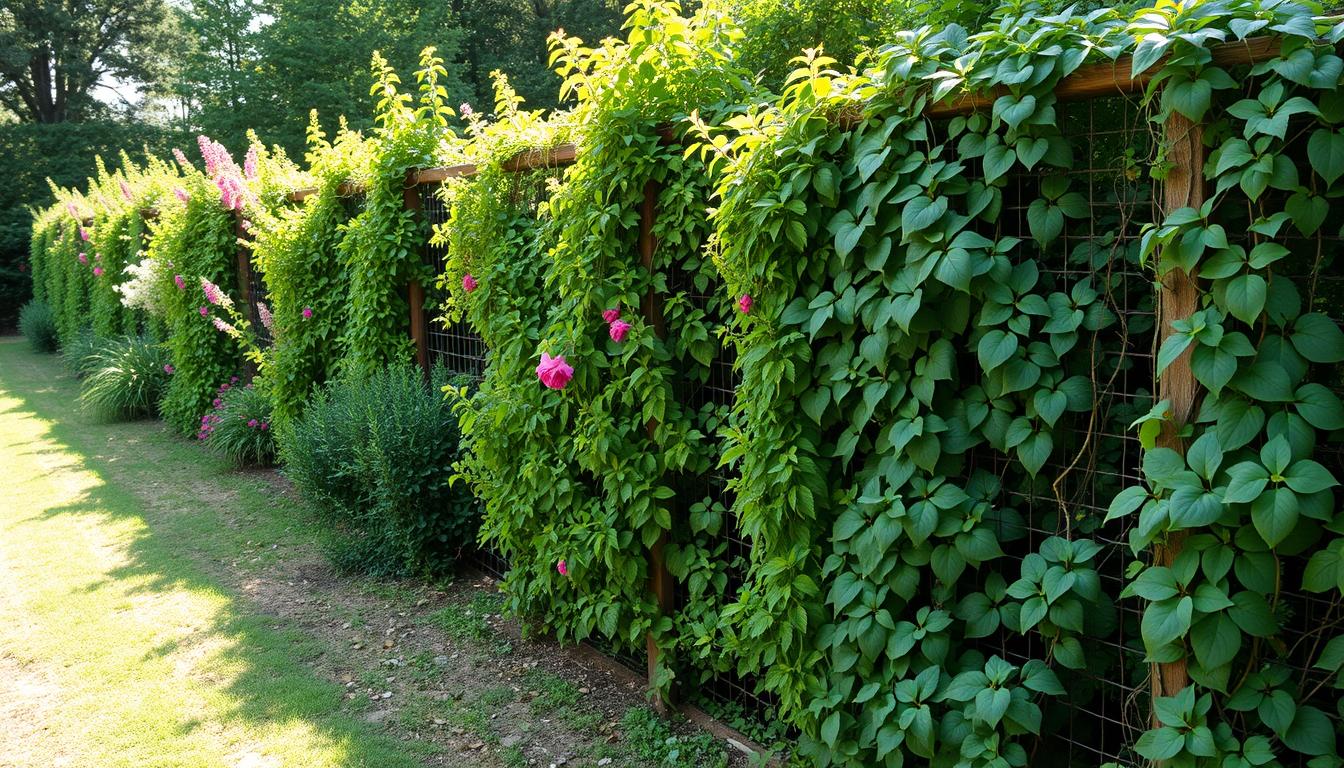
Walking along the fringes of the border today, the visual markers of the state are disappearing. In some sectors, the BSF has planted dense rows of Arundo donax—a tall, invasive grass—and thorny bamboo. This "green fence" is almost impossible to cut through. Unlike a chain-link fence, you cannot simply snip a hole in a thicket of bamboo. It grows back. It thickens. It becomes a wall of thorns that swallows anything that tries to pass.
Beneath the canopy, the silence is heavy. You find yourself looking not at the horizon for a guard tower, but at the mud for a footprint or a slide mark. You listen for the snap of a twig or the hiss of breath in the reeds.
The border has become a sensory experience. It is no longer a concept; it is a physical threat.
The irony is that as the border becomes more "natural," it becomes more alien to the humans who live there. The ancient pathways used by families divided by the 1947 Partition are being choked off by the very earth they walk on. The rivers that were once highways of commerce are becoming moats filled with monsters.
The Long Shadow
The sun sets over the Sundarbans with a violent, orange hue, casting long shadows across the water. In the fading light, the distinction between a floating log and a predator vanishes.
We often think of borders as static things—monuments to a nation's sovereignty. But here, the border is alive. It grows. It eats. It reproduces.
The Indian government’s turn toward crocodiles and snakes is a confession. It is an admission that the modern world, with all its industrial might, cannot contain the human impulse to move, to trade, and to escape. To stop a man, you cannot simply use a law or a wall. You have to use the one thing he fears more than a uniform: the silent, unblinking eyes of the swamp.
As the moon rises, the border guards in their towers look out over the dark expanse. They are not alone on watch. Somewhere in the tall grass, a viper coils. Somewhere in the black water, a tail twitches. The fence is hungry tonight.



