Winter in the trenches of the Donbas does not arrive with a whisper. It hits like a falling anvil, turning mud to iron and freezing the breath in a soldier's throat before it can form a prayer.
Oleksiy knows this cold. He has lived inside it for nearly three years, his world reduced to the damp smell of pine logs, the metallic tang of gunpowder, and the low, constant thrum of artillery shaking the frozen earth four miles away. He sits in a dugout carved into the hillside, wrapping his fingers around a tin cup of lukewarm tea. His boots are caked in grey clay that refuses to dry. Around him, three young recruits—boys who were still studying mechanics or literature when the first sirens wailed over Kyiv—are trying to dry their socks over a tiny, smoking stove.
They do not talk about grand geopolitics. They do not debate the intricacies of sovereign debt or the fiscal architecture of European central banking. They talk about batteries. They talk about whether the drone buzzing somewhere above the cloud cover has enough juice left to find their position before dawn. They talk about ammunition.
Thousands of miles away, in a sunlit conference room in Brussels, the conversation is nominally about the same thing, though it sounds entirely different. Here, the currency is not lead or shrapnel, but billions on a spreadsheet.
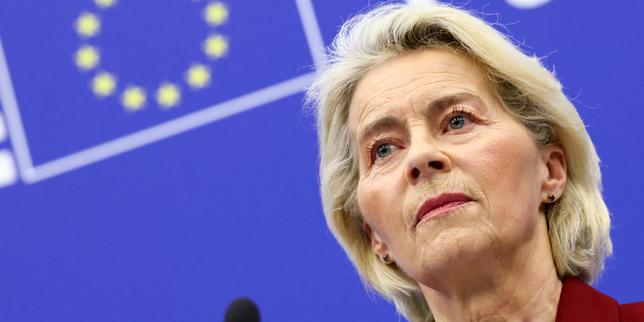
Volodymyr Zelenskyy and Ursula von der Leyen sat across from one another under the weight of an escalating emergency. The problem is no longer merely about acquiring weapons; it is about keeping the ledger balanced when the ink is running dry. Europe has pledged solidarity a thousand times over, wrapped in the comforting language of enduring support. Yet solidarity does not intercept incoming ballistic missiles. Cash does. Contracts do. Steel does.
Consider the mechanics of modern survival. A single interceptor missile costs millions of euros. A brigade holding a critical intersection needs fuel, spare parts for aging armored personnel carriers, rotated shifts, medical supplies, and electronic countermeasures that burn out faster than lightbulbs in a storm. Multiply that by an entire front line stretching hundreds of miles, and you discover the terrifying velocity at which money evaporates during total war.
For months, the friction has lived in the details. How do you finance a nation's defense when its economy has been hollowed out by bombardment, its ports blockaded, its factories reduced to twisted skeletons of corrugated iron and concrete?
The European Union finds itself trapped between its own rigid fiscal machinery and the merciless urgency of the calendar. Member states argue over joint borrowing, frozen Russian sovereign assets, and national budget deficits. Every debate in Brussels takes weeks. Every delay on the battlefield costs lives.
Oleksiy does not know what a sovereign asset freeze is. If you asked him about European financial architecture, he would likely laugh, a dry, humorless sound that carries the dust of shelled brickwork. But he feels the consequence of every delayed vote. When his unit has to ration artillery shells, forcing them to watch enemy armor advance without a counter-response, that is a policy paper manifesting as shrapnel. When the generator runs out of diesel because the logistics convoy was delayed by funding shortfalls, that is a debate in a parliamentary committee turning into frostbitten toes.
This is the hidden cost of the standoff. We treat defense financing as an accounting exercise, a dry matter of fiscal policy to be hammered out over coffee and pastries in glass-walled offices. But at the receiving end of the ledger, every delayed wire transfer is measured in heartbeats.
During their discussion, Zelenskyy and von der Leyen faced a reality that no amount of diplomatic phrasing could soften. The existing mechanisms are creaking under the strain. The initial wave of emergency aid, mobilized in the frantic early weeks of the invasion, has been spent. What is required now is structural, predictable, long-term sustenance—an economic life support system that can outlast an adversary banking on the West's collective exhaustion.
The debate over utilizing immobilized Russian central bank assets has moved from the fringes to the center of this crisis. It is a legally complex, unprecedented maneuver. Financial purists warn of systemic risks to global banking trust. They point to precedent and protocol.
Yet, as von der Leyen understands well, standard protocols were written for a world that no longer exists. When an aggressor shatters the architecture of international law, the rules governing restitution must adapt with equal force. Why should the taxpayers of democratic nations shoulder the entire indefinite burden of rebuilding and defending a country while the aggressor's vast wealth sits untouched in Western vaults?
Logic dictates a straightforward answer. Justice demands it. But international politics moves at the speed of consensus, which is to say, it moves like glaciers grinding across stone.
Back in the dugout, the generator splutters and dies. The sudden silence is heavier than the noise. The stove dims. The recruits look up, their faces etched with the quiet, devastating fatigue of people who have learned not to expect miracles.
Oleksiy stands up, adjusts his heavy flak jacket, and reaches for a flashlight. He has a perimeter check to run. He steps out into the freezing dark, where the wind cuts across the open steppe, carrying the faint, unmistakable rumble of a war that cares nothing for committee meetings or fiscal years.
The leaders in Brussels will wake up tomorrow to more briefs, more debates, more proposals. They will search for creative workarounds to bridge the funding gap before winter breaks and the ground hardens for another offensive. They must find them. Because down here in the mud, there are no footnotes, no caveats, and no second chances. There is only the next hour, and the hope that the ledger holds.


