Everybody loves a good environmental redemption story. Handing an open pit back to nature feels like penance for a century of industrial extraction. You flood a scar, stock some fish, plant a ring of eucalyptus, and wait for the press releases to write themselves.
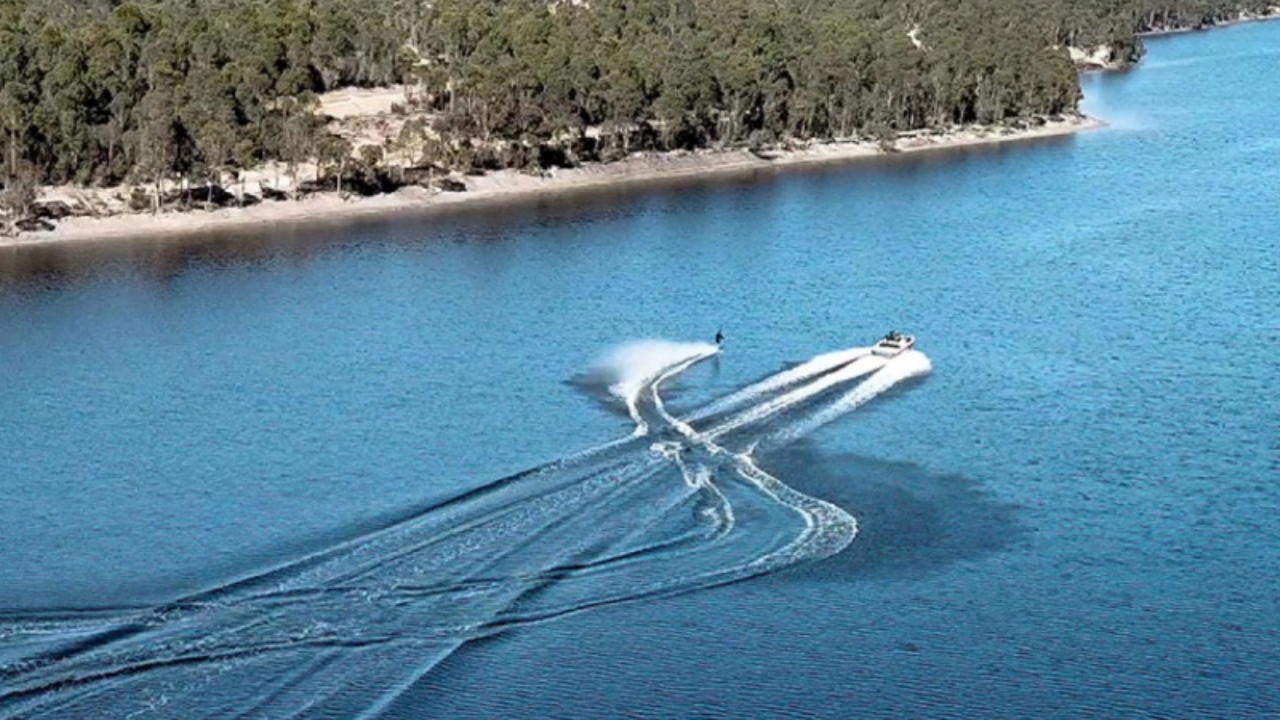
Lake Kepwari in Western Australia is the poster child for this feel-good fantasy. A massive coal mine closes down, water pours in, billions of litres pool together, and suddenly people are water-skiing where draglines used to dig. The narrative is neat. The pit is gone. Nature wins.
Except nature did not win. We just put a band-aid over a severed artery and called it plastic surgery.
I have watched mining executives and regional developers pat themselves on the back for decades over projects like this. They treat water-filled voids as biological resets. They are not. They are ecological taxidermy.
The Myth of the Natural Rebound
Look past the glossy tourism brochures for a moment. What is Lake Kepwari actually made of? It is a giant basin carved out by heavy machinery, pumped full of water diverted from a nearby river, and left to bake under the Australian sun.
The lazy consensus says that once water fills a hole, the ecosystem returns. Ecologists who actually study post-mining pit lakes know better. These environments are fundamentally sterile traps. The banks are steep, engineered slopes rather than natural littoral zones. The water chemistry is volatile, shaped by decades of exposed sulfides, heavy metal leaching, and acid mine drainage mitigation that requires active maintenance masked as passive beauty.
When you flood a coal pit, you do not recreate a wetland. You create a bathtub with an artificial plumbing system.
We celebrate these transformations because we are desperate for a happy ending to the extraction story. If we can turn a hole in the ground into a recreational playground, then extraction comes guilt-free. We can tear up the earth today knowing we will just drop a lake in it tomorrow.
That logic is bankrupt.
What the Tourism Boards Won't Tell You
Let us talk about the long-term reality of artificial pit lakes.
Water quality in these systems is a constant tightrope walk. Without natural groundwater flow-through matching a native catchment, a pit lake becomes a thermal sink. Evaporation concentrates salts and agricultural runoff that seeps in from surrounding farmland. Algal blooms are not an occasional surprise; they are a structural inevitability in stagnant, artificially deepened water bodies exposed to high temperatures.
If you put a boat on Lake Kepwari on a blistering summer afternoon, you are enjoying a localized amenity. But do not mistake it for a functional ecosystem. It is an industrial holding pond with a Jet Ski track.
And that is fine, provided we are honest about it. Stop calling it rewilding. Stop pretending that engineering a massive puddle erases the habitat fragmentation caused by thirty years of open-cut mining.
True land rehabilitation is painful, expensive, and slow. It requires reshaping topography to restore natural drainage networks, rebuilding topsoil profiles from scratch, and waiting decades for complex mycorrhizal networks to re-establish. Flooding a hole is the cheap way out. It is the corporate equivalent of sweeping dirt under a very expensive rug.
The Economics of Greenwashing
The real reason projects like Lake Kepwari get championed isn't ecology. It's liability shifting.
When a mining lease expires, the company on the hook for rehabilitation faces staggering costs. Moving millions of tonnes of overburden back into a void to restore the original contour line ruins profit margins. Flooding the hole and handing it over to the local shire as a public asset? That looks like corporate responsibility on a balance sheet while slashing closure liabilities by eighty percent.
Local governments inherit the long-term management costs of an artificial body of water that requires constant monitoring for bank erosion, water stratification, and public safety hazards. The mining company walks away clean. The public gets a lake with an asterisk.
We have normalized a system where industrial waste sites are rebranded as recreational assets so corporations can dodge the heavy lifting of true landscape restoration.
Designing for the Next Century
If we are going to keep turning pits into lakes, we need to stop pretending we are healing the earth and start treating them like the engineered infrastructure they are.
That means designing shorelines that can actually support wildlife instead of sheer walls where native fauna drown. It means building robust, continuous water-treatment loops that do not rely on hope and evaporation. It means holding developers accountable for fifty-year monitoring commitments, not just a ribbon-cutting ceremony once the pump is turned off.
Until we drop the fairy tale of the effortless environmental reset, we will keep turning our worst industrial mistakes into recreational band-aids.
Nature does not want your flooded coal mine. And neither should you, until we learn how to build one that lasts.