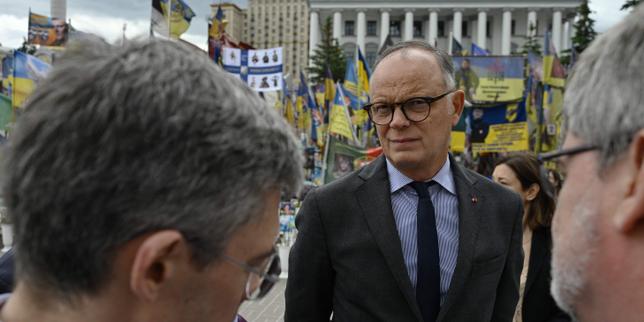
Xenia Fedorova, the former chief of RT France, recently targeted French journalists reporting from Kyiv, sparking a broader conversation about Russian influence operations in Western Europe. Her criticisms focused on the logistics and movement of Western reporters in Ukraine, framing their access as compromised or staged. This maneuver represents a tactical shift for the network of figures linked to Russian state media. They are moving from direct broadcasting to digital guerrilla warfare, exploiting the infrastructure of sympathetic French media platforms.
Understanding this shift requires examining how foreign influence adapts when traditional broadcast channels are cut off. The European Union banned RT and Sputnik shortly after the 2022 invasion of Ukraine. This forced state-backed actors to find new vessels. In France, this network found a natural convergence with certain conservative media circles, notably those under the umbrella of billionaire Vincent Bolloré. The goal is no longer just to praise Moscow. The objective is to systematically erode public trust in established news gathering.
The Evolution of the RT France Network
When French regulators pulled the plug on RT France, the channel did not simply vanish. It fractured into a decentralized network of commentators, digital platforms, and strategic alliances. Fedorova had spent years building a newsroom designed to look and feel like a standard 24-hour news channel. She understood that pure propaganda fails in Western markets. The content had to be wrapped in the language of alternative viewpoints and anti-establishment skepticism.
The current strategy relies on individual voices using social platforms to amplify specific talking points. When Fedorova critiques the freedom of movement for journalists in Kyiv, she is targeting the core credibility of eyewitness reporting. The insinuation is simple. If the journalists are managed by Ukrainian authorities, their reporting is inherently tainted. This rhetoric finds a ready audience among European populations already skeptical of official narratives.
This digital footprint is harder to regulate than a satellite television signal. A website can be blocked, and an enterprise can be sanctioned. An individual operator posting commentary on Telegram or X operates in a legal gray area. They leverage the principles of free speech to dismantle the credibility of the free press.
The Convergence with Domestic Media Empires
The alignment between former Russian state media assets and certain French conservative outlets is a marriage of convenience. Vincent Bolloré has constructed a media empire that includes CNews, Europe 1, and the Journal du Dimanche. This network frequently champions a sovereignist, traditionalist agenda that overlaps with the ideological framework promoted by the Kremlin for over a decade.
This is not necessarily a case of direct financial or editorial collusion. It is a convergence of interests. Both groups benefit from portraying the current European political establishment as weak, compromised, and out of touch. When a former RT executive critiques mainstream coverage of the Ukraine war, it provides ready-made content for domestic outlets looking to challenge the government's foreign policy.
- Shared Audience Demographics: Both networks target citizens who feel alienated by centrist politics and mainstream cultural shifts.
- Narrative Synergy: The critique of Western interventionism in Ukraine aligns with a domestic "France First" political stance.
- Distribution Channels: Social media algorithms naturally push viewers from alternative international news toward radical domestic commentary.
This synergy creates an echo chamber. A claim originating from a sanctioned state media figure can travel through independent digital channels, get picked up by domestic commentators, and eventually find its way onto prime-time talk shows. By the time it reaches a mass audience, the original Russian state connection has been scrubbed away. It looks like a homegrown critique.
Logistics and the Reality of War Reporting
The specific criticism regarding how journalists move through Kyiv ignores the operational realities of covering a modern conflict. War zones are tightly controlled environments by necessity. Every army, including the Ukrainian armed forces, implements accreditation systems, checkpoints, and military escorts for foreign press. This is done for operational security and physical safety.
Suggesting that these safety measures equal editorial control is a deliberate misinterpretation. Journalists on the ground regularly report on Ukrainian military struggles, corruption scandals, and the grim realities of civilian casualties. If the access were entirely stage-managed, these critical stories would never see the light of day. The presence of restrictions does not preclude the extraction of truth. It merely complicates it.
The Kremlin counter-narrative relies on a perfectionist fallacy. It argues that unless a journalist has total, unescorted freedom to roam a battlefield during an active missile defense engagement, their reporting is entirely fraudulent. This standard is applied selectively. The same critics rarely mention the absolute blackout imposed on independent reporting within Russian-controlled territories, where unauthorized filming can result in immediate espionage charges.
The Financial and Structural Resilience of Influence Operations
Disrupting a state-sponsored media apparatus requires more than revoking broadcast licenses. The financial structures backing these operations are highly resilient. While RT France went into liquidation after its bank accounts were frozen, the intellectual and social capital of its staff remained intact.
[State Media Apparatus]
       │
       ▼ (Sanctions & Broadcast Bans)
[Decentralized Digital Network]
       │
       ▼ (Ideological Alignment)
[Sovereignist Domestic Media]
       │
       ▼ (Public Consumption)
[Erosion of Institutional Trust]
Many producers, reporters, and analysts trained under the RT umbrella have transitioned to independent digital production. They run sub-stack newsletters, host independent podcasts, and act as consultants for fringe political parties. They are funded through crowdfunding, private donations, and alternative monetization platforms that bypass traditional Western payment processors.
The French state has attempted to counter this through agencies like VIGINUM, which monitors foreign digital interference. Detecting a campaign is different from stopping it. The speed at which a narrative can be generated and amplified outpaces the bureaucratic process required to formally identify and flag it as a foreign influence operation.
The Impact on Public Opinion and Policy
The ultimate metric of success for these narrative operations is not conversion. It is confusion. The goal is not to convince the French public that the Kremlin's view of the war is entirely correct. The goal is to make them believe that everyone is lying, making it impossible to discern the truth.
When citizens reach a state of total skepticism, they disengage. They stop supporting foreign aid packages, they question alliances, and they become susceptible to political movements that promise isolationism. This public fatigue is the exact strategic outcome required by an adversary engaged in a war of attrition. The frontline is not just in the Donbas. It is in the newsfeeds of European voters.
The focus on individuals like Fedorova highlights the persistent nature of this challenge. She represents a class of media professionals who view information purely as an instrument of state power. Their work continues because the market for skepticism is lucrative and politically potent. Western democracies remain vulnerable to this because the very tools required to fight it—censorship and state-directed information—contradict the core values these societies are trying to defend.
The defense against this style of political warfare cannot rely solely on government bans. It requires an audience capable of identifying the structural origin of an argument, recognizing when a domestic grievance is being weaponized by a foreign interest, and understanding that the messy, restricted nature of wartime journalism is still infinitely more reliable than the polished output of a state-directed apparatus.