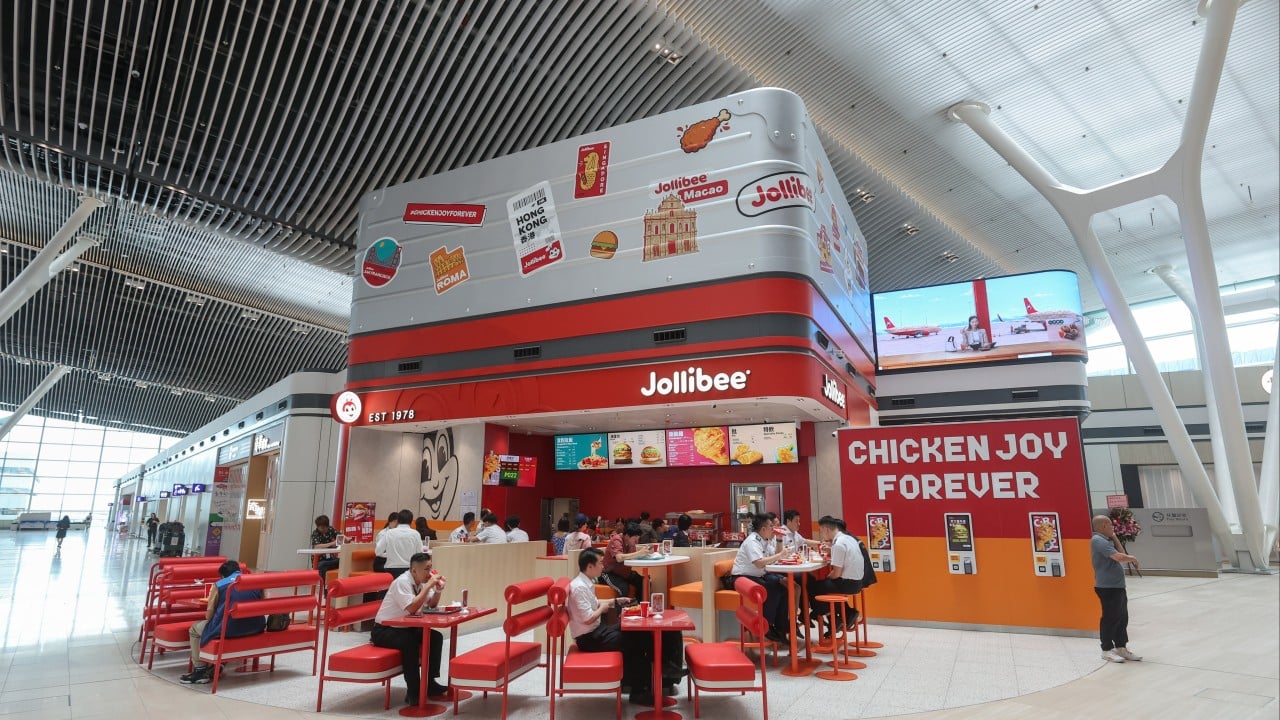
Philippine food service titan Jollibee Foods Corporation has officially abandoned its initial strategy to spin off and list its international subsidiary on a United States stock exchange, opting instead for the Hong Kong Stock Exchange.
This sudden redirection marks a calculated shift for the enterprise, which manages over 10,700 stores globally across twenty distinct brands. Jollibee Foods Corporation International, known as JFCI, will house all operations outside the domestic Philippine market. Steering this newly separated vehicle will be Richard Shin, who steps into the chief executive role while retaining his duties as group chief financial and risk officer.
The decision to bypass Wall Street for Victoria Harbour is not merely a change in venue. It is a stark reflection of investor appetite, liquidity realities, and the specific valuation frameworks applied to Asian consumer brands.
The Wall Street Valuation Trap
Why would a company with aggressive North American footprints walk away from the deepest capital pools on earth?
The answer lies in consumer brand translation. On a US exchange, a fast-food operator originating from Southeast Asia faces an uphill battle for analyst attention and comparative valuation. Wall Street indexes are crowded with domestic heavyweights. Analysts covering those markets often struggle to price multi-brand portfolios that rely on localized Asian flavors, overseas diaspora demand, and complex joint ventures.
When a foreign entity lists in New York without an easily digestible domestic peer group, it frequently suffers from a multi-nation discount. Investors fail to price in the organic growth rates happening across Vietnam, China, and the Middle East. Trading volumes dry up. Management spends valuable quarters educating retail and institutional funds on basic operational concepts rather than executing expansion strategy.
Jollibee realized that American institutional investors view foreign restaurant chains through a cautious lens. Skepticism surrounding supply chain logistics, foreign currency exposure, and unverified domestic brand loyalty in Western markets can severely depress initial pricing.
The Hong Kong Liquidity Engine
Hong Kong offers a completely different mathematical reality.
The city's primary equity market has experienced a profound resurgence. Driven by massive capital inflows and a relentless wave of listings, total debut proceeds for the year have blown past forty-five billion dollars. While a significant portion of this liquidity has been fueled by technology companies funding infrastructure expansions, the secondary effect is a broader appetite for large-scale Asian consumer issues.
JFCI arrives in Hong Kong with built-in regional relevance. Institutional funds in the region understand the operational mechanics of multi-brand food portfolios. They track consumer discretionary spending patterns across maritime and mainland Asia with precision.
Furthermore, Jollibee is no stranger to the territory. The company operates dozens of profitable outlets locally, maintaining a fierce brand loyalty base anchored heavily by the region's workforce and local consumers alike. By choosing Hong Kong, JFCI positions itself among peer restaurant groups and consumer brands that trade at multiples familiar and favorable to Asian portfolio managers.
Structural Mechanics of the Separation
Executing a cross-border corporate split requires surgical precision.
Jollibee will keep its home operations anchored to the Philippine Stock Exchange. The domestic business remains a cash-generative engine, feeding on the unshakeable popularity of local favorites within the home islands. Separating the domestic entity from JFCI creates two distinct operational mandates.
+-------------------------------------------------------+
                Jollibee Foods Corporation
                       (Parent)
+-------------------------------------------------------+
                           |
         +-----------------+-----------------+
         |                                   |
         v                                   v
+------------------+               +------------------+
| Philippine Stock |               | Hong Kong Stock  |
|     Exchange     |               |     Exchange     |
| (Domestic Market)|               |  (JFCI - Global) |
+------------------+               +------------------+
JFCI inherits the heavy lifting of international scaling. This includes managing the expansion of core brands alongside acquired properties like Tim Ho Wan across North America, Europe, and neighboring Asian economies. Richard Shin faces the immediate task of proving that this international vehicle can self-fund its growth without relying on capital injections from the Philippine parent.
Structuring the executive team with dual-hatted leadership under Shin provides short-term stability. Yet, the long-term viability of JFCI depends on establishing an independent operational infrastructure. Supply chains in North America must operate autonomously from procurement networks in Manila. Financial reporting standards must satisfy rigorous international regulatory bodies while appealing specifically to the regional investor base.
The Broader Regional Ripple Effect
Jollibee's pivot serves as a bellwether for other multinational enterprises headquartered in emerging Asian markets.
For years, the default playbook for global expansion and subsequent capitalization pointed directly toward a New York listing. Bankers in Manhattan pitched global prestige and unparalleled valuation ceilings. Yet, execution data reveals that secondary and tertiary listings from Asian issuers in Western markets have frequently underperformed post-debut.
By pivoting to Hong Kong, Jollibee acknowledges a structural shift in global finance. Capital is increasingly regionalized. Investors prefer assets where they can physically sample the product, observe store traffic firsthand, and contextualize growth within familiar geographic boundaries.
The success of the JFCI float will likely encourage other consumer conglomerates in Southeast Asia to reconsider traditional listing routes. Companies caught between domestic market caps and hostile Western valuation climates now have a clear precedent. Proximity to capital matters less than proximity to understanding.
As the prospectus moves through the pipeline, the market will judge whether regional alignment outweighs the sheer depth of American capital markets. The numbers coming out of Victoria Harbour suggest the gamble is calculated, timely, and structurally sound.
Execution now dictates the outcome, and the kitchen doors are wide open