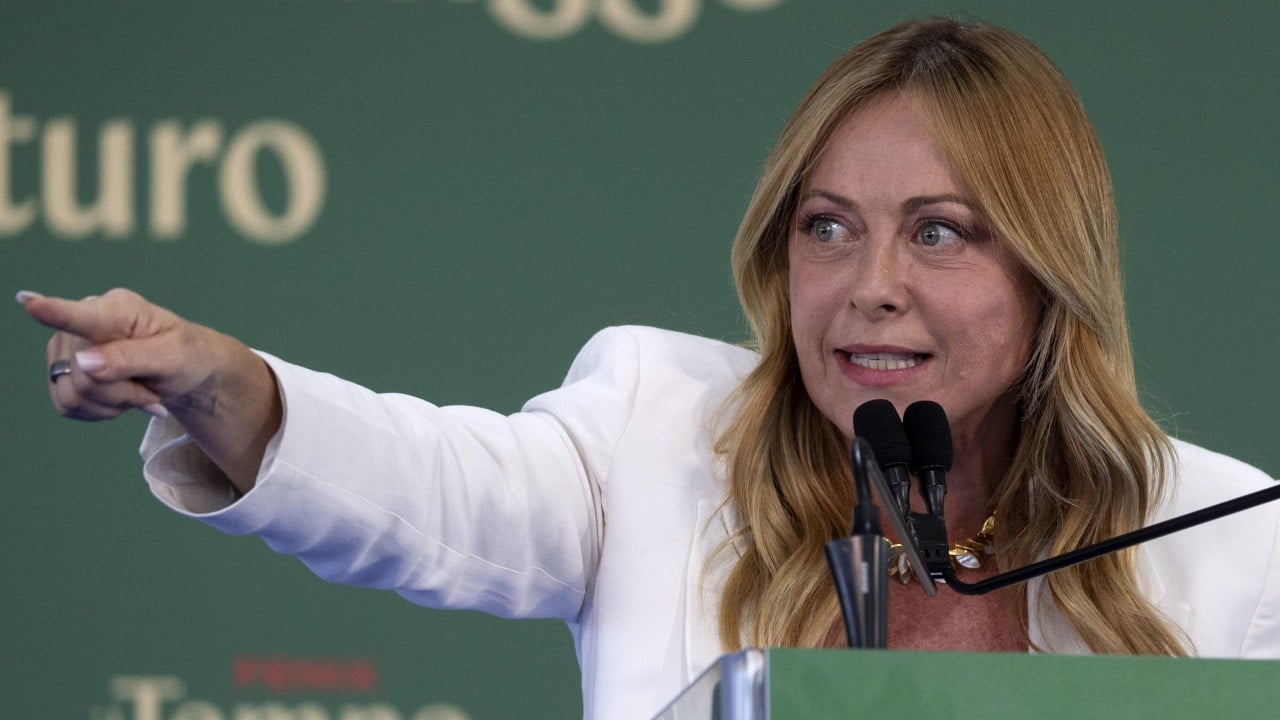
Proposals by Italian Prime Minister Giorgia Meloni’s coalition—specifically the Brothers of Italy party—to ban face-covering garments like the burka and niqab in schools and cap the percentage of non-Italian students per classroom have reignited a fierce European debate over secularism, integration, and educational quality.
Standard media coverage frames this clash as a binary culture war: populist nationalism clashing with multicultural inclusion. However, educational economists, sociologists, and school administrators across Europe point out that focusing exclusively on ideological symbols or arbitrary classroom quotas obscures the deeper structural mechanics that actually determine whether immigrant students succeed or fail.
The Mechanics of Classroom Caps and "White Flight"
The proposal to cap the proportion of foreign-born or non-Italian-speaking students in a single classroom is not entirely new in Italy. In 2010, the Italian Ministry of Education introduced a guideline suggesting a 30 percent threshold for non-Italian citizens who lacked adequate language proficiency, though schools were permitted to bypass it when demographic realities made compliance impossible.
Supporters of strict enforcement argue that high concentrations of non-native speakers slow down the curriculum and hinder language acquisition. According to proponents within the Brothers of Italy party, dispersing students prevents the formation of isolated enclaves within public schools.
Opponents, including teachers' unions and civil rights groups, counter that rigid caps are logistically unworkable and legally discriminatory. In urban districts where immigrant families reside in higher concentrations due to housing affordability, enforcing a strict cap requires either bussing students long distances or turning them away from neighborhood schools—a violation of constitutional mandates guaranteeing universal access to education.
Research from the Organisation for Economic Co-operation and Development (OECD) indicates that the concentration of socioeconomically disadvantaged students—rather than ethnic or national origin alone—is the primary driver of lower academic performance. When middle-class native families withdraw their children from diverse neighborhood schools—a phenomenon sociologists refer to as "native flight"—segregation accelerates regardless of official quotas.
Face Coverings in Public Institutions
The second pillar of the proposed legislation targets the wearing of the burka and niqab inside educational institutions, framed by lawmakers as a measure to protect women's dignity, ensure security, and uphold Western secular values.
Across Europe, policies vary significantly:
- France banned conspicuous religious symbols, including the hijab, in public schools in 2004 under the principle of laïcité, and prohibited full-face coverings in all public spaces in 2011.
- Belgium and Austria enforce similar restrictions on full-face veils in public spaces and schools.
- The United Kingdom and Scandinavian countries generally allow schools to set their own uniform policies, intervening only when face coverings impede communication or identification.
Critics of the Italian proposal note that full-face coverings like the burka and niqab are exceedingly rare among school-aged girls in Italy. Civil liberties organizations, such as Amnesty International, have argued that broad legislative bans risk alienating the very women and girls they claim to liberate, potentially pushing conservative families to withdraw daughters from public education altogether in favor of isolated homeschooling or private religious instruction.
Conversely, defenders of the ban argue that clear legal boundaries prevent coercion within patriarchal households and establish uniform civic standards before conflicts arise in the classroom.
Language Acquisition Versus Demographic Quotas
If the objective is successful integration and academic parity, comparative education data suggests that early language intervention outperforms demographic engineering.
According to data from Italy’s National Institute of Statistics (ISTAT) and the Ministry of Education, students with non-Italian citizenship make up roughly 11 percent of the overall student body, though that figure exceeds 20 percent in several northern industrial regions like Lombardy and Emilia-Romagna. Crucially, over 65 percent of these "foreign" students were actually born in Italy, meaning they are culturally Italian yet lack formal citizenship until age 18 due to Italy’s strict jus sanguinis (right of blood) nationality laws.
Treating a second-generation student born in Milan the same as a newly arrived refugee for the purpose of classroom quotas conflates legal status with linguistic need. Educational researchers emphasize that targeted funding for certified Italian-as-a-second-language (L2) instructors, smaller class sizes, and early childhood education access have a measurable impact on closing achievement gaps—areas where Italian public schools have historically faced chronic underfunding.
The Administrative Reality on the Ground
For school principals (dirigenti scolastici), the debate in Rome often feels disconnected from daily operational constraints. Italy faces a persistent shortage of permanent teaching staff, aging school infrastructure, and a high rate of early school leaving compared to the European Union average.
Without dedicated funding for transportation, specialized language teachers, and cultural mediators, legislative mandates on classroom composition place the burden of enforcement on local administrators who lack the resources to execute them. Whether through stricter secular regulations or targeted linguistic support, the long-term outcome of Italy’s schools depends less on symbolic legislation and more on sustained investment in classroom capacity.