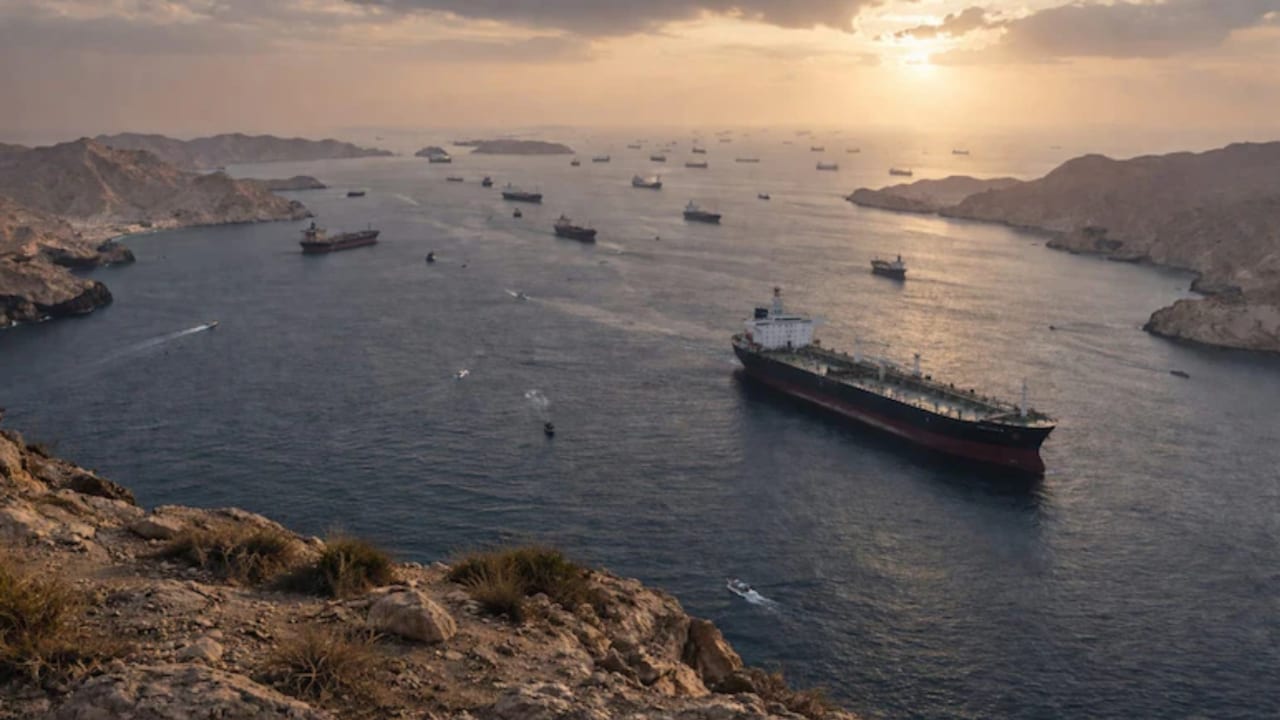
The coffee in the portside canteen tasted like burnt copper and patience. Outside, through salt-crusted glass, the gray expanse of the Persian Gulf rippled under a suffocating afternoon haze. A supertanker, heavy with millions of barrels of crude, idled in the swells. It looked less like a vessel of commerce and more like a sleeping leviathan, waiting for a permission slip that might never arrive.
For the men and women who chart the shifting currents of global trade, that ship is a monument to a stubborn reality. Waterways do not care about diplomacy until diplomacy stops working.
Right now, the Strait of Hormuz is a choke point held hostage by history.
An Iranian official recently made it clear that the narrow artery through which a massive portion of the world's petroleum flows will stay locked tight. The condition for its reopening? The United States must fully comply with the terms of a defunct memorandum. Not a new treaty. Not a fresh round of compromise. A ghost of paper from yesterday, resurrected to justify a modern blockade.
To understand why this matters, you have to look past the ticker tape of financial networks. You have to leave the air-conditioned boardrooms of Houston and London and stand on the bridge of a container ship where the horizon is a line of interrogation.
(Note: The following scene is a hypothetical scenario designed to illustrate the human cost of geopolitical gridlock.)
Imagine a captain named Elena. She has spent twenty-eight years navigating the dangerous creases of the globe. She knows the sound of a diesel engine singing at optimal RPM, and she knows the silence that follows a sudden radio hail from a patrol boat demanding she cut her speed. When the strait closes, Elena does not read about it in a morning briefing. She feels it in the sudden, sickening drop of her stomach as her company dispatches a message ordering her to drop anchor in open water, burn less fuel, and wait.
Wait for what?
Wait for politicians thousands of miles away to decide whether an old signature on a defunct document still holds weight in a room where everyone has forgotten why they sat down at the table in the first place.
The Strait of Hormuz is only twenty-one miles wide at its narrowest point. That leaves just two shipping lanes—each two miles wide—for the lifeblood of the global economy to squeeze through. It is a terrifyingly narrow funnel. When that funnel is pinched, the shockwaves travel outward with brutal speed. Diesel prices at local pumps tick upward. Freight costs for raw materials spike. Factories in nations that have never seen the Persian Gulf suddenly find themselves short on components because the ships carrying them are parked in the Gulf of Oman, rotting under the sun.
We treat global economics like weather—an act of God we can only umbrella against. But economics is human behavior writ large. It is built on trust. And when trust breaks down, trade does not merely slow down; it freezes.
The demand tied to the defunct memorandum is a masterclass in diplomatic stubbornness. In international relations, agreements are rarely just ink and parchment. They are totems of prestige. When one side feels a past deal was torn up unfairly, the grievance hardens into an institutional dogma. The current insistence on adherence to a dead accord is not about the literal text of the document anymore. It is about pride. It is about leverage. It is about a government looking at the most critical maritime chokepoint on Earth and realizing they hold the key to the iron gate.
And nobody has a spare key.
Consider what happens next: the insurance rates for vessels operating in the region skyrocket overnight. Underwriters look at the threat of detained crews, seized cargo, and stray ordnance, and they adjust their algorithms. A voyage that was profitable last week becomes a financial liability today. Shipowners pull their fleets. Exporters scramble for overland routes that do not exist in sufficient capacity.
The absurdity of the situation lies in its asymmetry. A handful of officials in a capital city can issue a statement that alters the price of bread in a European village or the cost of heating oil in a New England suburb. The invisible threads connecting our daily lives to these distant waters are real, even if we rarely feel them until they snap.
We live in an era that worships speed. We expect data in milliseconds, deliveries in hours, and resolutions in days. Yet, we remain shockingly vulnerable to ancient geography. A narrow strip of water, bordered by mountains on one side and flat dunes on the other, can bring the hyper-connected twenty-first-century machine to a stuttering halt because two nations cannot agree on the ghosts of yesterday.
Elena remains anchored in the gray swells. Her crew rotates through maintenance shifts, keeping the engines warm, polishing brass that salt air tarnishes within hours. They talk about home, about families growing older without them, about the absurdity of sitting fifty miles away from a destination they cannot reach.
The water around them is calm. The sky is clear. But beneath the surface, the current is pulling us all toward a place where old grievances dictate tomorrow's reality, and the gate remains firmly shut.