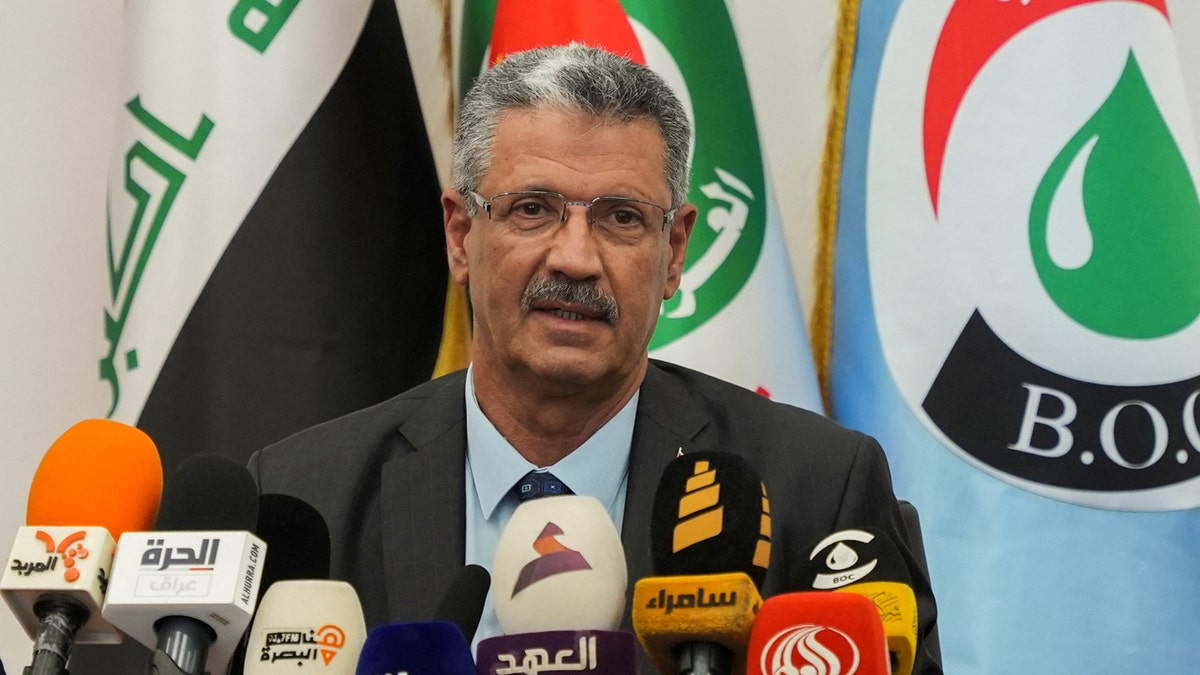
The U.S. Treasury Department just effectively declared that the call is coming from inside the house. By blacklisting Ali Maarij al-Bahadly, Iraq’s Deputy Oil Minister for Extraction, Washington is no longer just chasing smugglers in speedboats. It is targeting the bureaucratic engine of the Iraqi state. The move clarifies a grim reality that Baghdad has tried to obscure for years: the technical and administrative machinery of the world’s sixth-largest oil producer is being actively used to subsidize the Iranian economy and its paramilitary proxies.
Ali Maarij al-Bahadly didn't just look the other way. According to the Treasury’s Office of Foreign Assets Control (OFAC), he abused his official authority to divert Iraqi oil products to benefit Salim Ahmed Said, an operative tied to the Iranian Revolutionary Guard Corps (IRGC), and the Asa’ib Ahl al-Haq (AAH) militia. This wasn't a one-off lapse in judgment. It was a systemic exploitation of state resources to fund a parallel power structure that often works directly against the interests of the sovereign Iraqi government.
The Architect of the Leak
To understand why this matters, you have to look at the role al-Bahadly occupied. As Deputy Minister for Extraction, he sat at the throat of Iraq’s primary revenue stream. He wasn't a low-level clerk forging signatures. He was a high-ranking official with the power to approve contracts, manage production quotas, and oversee the movement of refined products.
Before his ascent in the Ministry, al-Bahadly chaired the Iraqi parliament’s oil and gas committee. This gave him the political capital to build a network that bridged the gap between legal state operations and the illicit "shadow" market. The U.S. alleges that he used these positions to enrich Salim Ahmed Said, a man the Treasury previously identified as a key node in the IRGC-QF’s oil-for-terror schemes.
The mechanism is simple but effective. By mislabeling Iraqi oil or diverting it into the hands of "security units" controlled by militias like AAH, the conspirators can move sanctioned Iranian crude under the guise of legitimate Iraqi exports. It’s a shell game played with millions of barrels. When the U.S. Navy interdicts a tanker in the Gulf, they often find forged Iraqi paperwork—documents that, according to these latest sanctions, may have originated from within the very ministry tasked with protecting those assets.
The Militia Business Model
While al-Bahadly provided the bureaucratic cover, groups like Asa’ib Ahl al-Haq provided the muscle and the logistics. This is where the story shifts from high-level corruption to a paramilitary "protection" racket. The sanctions also targeted Mustafa Hashim Lazim al-Behadili, an AAH financial official who reportedly built an oil trucking and security unit specifically to facilitate fuel theft and smuggling.
Since the U.S. withdrawal in 2011, AAH has evolved from a purely kinetic militia into a diversified conglomerate. They don't just fight; they manage scrap metal, real estate, and, most lucratively, the "protection" of oil infrastructure. By controlling the roads and the trucks, they ensure that a significant percentage of "subsidized" Iraqi fuel—meant for the Iraqi people—never reaches a domestic gas station. Instead, it is trucked across borders or loaded onto tankers to be sold at market rates, with the profits flowing directly into militia coffers.
The Treasury’s statement was blunt. "Like a rogue gang, the Iranian regime is pillaging resources that rightfully belong to the Iraqi people," Secretary Scott Bessent noted. But the "gang" has official badges. This creates a nightmare for international oil companies operating in Iraq. If the person signing your extraction permit is also the person facilitating the theft of the product, the entire regulatory environment becomes a minefield of legal and ethical risks.
A Signal to the Sudani Government
These sanctions arrive at a delicate moment for Iraqi Prime Minister Mohammed Shia al-Sudani. He has spent months trying to balance his relationship with the U.S. against the demands of the "Coordination Framework," the pro-Iran political bloc that brought him to power. By hitting a sitting deputy minister, Washington is signaling that the era of "strategic ambiguity" is over.
For years, the U.S. granted Iraq waivers to import Iranian electricity and gas, acknowledging the country's desperate need for energy. Those waivers were meant to be a bridge toward energy independence. Instead, they became a permanent feature of the landscape, providing a legal channel for billions of dollars to flow into Tehran. This latest round of sanctions suggests that the U.S. is losing patience with the slow pace of Iraq’s "disconnection" from the Iranian sphere of influence.
The message is clear: the U.S. will no longer separate the "good" parts of the Iraqi government from the "bad" parts of the militias if the two are actively collaborating. If your deputy minister is on the payroll of a designated terrorist organization, your entire ministry is a liability.
The Hezbollah Connection
The scope of this investigation extends beyond the Iraq-Iran border. Included in the same sanctions package were officials from Kata’ib Sayyid al-Shuhada (KSS), another Iran-backed group. One official, Ahmed Khudair Maksus Maksus, is accused of coordinating the payment of millions of dollars to Hezbollah in Lebanon to purchase weapons.
This reveals the true scale of the "oil-for-influence" pipeline. Iraqi oil is pumped from the ground, diverted by a deputy minister, smuggled by a militia, sold on the black market, and the resulting cash is used to buy missiles for a war in Lebanon. This is not just local corruption. It is the financial backbone of a regional conflict.
The Iraqi Oil Ministry has remained largely silent since the announcement. There are no easy fixes here. Firing al-Bahadly might satisfy Washington in the short term, but the "trucking and security" units run by AAH still control the ground. Removing one official doesn't dismantle a decade-old infrastructure of theft.
The Iraqi government now faces a binary choice. It can continue to allow its most precious resource to be cannibalized by neighbors and non-state actors, or it can begin the painful process of purging the "shadow" elements from its ministries. One path leads to continued international isolation and a collapsing energy sector; the other leads to a direct, and potentially violent, confrontation with the militias that hold the keys to the kingdom.
Washington has stopped asking Iraq to choose. By sanctioning al-Bahadly, they have made the choice for them. The Iraqi state is now officially on notice: you are either a sovereign nation or a gas station for the IRGC. You cannot be both.


