Money has a weight that has nothing to do with paper or metal. You feel it in the quiet pause before tapping a card at the grocery register. You hear it in the careful phrasing of a phone call to a bank, asking for just a little more time. For years, that weight felt light enough to ignore. Interest rates sat near zero, a quiet baseline hum in the background of modern life, making borrowing feel as effortless as breathing in and out.
Then the hum stopped.
To understand what happens when the Federal Reserve prepares to shift its benchmark interest rate upward for the first time in years, you have to look past the dense financial journalism and the flickering Bloomberg terminals. You have to look at ordinary lives. Consider Marcus, a thirty-four-year-old carpenter who finally saved enough for a modest down payment on his first home after a decade of renting. For months, he watched mortgage rates creep upward, each fractional percentage point acting like an invisible hand pushing the front door of his dream just a little further out of reach.
Marcus is not an economist. He does not care about the fine points of quantitative tightening or the nuances of the federal funds rate. He cares about a monthly payment that suddenly requires him to skip family dinners out and put off buying new work boots.
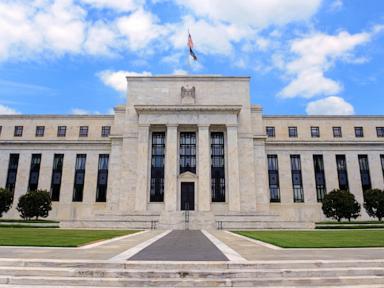
When central bankers in Washington adjust rates, they are pulling a massive lever that controls the cost of borrowing across the entire global economy. Think of money as water in a vast, interconnected plumbing system. When the Fed lowers rates, it turns the valve wide open, flooding the pipes with cheap credit to stimulate growth during hard times. Businesses expand. Consumers buy cars and houses. The economy runs hot.
But water left running too long floods the house. Inflation follows, driving up the price of eggs, gas, and rent until paychecks shrink in real purchasing power. To stem the tide, the Fed must reverse course. It must turn the valve the other way, making money more expensive to borrow.
This is where the story shifts from abstract theory to human friction.
When borrowing costs rise, the ripples spread outward with mathematical precision. Credit card annual percentage rates climb. Auto loans demand steeper monthly commitments. Small business owners who relied on lines of credit to stock inventory for the upcoming season suddenly find themselves calculating whether the margin is wide enough to survive.
Elena runs a neighborhood bakery that has anchored a bustling corner for twelve years. Her ovens are aging, humming with a tired rattle that warns of a costly replacement someday soon. In a low-rate environment, financing a new set of commercial ovens was a straightforward operational expense, easily absorbed by steady weekend foot traffic. In a high-rate environment, every loan calculation carries a sharper risk. Do you raise the price of a loaf of sourdough and risk losing the regulars who have known your name for a decade, or do you hold the line and pray the old equipment holds out through the winter?
Fear is a quiet companion in business, but high interest rates give it a loud voice.
The rationale behind these central bank decisions is rarely malicious. It is an attempt at balance, a delicate walk across a high wire in a high wind. Raise rates too fast or too high, and you risk tipping a fragile economy into recession, stalling growth and putting people out of work. Keep them too low, and you let inflation erode the savings of everyone who has ever tried to put a little cash away for tomorrow.
Yet numbers on a quarterly report rarely capture the emotional toll of that balancing act. They do not measure the anxiety of a young couple looking at student loan repayments that suddenly swallow half their combined income. They do not account for the quiet postponement of dreams—the master's degree put on hold, the small business idea folded back into a desk drawer, the retirement timeline pushed back by another five years.
Economics is fundamentally the study of human choices under scarcity. Every time the cost of capital changes, the boundary of what is possible shifts for millions of people who never signed up to be part of a macroeconomic experiment.
We have lived through an era of financial ease that taught us to treat credit as an infinite resource. We built lifestyles, housing markets, and corporate strategies around the assumption that borrowing would always be practically free. That era is closing. The return of higher interest rates is not just a policy adjustment; it is a cultural and financial reckoning.
As the shift unfolds, the burden will not be shared equally. Those with deep cash reserves and little debt will weather the change with barely a ripple in their daily routines. But those skating closer to the edge—the hourly workers, the new entrepreneurs, the families stretching to secure a place to live—will feel the squeeze in every transaction.
Money tells stories about what a society values, what it fears, and how it plans for tomorrow. When the cost of that money rises, the stories we tell ourselves change too. We learn to live with tighter margins. We find out what we can do without. And we are reminded, sometimes painfully, that the invisible machinery running quietly behind the scenes has a very direct, undeniable impact on the ground where we all live.



