The humidity in Hong Kong does not just sit on your skin; it breathes. It is a wet, heavy blanket that smells of salt water and concrete. In the narrow alleys of Sham Shui Po, where the air conditioners drip like rhythmic metronomes onto the pavement, a small, striped shadow waits.
She is Aedes albopictus. You know her as the Asian tiger mosquito.
She doesn't need much. A discarded bottle cap filled with rainwater is a nursery. A damp corner of a construction site is a kingdom. For decades, the battle against her has been loud and messy. We have sprayed clouds of poison that make our eyes sting. We have scrubbed drains until our backs ache. Yet, every summer, the clinics fill with people shivering from dengue fever, their joints aching as if they have been crushed.
But a quiet change is coming to the islands of the south. This time, the weapon isn't a chemical. It is a biological Trojan horse.
The Secret Carried by the Groom
Imagine a laboratory, sterile and bright, a sharp contrast to the stagnant heat of the city’s drainage tunnels. Inside, scientists are preparing for a wedding. But this is a sabotage.
The plan involves a bacterium called Wolbachia. It is a common hitchhiker, found in about 60 percent of all insect species, but notably absent from the mosquitoes that plague Hong Kong. When a male mosquito is infected with Wolbachia and mates with a wild, uninfected female, something remarkable happens: the eggs never hatch.
They call it cytoplasmic incompatibility. It is a fancy way of saying the biological lock and key no longer match.
The strategy is elegant because it exploits the only thing a mosquito wants more than your blood: to reproduce. By flooding a specific area with "sterile" males, the government isn't trying to swat every insect in the city. They are tricking the population into a dead end.
Consider a hypothetical resident named Mr. Lam. He lives near the lush, green fringes of a park in New Territories. For years, his late-afternoon walks have been a tactical retreat, a frantic swatting of ankles and neck. He sees a technician releasing a cloud of insects from a plastic tube. To Mr. Lam, it looks like madness. Why would we add more mosquitoes to a city already drowning in them?
The answer lies in the diet. Male mosquitoes do not bite. They feed on nectar. They are the harmless bachelors of the species. By releasing only males, the trial ensures that the "infestation" is a ghost. These males will seek out the females hiding in the shadows of Mr. Lam’s garden, and within a generation, the high-pitched whine that keeps him awake at night will simply fade into silence.
A History Written in Fever
This isn't just a local experiment; it is a response to a global shift. As the planet warms, the borders of tropical diseases are moving. Dengue isn't just a "somewhere else" problem anymore.
In 2024, the world saw a record-breaking surge in cases. Hong Kong, with its dense population and subtropical climate, sits on a knife’s edge. One traveler returning from abroad with a fever is enough to start a chain reaction. A single mosquito bites the traveler, becomes a carrier, and then bites ten more people. The math of an outbreak is terrifyingly efficient.
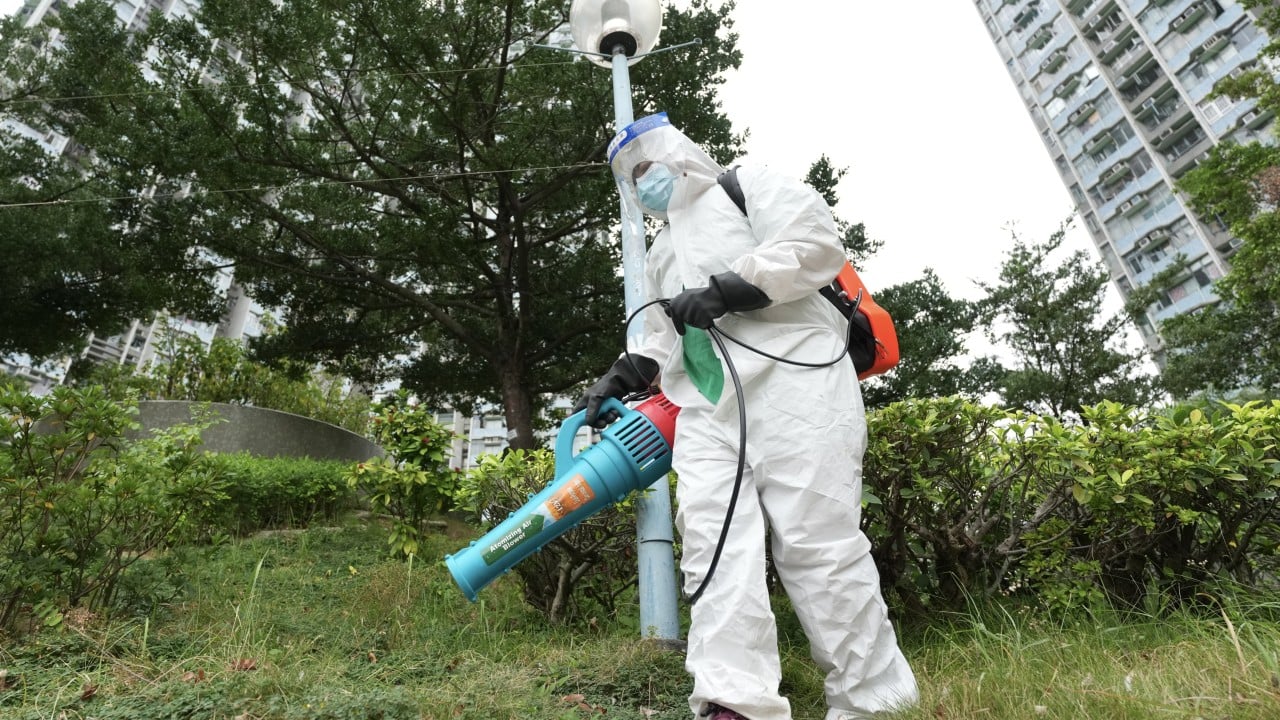
Past efforts relied on the "Sledgehammer Approach." We used organophosphates and pyrethroids—chemicals designed to kill on contact. But nature is stubborn. Mosquitoes began to develop resistance, turning our strongest sprays into nothing more than a mild cologne. We were running out of ways to fight.
The Wolbachia trial represents a shift from brute force to genetic sleight of hand. It is the difference between trying to burn down a forest to kill a wolf and simply ensuring the wolves can no longer have pups.
The Logistics of a Microscopic War
How do you sort a million mosquitoes?
This is where the technology becomes almost intimate. The trial requires a massive scale of production. Millions of larvae are grown in vats, fed a precise diet to ensure they are strong and competitive. If the lab-grown males are too weak, the wild females will reject them. They have to be the most "attractive" options in the alleyway.
The sorting process is a marvel of mechanical engineering. Because female pupae are significantly larger than males, they can be separated using specialized sieves or AI-powered optical sensors. It is a high-stakes filter. Even a few females accidentally released could undermine the public's trust, as they would still bite, even if their offspring were limited.
The Hong Kong government is treading carefully. They are starting small, focusing on areas where the risk of disease is highest and the mosquito density is a constant complaint. They are watching the data like hawks. They measure the "egg-hatch rate"—a cold statistic that represents the heartbeat of the project. When that rate drops, the city wins.
The Doubt in the Air
It is natural to feel a flicker of unease. We have a poor track record of "fixing" nature by introducing new variables. We remember the cane toads in Australia or the kudzu in the American South. We wonder: what happens to the birds that eat these mosquitoes? What happens if the Wolbachia jumps to another species?
The science, fortunately, offers a shield against these fears. Wolbachia is an endosymbiont. It lives inside the cells and is passed down through the mother. It doesn't leak into the environment. It doesn't survive in the soil or the water. And because mosquitoes are not a "keystone species" in urban environments—meaning no animal relies solely on them for survival—their reduction doesn't collapse the local food chain. The dragonflies and swallows simply find other flies to snack on.
Still, the skepticism of the public is a vital part of the process. It forces the scientists to be transparent, to prove that the cure isn't worse than the disease. It reminds us that we are messing with the fundamental code of life in our backyard.
The Long Game
Success in this trial doesn't look like a celebration. There will be no ribbon-cutting ceremony when the mosquitoes are gone. Success is a non-event. It is the absence of a headline about a dengue outbreak. It is a child playing in a park in Fanling without coming home covered in red, itchy welts.
It is the victory of the invisible over the microscopic.
As the sun sets over Victoria Peak, the city begins to glow. In the parks below, the first batch of the Wolbachia battalion is being released. They take flight, thousands of tiny, engineered soldiers, drifting on the evening breeze toward the shadows where the tiger mosquitoes wait. They carry no sting. They carry only the end of their own kind.
In the humid silence of the night, the war for the city’s health is being fought in a way we can barely see, and for the first time in a century, the humans are no longer the ones being hunted.
The sting is gone. The fever is waiting to be forgotten. The city breathes, and for once, it does not itch.