Salt spray coats the windshield as the old Renault climbs the winding tarmac toward the heights of Saint-Denis. Below, the Indian Ocean stretches out in a flat, indifferent sheet of sapphire, hiding secrets thousands of meters beneath its surface.
To the casual tourist sipping espresso on a shaded terrace, Réunion Island is a postcard of volcanic peaks and lush cirques, a slice of Europe tucked away in the southern hemisphere. But stand on these shores with a local software engineer trying to push a two-gigabyte update to a client in Paris, or watch a doctor attempting to stream a high-resolution teleconsultation with a specialist in Lyon, and the postcard fractures.
You feel the distance. You feel the isolation.
For decades, the invisible arteries of the modern internet have treated islands like Réunion as afterthoughts. Every keystroke, every financial transaction, every video call you make from this volcanic outcrop does not simply travel through the air. It dives into the dark, crushing abyss of the ocean, racing along hair-thin glass fibers resting on the silent, muddy plains of the sea floor.
Until recently, those fibers offered a limited number of paths. If a ship dragged an anchor off the coast of East Africa, or if an underwater tectonic shift pinched a cable near the Mozambique Channel, the island’s digital heartbeat stuttered. Businesses held their breath. Students lost their exams mid-upload. Hospitals waited anxiously for data packets to crawl back to life through congested, secondary loops.
Dependency is a quiet cage. When your digital sovereignty relies entirely on cables owned by foreign consortiums or routed through congested choke points, you are never truly in control of your own economic destiny.
Enter a new kind of ambition.
Plans are quietly taking shape to anchor Réunion to a massive new submarine infrastructure project: a high-capacity fiber-optic cable stretching all the way from the industrial powerhouse of South Africa to the financial titan of Singapore.
Stop for a moment and picture it.
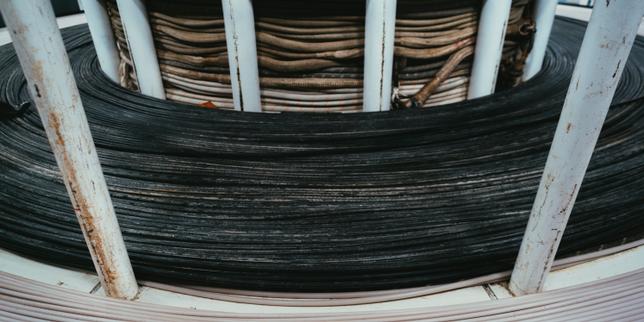
Thousands of kilometers of armored glass, thicker than a garden hose near the shore, tapering down to the thickness of a garden spider's web in the deep trenches. It is being laid by specialized ships moving at a glacial pace, paying out cable meter by careful meter across underwater mountains and abyssal plains. It is a monument to human stubbornness.
Why Singapore? Why South Africa?
Because the future of Réunion's economy cannot afford to remain tethered exclusively to Europe. While historical and administrative ties to France anchor the island’s legal and institutional framework, its geographic reality places it squarely in the pulsing heart of the Indo-Pacific. By plugging directly into the digital superhighways connecting the African continent to Southeast Asia, Réunion changes its gravitational pull.
Imagine a startup nestled in the tech incubators of Saint-Pierre. Yesterday, their ambitions were capped by latency—that agonizing fraction-of-a-second delay that turns real-time financial trading into a gamble and remote collaboration into a chore. With direct, sovereign routing to two of the world's most dynamic economic zones, that latency shrinks. The ocean stops acting as a barrier and starts acting as a bridge.
Sovereignty is a heavy word. Politicians love to roll it off their tongues in air-conditioned auditoriums, but on the ground, it means something very simple: resilience.
When a territory controls its primary conduits of information, it dictates its own terms. It means local hospitals can handle massive flows of medical imaging data without fear of a network blackout. It means university researchers can collaborate with labs in Cape Town or Singapore at the speed of light. It means local entrepreneurs can build global software products without worrying that a single severed cable will wipe out a month of revenue.
Critics will point to the immense financial cost. Laying thousands of miles of submarine cable requires billions in capital, a complex mosaic of public-private partnerships, and diplomatic alignment across multiple jurisdictions. Environmental impact assessments must be painstakingly conducted to ensure that landing stations on the pristine coastlines of Réunion do not disrupt fragile marine ecosystems.
These are not trivial hurdles. They are jagged rocks in the current.
Yet, the alternative is far more dangerous. To do nothing is to accept digital second-class citizenship. In the twenty-first century, bandwidth is oxygen. If you choke off the supply, the economy suffocates, no matter how rich your volcanic soil or how stunning your tourist trails.
The ship laying the cable out in the dark waters will eventually move on to its next job. The divers will surface. The engineers will pack up their telemetry screens in air-conditioned control rooms on the mainland.
Back on the terrace in Saint-Denis, the espresso cup is empty. The ocean is still blue, still vast, still hiding the strange, quiet world at the bottom of the world. But deep down in the silt, a new thread is being spun, tying a tiny island to the vast, spinning globe, and quietly rewriting what is possible at the edge of the world.