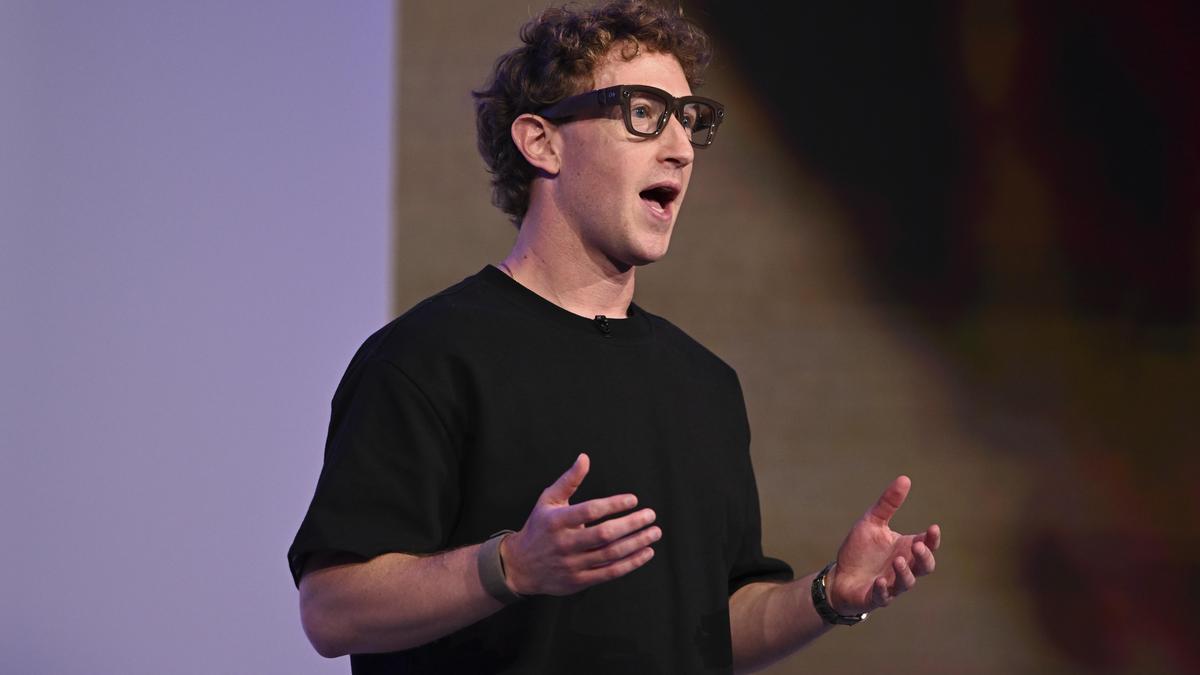
Jim Cramer paces the studio floor, hands gesturing wildly, voice reaching that familiar, frenetic crescendo. He is talking about Equinix. On the screen, numbers flash, tickers scroll, and the phrase "a great way to play the data center" hangs in the air. To the casual viewer flipping channels on a Tuesday evening, it sounds like standard Wall Street jargon. It sounds like cold math, real estate trusts, and server racks.
They are missing the entire point.
When we talk about data centers, we tend to picture something sterile. We imagine endless corridors of humming gray boxes, blinking blue LED lights, and industrial air conditioning units blasting freezing air into empty rooms. It feels detached from human life.
But it isn't. Every single beat of our modern existence passes through these quiet, monolith buildings.
Think about Sarah. She is a fictional composite, but her story happens ten thousand times a second. It is 3:14 AM in a quiet suburban hospital. Sarah is a neonatal nurse, her eyes burning from caffeine and exhaustion. She is monitoring a critically premature infant whose lungs are barely the size of walnuts. Suddenly, the baby's oxygen saturation dips. Sarah doesn't panic. She taps an iPad hooked to a central monitoring network.
Across the country, a specialized pediatric cardiologist is woken by a distinctive chime on his phone. He opens an app, views a high-definition, real-time stream of the infant’s vitals, and authorizes a medication adjustment. The baby stabilizes. Sarah breathes.
That entire interaction—the life-saving data, the instantaneous video, the security protocol preventing a catastrophic data breach—did not happen in the cloud. The cloud is a myth, a clever marketing term designed to make us think our digital lives float effortlessly in the sky.
It happened on earth. Specifically, it happened inside a physical fortress owned by a company like Equinix.
The Geography of a Digital Heartbeat
We have been conditioned to believe that distance no longer matters. We think the internet is instantaneous. It feels that way when you double-tap a photo or stream a movie.
It is an illusion.
Information travels down fiber-optic cables at the speed of light. But light, fast as it is, still takes time to travel. If a financial trader in Chicago wants to buy a stock listed on an exchange in New York, those milliseconds of travel time are everything. Millions of dollars can vanish in the blink of an eye if the data has to travel too far.
This is where the concept of "co-location" comes in. It sounds dry. It sounds like corporate real estate lease agreements. But consider what it actually means.
Imagine a massive international airport. If every airline had its own separate airport miles apart from the others, transferring from a domestic flight to an international one would be a nightmare. You would have to gather your luggage, hail a cab, fight through traffic, and re-check your bags.
Equinix builds the ultimate airport terminal for data.
Instead of forcing Amazon, Google, banks, telecom companies, and healthcare providers to build their own separate networks and try to connect them across thousands of miles, Equinix pulls them all into the same room. They call these facilities International Business Exchange centers. Inside these walls, a wire running from an Amazon server rack can plug directly into a wire owned by AT&T.
The distance isn't measured in miles anymore. It is measured in inches.
When you eliminate the distance, you eliminate the friction. That is what Jim Cramer meant, stripped of the cable news theatricality. Equinix isn't just selling space to put computers. They are selling the intersections where the modern economy meets.
The Unseen Stakes of Our Daily Routine
Let’s be vulnerable for a moment. Most of us don't want to think about infrastructure. It’s boring. We want our phones to work, our bank accounts to update, and our favorite shows to stream without that agonizing little loading wheel spinning in the center of the screen.
We only notice infrastructure when it breaks.
A few years ago, I visited one of these massive data hubs. Walking up to the building felt less like entering a tech company and more like approaching a nuclear power plant or a central bank currency vault. Ballistic glass. Biometric hand scanners. Kinetic fences designed to stop a speeding truck.
Inside, the noise hits you first. It isn't a roar; it is a deep, physical vibration. A collective hum of millions of microprocessors calculating the trajectory of human life.
I stood in a row where one side belonged to a massive global bank and the other belonged to a major cloud provider. A yellow fiber-optic cable bridged the gap between them, slung neatly through an overhead tray.
That cable was handling billions of dollars in transactions. If it severed, markets would stumble. If the power failed, chaos would ripple outward through automated supply chains, grounded flights, and dark smartphone screens.
But it doesn't fail.
The engineering required to keep these places alive is terrifyingly complex. They utilize massive rotary uninterruptible power supplies—giant flywheels spinning constantly in a vacuum, ready to instantly provide power to the entire facility if the main electrical grid drops for even a fraction of a second, long enough for rows of diesel generators the size of locomotives to roar to life.
It is easy to look at the stock price of a company like Equinix and see a line on a graph. It is harder, but far more important, to see the sheer human ingenuity required to keep that line moving sideways without a dip.
The AI Gold Rush Needs Shovels
There is a frantic energy in the world right now. Everyone is chasing artificial intelligence. Companies are pouring billions into large language models, neural networks, and automated systems that promise to rewrite how we write, work, and think.
But a brain cannot function without a skull to protect it and blood to feed it.
Artificial intelligence requires an astronomical amount of computational power. It drinks electricity and breathes heat. A single AI query can use ten times the energy of a standard Google search. The chips required to process these models run so hot they can melt if the cooling systems fail for a minute.
Suddenly, the boring business of data centers becomes the most critical bottleneck in human progress.
During the 1849 California Gold Rush, the people who made the most consistent fortunes weren't the miners panning for gold in the freezing rivers. Most of them went broke. The people who got rich were the ones selling the shovels, the pickaxes, and the sturdy denim jeans.
Equinix is the ultimate shovel salesman of the digital age.
It does not matter which AI startup wins the race. It does not matter if one tech giant’s chatbot outperforms another’s. They all require the exact same thing: a physical home with massive power capacity, specialized liquid cooling architecture, and instant access to the global internet backbone.
Consider what happens next as these models grow. We are moving from text-based assistants to autonomous AI agents that negotiate deals, manage logistics, and monitor industrial plants in real time. The tolerance for lag drops to zero.
If an AI driverless truck is navigating a highway, it cannot wait half a second for a distant data center to process a hazard warning. The processing must happen at the "edge"—in data centers located right on the periphery of major cities, exactly where Equinix has spent decades acquiring prime real estate.
The Value of the Unspectacular
It is incredibly easy to be seduced by the shiny objects of technology. We love the product launches, the charismatic founders in hoodies, and the promises of changing the world.
But the real world is anchored by things that do not change.
We will always need to move data. We will always need that data to move faster today than it did yesterday. And as long as physics dictates that signals take time to travel across physical space, the companies that own the premium locations where those networks meet will hold the keys to the kingdom.
When you strip away the market volatility, the breathless commentary from television pundits, and the dizzying complexity of modern tech, you are left with something deeply human.
You are left with a global conversation. A conversation between a nurse and a doctor, a buyer and a seller, a mother and a son across an ocean.
We live our lives in the open, bathed in the glow of our screens, entirely unaware of the invisible spine supporting every step we take. It is a monument to human engineering that we are allowed to forget it exists at all. But every now and then, it is worth looking past the glass of our devices to appreciate the massive, humming fortresses that keep our world from flying apart.