The coffee in the ceramic mug didn't spill. It shivered.
It was a Tuesday afternoon in Mexico City, the kind of heavy, humid day where the air feels thick enough to chew. Elena was sitting at her kitchen table, staring at a spreadsheet, when she noticed the tiny, rhythmic concentric circles rippling across the surface of her black coffee. It was subtle. If she hadn't been resting her chin on her hand, eyes locked on the table, she would have missed it entirely.
Then came the sound. Not a crash, but a deep, sub-bass groan that seemed to travel upward through the soles of her shoes rather than through the air.
Before her conscious mind could process the vibration, her phone, resting face-up beside the computer, screamed. It wasn't her usual ringtone. It was a piercing, synthetic wail accompanied by a stark, full-screen message: Earthquake. Expect shaking. Drop, cover, and hold on.
She had exactly six seconds.
To someone who has never felt the earth turn liquid beneath their feet, six seconds sounds like nothing. It is the time it takes to tie a shoe, to pour a glass of water, to take two deep breaths. But in the brutal mathematics of seismic survival, six seconds is a lifetime. It is the razor-thin margin between being buried by a collapsing ceiling or crouching safely beneath a heavy oak table.
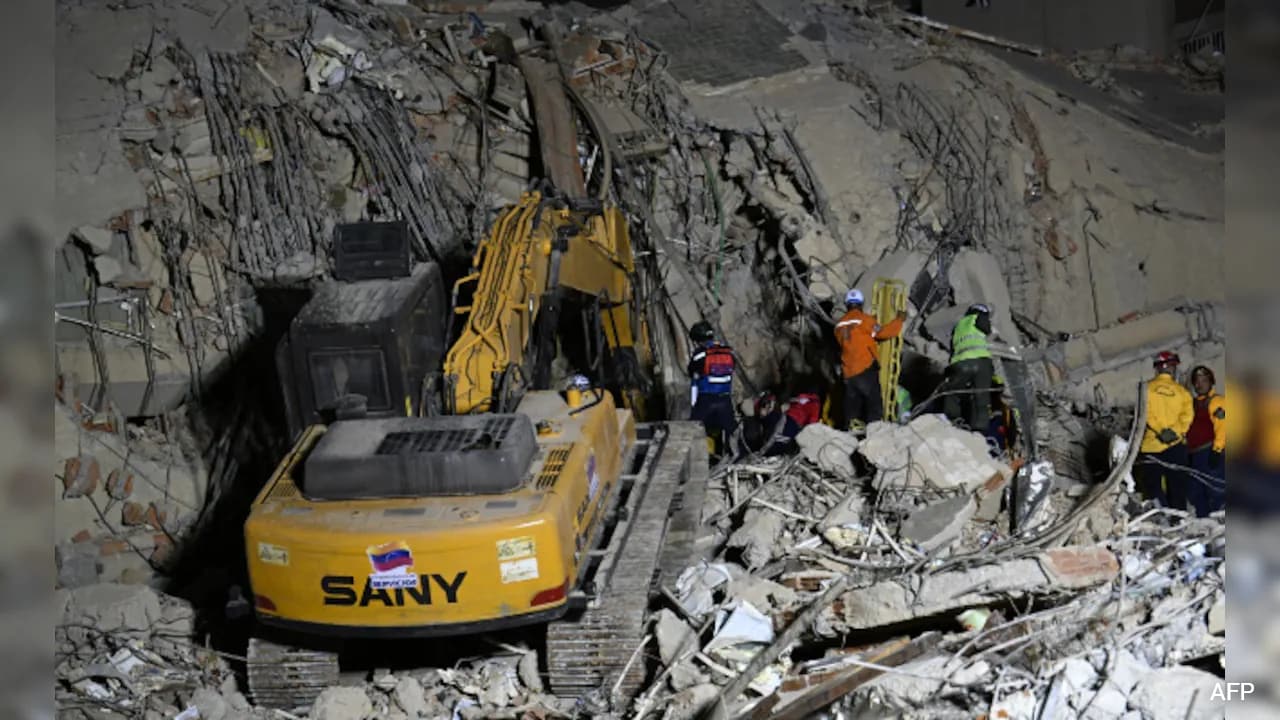
Elena dropped. She crawled. She held the table leg. When the violent, lateral violently swaying motion finally arrived, tearing plaster from the walls and shattering her kitchen windows, she was already protected.
Millions of people across the globe are experiencing this exact sequence of events. They are receiving a digital heads-up from the very device they use to scroll through social media or text their friends. This isn't magic, nor is it a prophecy. It is a brilliant, crowdsourced web of modern physics and software engineering working at the speed of light to outrun the shifting of tectonic plates.
The Two Voices of the Earth
To understand how your phone can predict the future, you have to understand how an earthquake actually travels.
When a fault line slips deep underground, it releases an immense amount of energy that radiates outward in waves. But this energy doesn't travel all at once. It splits into different types of vibrations.
First come the Primary waves, or P-waves. Think of these as the advance scouts. They are compressional waves, pushing and pulling the rock in the same direction the wave is moving, much like a sudden shove to a line of people standing in a queue. P-waves travel incredibly fast, ripping through the earth’s crust at speeds of several miles per second. Crucially, they don't do much damage. They are the quiet rumble, the sudden vibration that makes dogs bark seconds before humans realize anything is wrong.
Behind them come the Secondary waves, or S-waves. These are the monsters. S-waves move slower, but they shake the ground side-to-side, perpendicular to the direction of travel. They shear the earth, ripping foundations from their moorings, tearing down brick walls, and tossing vehicles across streets.
[Image of P-waves and S-waves traveling from an earthquake epicenter]
This speed gap between the harmless P-wave and the destructive S-wave is where technology finds its window of opportunity.
Imagine a massive car crash happening twenty miles down a highway. If a driver at the scene immediately calls a friend twenty miles away to warn them, that phone call travels via radio waves at the speed of light—roughly 186,000 miles per second. The physical traffic jam, moving at seventy miles per hour, will take a long time to reach that second friend.
The phone call outruns the crash. In the case of seismology, the digital alert outruns the destruction.
A Seismometer in Every Pocket
For decades, earthquake early warning systems were the exclusive domain of incredibly wealthy nations with the resources to build massive, state-of-the-art scientific infrastructure. Japan, Taiwan, and the west coast of the United States spent hundreds of millions of dollars planting highly sensitive traditional seismometers deep into the ground. These sensors are magnificent pieces of engineering, capable of detecting the slightest quiver in the bedrock.
When a traditional grid detects a P-wave, it instantly flashes a signal to a central data hub, which then broadcasts an alert through radio towers, television networks, and dedicated emergency sirens. This is the foundation of systems like ShakeAlert in California, Oregon, and Washington.
But what happens if you live in an earthquake-prone region that cannot afford a multi-million-dollar grid of underground sensors? What happens in parts of Peru, Greece, or Indonesia?
The answer was already sitting on nightstands, kitchen counters, and desks.
Inside almost every modern smartphone is a tiny, microscopic component called an accelerometer. It is a miniature electronic sensor designed to measure movement and orientation. It is the reason your phone knows to flip the screen from vertical to horizontal when you tilt it to watch a video. It is the mechanism that counts your steps during a walk.
As it turns out, these tiny sensors are also incredibly adept at detecting the distinct, high-frequency jolt of a P-wave.
Consider what happens next: a fault line slips. The ground directly above the epicenter violently jerks. Thousands of smartphones sitting on tables and chargers in the immediate vicinity feel that exact, simultaneous jolt.
Separately, a single phone moving might just mean someone dropped their device or tossed it onto a couch. The system ignores isolated movements. But if thousands of phones in the exact same neighborhood detect the precise signature of a P-wave at the exact same millisecond, the central cloud network recognizes the pattern.
It is a data-driven democracy of survival. The phones collectively scream: Earthquake.
The central system instantly calculates the origin point and the estimated magnitude. Within a fraction of a second, a digital warning is pushed outward to every phone located in the concentric circles surrounding the epicenter, traveling ahead of the slower, destructive S-waves.
The Logistics of Panic
Getting the data is only half the battle. The harder part is figuring out how to tell a human being that their world is about to shake without causing a stampede that inflicts more damage than the tremor itself.
Human psychology under stress is incredibly fragile. If an alert goes off with a gentle chirp, people ignore it. If it sounds like a nuclear strike warning, people might jump out of second-story windows or slam on their brakes in the middle of a high-speed freeway, causing massive pile-ups.
Engineers and behavioral scientists had to collaborate to build a system that commands immediate, calm action.
The alerts are tiered based on intensity. If the system calculates that your specific location will only experience light rattling—the kind that makes dishes clatter but doesn't threaten structural integrity—the phone sends a quiet notification. No loud alarms. No flashing lights. Just a simple note telling you what is happening so you don't panic when the floor starts to vibrate.
But if the system detects an earthquake of magnitude 4.5 or greater, and calculates that your area is about to get slammed by severe shaking, it bypasses all your settings. It doesn't matter if your phone is on silent, do not disturb, or turned down low. The screen turns bright red. The phone vibrates with a violent, unmistakable cadence. It emits a loud, jarring sound designed to cut through the noise of a crowded room or wake a deep sleeper from a heavy slumber.
The instructions on the screen are intentionally sparse. There are no long paragraphs. No technical jargon about magnitudes or epicenters. Just three simple directives: Drop. Cover. Hold on.
When the brain is suddenly flooded with cortisol and adrenaline, it loses the ability to process complex choices. It needs simple, binary commands.
The Vulnerability of Distance
The system is a triumph of human ingenuity, but it is not infallible. It has a cruel, mathematical limitation known as the "blind zone."
If you are standing directly on top of the fault line when it breaks, the P-waves and S-waves hit you at almost the exact same time. The local smartphones feel the shock, send the data to the cloud, and the cloud processes the alert—but by the time the signal bounces back down to the phones in that immediate zone, the destructive shaking is already occurring.
For those at the epicenter, the system provides zero warning.
But for those living ten, twenty, or fifty miles away, the benefits scale upward dramatically. The farther you are from the origin, the more time you have.
Distance from Epicenter | Approximate Warning Time
------------------------|--------------------------
0-5 miles               | 0 seconds (Blind Zone)
15 miles                | 3 to 5 seconds
30 miles                | 8 to 12 seconds
60 miles                | 20+ seconds
What can a society do with twenty seconds?
It is enough time for automated systems to shut down gas valves across an entire city, preventing the catastrophic fires that traditionally ravage urban areas after a major tremor. It is enough time for transit systems to automatically slow down high-speed trains, preventing horrific derailments. It is enough time for a surgeon to lift their scalpel away from a patient's vital organ, or for a factory worker to step away from heavy, unstable machinery.
A Silent Network
We live in an era where we often view our constant connectivity with a degree of cynicism. We worry about data privacy, the addictive nature of algorithms, and the way our screens draw us away from the physical world around us.
But beneath the surface of our daily digital distractions lies a silent, protective grid.
Every night, as millions of people plug their phones into chargers and drift off to sleep, those devices remain awake. They are listening to the earth. They are waiting for the telltale shudder of a planet in motion. They are connected to a global network of billions of other tiny sensors, all acting as an interconnected shield for humanity.
The next time you look at the smooth glass rectangle sitting on your desk, remember that it is more than a portal to the internet. It is a lifeline. It is an instrument of collective survival, waiting to give you those precious, fleeting seconds that change everything.