Two hundred feet.
If you stand on the edge of a twenty-story roof in downtown Miami and look straight down at the cars moving like beetles along the asphalt, that is two hundred feet. If you look up at a mature coastal pine tree and stack four of them end-to-end into the humid Florida sky, that is two hundred feet. In the world of everyday human perception, it feels dizzying, exposed, and impossibly high above the solid earth.
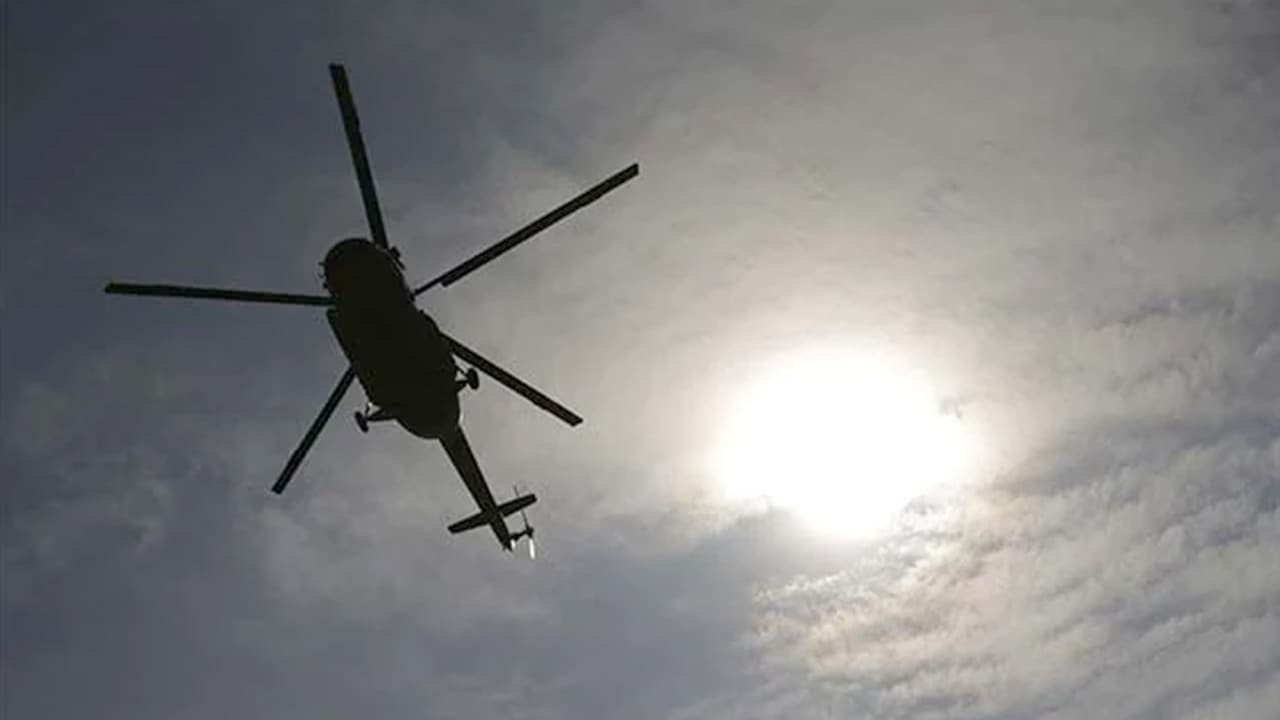
Inside the bubble canopy of a light utility helicopter cruising at ninety knots, two hundred feet is practically scraping the grass.
When federal aviation investigators released their preliminary findings on the fatal Florida helicopter crash that claimed one life, the headline writers seized on a single, arresting word from the witness statements and radar data. The aircraft, the report noted, had been flying "extremely" low just before impact. To the casual reader scrolling past the news on a Tuesday morning, that phrase reads like an open-and-shut verdict of recklessness. It conjures images of a hotshot pilot buzzing palm trees, showing off for friends, or tempting fate for an adrenaline rush.
That reaction is comforting because it lets us believe disasters only happen to people who ask for them. The truth of low-altitude aviation is far quieter, far more seductive, and infinitely harder to spot before the rotor blades strike the earth.
The Seduction of the Deck
Anyone who has ever sat in the left seat of a small rotorcraft over the Florida peninsula knows the peculiar magic of flying low. Up at three thousand feet, the state flattens into a monotonous circuit board of retention ponds, sprawling subdivisions, and endless sawgrass. You are detached from the world, suspended in a vibrating capsule of noise and forced air, watching a map unroll beneath your boots.
Drop down to three hundred feet, and the world wakes up.
Suddenly, you can see the wake of a manatee cutting through a brackish canal. You can read the wake patterns on the Intracoastal Waterway, feel the warm thermal bumps rising off sun-baked asphalt parking lots, and sense your actual speed against the blur of Australian pines and power lines. Unlike fixed-wing airplanes, which require long runways and high forward speeds to keep air flowing over their wings, helicopters were invented specifically to inhabit this lower tier of the atmosphere. They exist to hover over construction sites, inspect transmission lines, dust crops, ferry tourists along coastlines, and land in clearings no wider than a suburban driveway.
Because helicopters belong near the ground, the boundary between "operational" and "fatal" becomes dangerously elastic.
Think of a helicopter's altitude not as a simple measurement of height, but as a bank account filled with time. Every hundred feet between the skids and the ground represents roughly two to three seconds of reaction window if something goes catastrophically wrong. At two thousand feet, a sudden engine failure is a stressful, demanding emergency, yet a trained pilot has twenty or thirty seconds to lower the collective pitch, establish an autorotation glide, spot a clear field, align into the wind, and cushion the touchdown.
Down at one hundred and fifty feet, that bank account is nearly empty. You do not have twenty seconds. You have three.
Inside the Dead Man's Curve
To understand why "extremely low" flight turns routine moments into tragedies, you have to understand a piece of aerodynamic physics that helicopter pilots literally call the Dead Man's Curve. In official flight manuals, it wears a more polite name—the Height-Velocity Diagram—but every student pilot learns its grim nickname during their first week of ground school.
Imagine driving a car at seventy miles per hour down a narrow mountain road with no guardrails and a brick wall fifty feet ahead, except your brakes take four full seconds to engage once you press the pedal. That is the mathematical reality of operating inside the shaded region of a helicopter's Height-Velocity chart.
A helicopter stays aloft by spinning curved airfoils—its main rotor blades—through the air at high speed. Those blades carry rotational inertia, much like a heavy flywheel. If the engine quits suddenly, the pilot must immediately drop the collective lever on their left side, flattening the angle of the blades so the upward rush of air keeps them spinning as the aircraft descends. Once the helicopter nears the ground, the pilot pulls up on that same lever, converting the stored rotational energy of the spinning blades into one final burst of lift to slow the descent before the skids touch dirt.
That life-saving trade requires two things: altitude to build downward airflow, or forward airspeed to keep air moving horizontally across the rotor disc. If a helicopter is flying both very low and relatively slow—or flying low at high speed with obstacles directly ahead—neither safety net exists. If the engine sputters, or a tail rotor loses effectiveness, or a sudden downdraft pushes the aircraft toward the canopy, the blades run out of energy before the ground arrives.
Physics does not negotiate. It does not care whether the pilot has ten thousand hours of flight time or fifty.
A Hypothetical Afternoon Over the Marsh
To see how easily a flight drifts into that unforgiving margin without anyone aboard realizing they are in danger, consider a composite scenario drawn from dozens of National Transportation Safety Board investigations across the Gulf Coast. Let us call our pilot David, a seasoned commercial aviator with a clean record, flying a routine afternoon positioning leg across central Florida.
David is not performing aerobatics. He is not trying to impress anyone.
The afternoon sky is heavy with typical Florida summer buildup—towering cumulus clouds to the east, a lowering ceiling of scattered haze to the west, and humid, sluggish air that robs a piston or small turbine engine of roughly ten percent of its crisp sea-level power. Ahead of him, a localized rain shaft curtains off the horizon, pushing the cloud base down toward six hundred feet.
Under Federal Aviation Administration rules, helicopters occupy a unique legal gray zone compared to airplanes. While fixed-wing pilots generally must stay at least five hundred feet away from people, vessels, vehicles, and structures in uncongested areas, federal regulations allow helicopters to operate below those minimums—provided the operation is conducted without hazard to persons or property on the surface, and the pilot can execute an emergency landing without undue risk.
That rule relies entirely on human judgment in real time.
As David approaches the lowering cloud ceiling, he eases the cyclic stick slightly forward and lowers the collective a fraction of an inch. He drops from seven hundred feet to four hundred feet to stay clear of the mist. Five minutes later, chasing better visibility beneath a darker shelf of cloud, he eases down to two hundred and fifty feet. His eyes are outside the cockpit, scanning for radio towers and weather, while the subtle shift in his peripheral vision makes two hundred feet feel completely normal.
Human eyes are terrible altimeters. Without clear vertical reference points—like buildings of known height—our brains struggle to distinguish between three hundred feet and one hundred feet over flat terrain, marshes, or glassy water. Over flat Florida wetlands, depth perception quietly dissolves.
Then comes the invisible wall.
The Unseen Hazards of the Lower Atmosphere
At low altitude, the threat is rarely just the ground itself; it is everything humans have strung above it. Across Florida's sprawling agricultural belts, coastal corridors, and rural highways, utility companies maintain tens of thousands of miles of high-tension transmission lines and guy-wired meteorological towers.
From the air, a steel cable half an inch thick is virtually invisible until you are close enough to see the sun glint off its braided strands. Pilots are trained to look not for the wires themselves, which disappear against green foliage and dark canal water, but for the wooden poles or steel lattice towers supporting them. Yet in flat, overgrown terrain, poles hide behind tree lines, and single-span distribution wires cross narrow rivers and back roads with almost no visual warning.
Alongside the physical clutter sits an invisible meteorological trap. Near the surface, wind does not flow smoothly. It tumbles over tree lines, curls behind buildings, and drops abruptly in the lee of wooded ridges. A helicopter flying at eighty knots into a fifteen-knot headwind is enjoying healthy airflow across its rotor system. If the aircraft turns downwind or passes behind a dense stand of pines, that headwind vanishes in a heartbeat. The helicopter experiences a sudden loss of translational lift—the aerodynamic bonus a rotorcraft gets from moving forward through clean air—and begins to sink rapidly just as the ground rises to meet it.
To arrest that sudden sink, the pilot instinctively pulls up on the collective lever, demanding more bite from the rotor blades. In hot, humid air near sea level, an engine already working near its temperature limits may not have enough reserve torque to answer the call. Instead of climbing, the rotor blades slow down. Once rotor RPM decays below a critical threshold, the blades cone upward like an umbrella turning inside out in a gale.
Recovery becomes mathematically impossible.
The Anatomy of an Investigation
When a helicopter goes down in these conditions, the aftermath rarely leaves behind the neat, intact fuselage seen in dramatic movie crash landings. Low-altitude impacts happen fast, often at high forward speeds or steep bank angles after a last-second evasive maneuver to clear a wire, a tree, or a sudden loss of lift.
Investigators arriving at a crash site in thick Florida scrub or marshland work backward through shredded aluminum, fractured carbon-fiber blades, and the silence of a stopped engine. They examine the twist of the rotor mast to determine whether the engine was producing power at the moment of impact. They inspect the tail rotor drive shaft for torsional fractures. They pull data from handheld GPS units, smartphones, ADS-B ground receivers, and nearby security cameras to reconstruct the final sixty seconds of flight path down to the second.
When the preliminary report emerges weeks later with that clinical observation—that the helicopter was flying "extremely" low—it captures the final symptom without always conveying the quiet chain of decisions that preceded it.
In aviation safety circles, there is an old axiom that a superior pilot uses their superior judgment to avoid situations that require the use of their superior skill. Yet the culture of low-level utility and recreational helicopter flying constantly nudges pilots toward the edge of that envelope. Customers want closer aerial photographs. Tour routes hug shorelines to give passengers better views. Weather pushes ceilings down, and rather than turning back toward an airport twenty miles behind them, pilots press on beneath the clouds, trading altitude for forward progress one fifty-foot increment at a time.
Each small descent feels harmless because nothing bad happens at four hundred feet. Nothing bad happens at three hundred feet. Nothing bad happens at two hundred feet. In behavioral psychology, this is known as the normalization of deviance—the gradual acceptance of lower safety margins simply because the worst-case scenario has not yet collected its debt.
What the Report Leaves Behind
It is easy to read a brief news wire about a fatal crash, absorb the headline about low altitude, and move on to the next story. News cycles are built for compression; they turn complex human lives and intricate physical failures into two-sentence summaries.
Behind every preliminary NTSB report, however, sits an empty hangar space, a family trying to comprehend how an ordinary flight ended in seconds, and a sobering lesson written into the rules of the sky. Aviation safety regulations—every altitude floor, every visibility minimum, every caution printed in bold red ink inside a flight manual—are often described by pilots as rules written in blood. None of those rules were invented by bureaucrats sitting in windowless offices looking to spoil the joy of flight. Each one exists because someone before us pushed a machine into a corner where airspeed, altitude, and physics ran out at the exact same moment.
A helicopter hovering effortlessly ten feet above a helipad looks like a triumph over gravity, a machine that has tamed the sky so completely that height no longer matters. That illusion is its greatest danger. Gravity never takes a break, never loosens its grip, and never forgives a pilot who forgets that the thin cushion of air beneath the skids is the only thing keeping the machine alive.