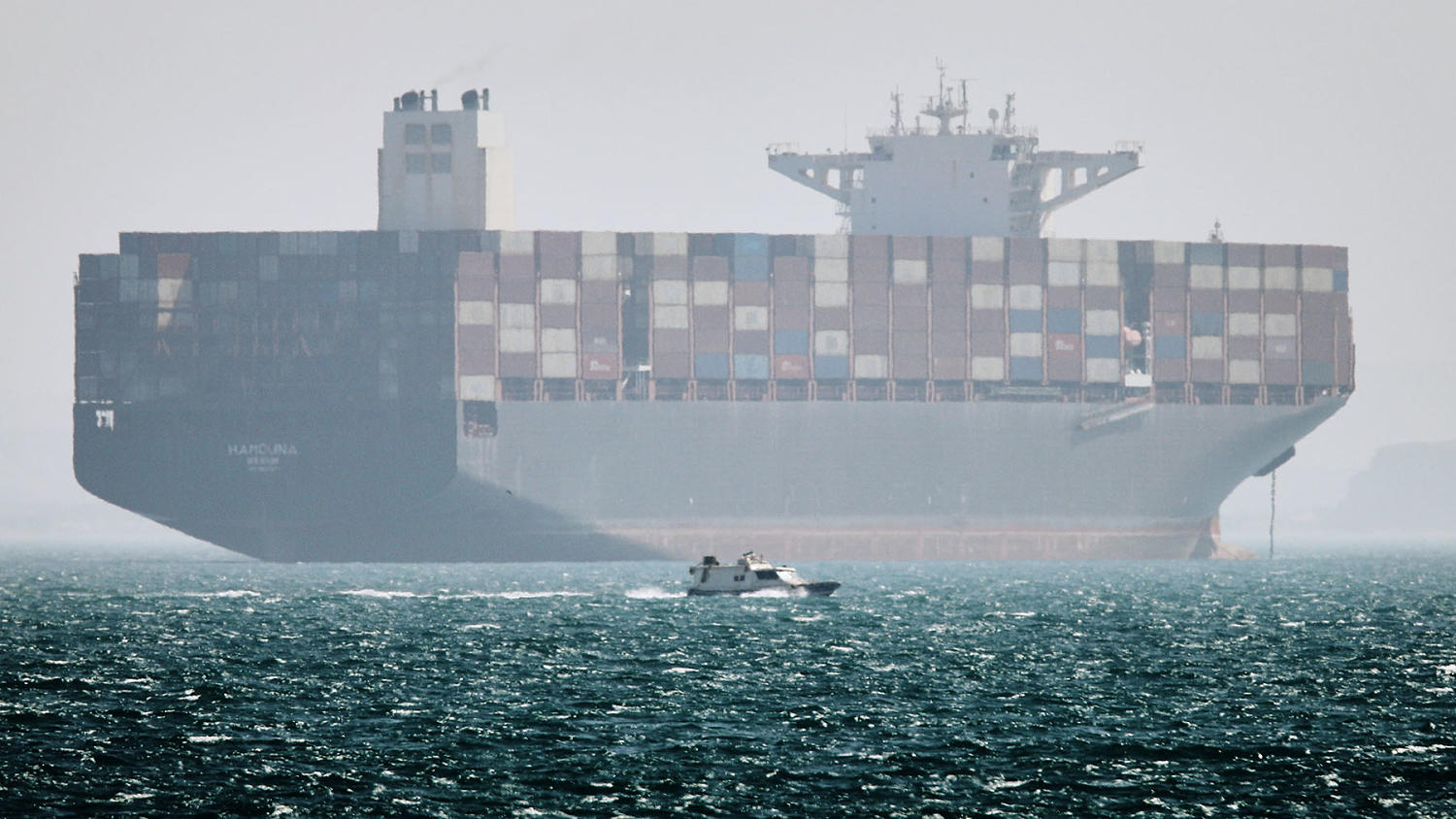
The Strait of Hormuz is not a light switch. You cannot simply flick it back on once the geopolitical currents settle. While market analysts often talk about "reopening" the strait as if it were a cleared highway, the reality on the water is a grinding, multi-layered logistical nightmare that could keep global energy markets in a stranglehold for months after a conflict ends.
At its narrowest point, the shipping lanes in the strait are only two miles wide. Through this needle’s eye passes roughly 21 million barrels of oil per day, representing about 20% of global liquid petroleum consumption. When this artery clogs, the world bleeds. But the delay in "rebooting" this passage isn't just about clearing sunken hulls or sweeping for mines; it is about the total collapse of maritime trust, the explosion of insurance premiums, and a backlog of tankers that would stretch across the horizon.
The Phantom Menace of Subsurface Warfare
The primary reason a restart takes so long is the sheer terror of what might be lurking beneath the surface. Modern naval mines are not the spiked iron balls of the world wars. They are sophisticated, acoustic-triggered, or pressure-sensitive devices that can lie dormant in the silt for years.
Clearing these is a slow, agonizing process. Mine Countermeasures (MCM) vessels move at a crawl. They use sonar to map every rock and soda can on the seafloor. If a conflict occurs, every "new" object must be investigated as a potential lethal threat. Even with autonomous underwater vehicles (AUVs), the math remains grim. A single square mile can take days to fully certify as safe. Multiply that by the essential transit zones of the strait, and you are looking at weeks of "quiet time" required before a single commercial VLCC (Very Large Crude Carrier) will risk its hull.
No captain is going to sail a $100 million vessel carrying $200 million in cargo into a zone that is only 90% clear. In the shipping industry, 90% might as well be 0%.
The Insurance Wall and the Death of Risk Appetite
Even if the US Navy or a regional coalition declares the waters "safe," the bean counters in London have the final say. The Joint War Committee (JWC) of the Lloyd’s Market Association dictates the "listed areas" where additional insurance premiums apply.
During a crisis, these premiums don't just rise; they verticalize. We have seen instances where "war risk" surcharges added hundreds of thousands of dollars to a single seven-day voyage. For the strait to reboot, these underwriters need to see a sustained period of zero-incident stability. They operate on data, not promises from defense departments.
The financial friction alone acts as a secondary blockade. Small and mid-sized operators are priced out immediately. Only the state-owned giants or the most desperate speculators remain. This thins the fleet available to move the massive backlog of crude sitting in Gulf storage facilities.
The Physical Logjam of the Tanker Fleet
Logistics is a game of momentum. When the strait stops, the entire global supply chain experiences a cardiac arrest.
Tankers are currently optimized for "just-in-time" delivery. There is very little slack in the system. If the strait closes for even ten days, you have a pileup of over 100 massive tankers waiting outside the Gulf of Oman and another hundred trapped inside the Persian Gulf.
The Loading Headache
Once the "all clear" is given, you cannot simply have 100 ships rush the gates. Loading terminals in Ras Tanura or Umm Said have finite capacities. The scheduling algorithms used by port authorities are designed for steady flow, not a frantic surge.
- Berth availability: Each ship takes 24 to 48 hours to load.
- Draft restrictions: Loaded tankers must navigate specific deep-water channels, further slowing the exit.
- Tugboat shortages: The specialized vessels required to move these behemoths will be overworked and spread thin.
Imagine a stadium where everyone tries to leave through one exit at the exact same time. Now imagine those people are 1,000-foot-long steel islands filled with flammable liquid. The congestion alone creates a physical bottleneck that can take a month to unwind.
The Geopolitical Hangover
The Strait of Hormuz is surrounded by a neighborhood that does not forget grievances quickly. A "reboot" requires cooperation between the coastal states—Oman, Iran, and the UAE.
Even in a post-conflict scenario, the technical cooperation required for Vessel Traffic Service (VTS) is immense. The two-mile-wide transit lanes rely on radar handoffs and radio communication. If the diplomatic ties are frayed or the physical infrastructure on the Iranian coast is damaged, the safety of navigation is compromised.
There is also the "Return to Normal" psychological barrier. Crew members are human. After a period of kinetic activity—missile strikes, drone swarms, or boardings—mariners are hesitant to sign onto contracts that take them through the Musandam Peninsula. Manning agencies will struggle to find crews willing to sail the "Graveyard of Ships" until the memory of the last explosion fades.
The Myth of the Pipeline Bypass
Critics often point to the various pipelines across Saudi Arabia and the UAE as a solution. They argue these pipes make the strait less relevant.
They are wrong.
While the East-West Pipeline in Saudi Arabia and the ADCOP line in Abu Dhabi can move a combined 6 or 7 million barrels per day, that still leaves 15 million barrels with no way out but the water. Furthermore, these pipelines have their own vulnerabilities. They are static targets for sabotage and require massive pumping stations that are difficult to repair if targeted.
The world’s energy security is still tethered to the water. There is no "Plan B" that doesn't involve a massive hit to the global GDP.
The Technical Debt of Idle Refineries
The impact of a Hormuz shutdown travels thousands of miles to refineries in South Korea, Japan, and the United States. These facilities are tuned to specific grades of crude.
If the supply of Arabian Light or Upper Zakum is cut off for several weeks, refineries must either find a comparable "sweet" or "sour" substitute—which is expensive and difficult—or they must throttle down. Restarting a refinery is not like starting a car. It is a dangerous, chemically intensive process that can take weeks to reach optimal efficiency.
By the time the tankers finally clear the strait and reach their destinations in Asia or the Gulf Coast, the refineries may already be in a state of "cold standby." This delay adds another layer of lag to the global energy reboot. The oil might be moving again, but the gasoline and jet fuel aren't being produced yet.
The Real Cost of a "Short" Interruption
If a hypothetical conflict lasted only 72 hours, the market ripples would last 72 days.
- Day 1-3: Total panic. Brent crude spikes $20-$30.
- Day 4-14: Mine sweeping operations. Zero commercial movement.
- Day 15-30: "Test" transits with heavy naval escort. High insurance premiums.
- Day 31-60: Clearing the backlog of ships. Global pump prices remain high due to refinery lag.
The math of maritime logistics is unforgiving. We have built a world that relies on the frictionless movement of goods through a channel that is inherently prone to friction. Every year, the ships get larger and the margins for error get smaller.
The strait is a bottleneck not because of its geography, but because of our global dependence on it. Until the energy mix shifts fundamentally away from the Gulf, we are all essentially passengers on a tanker moving through a dark room, hoping the floor remains clear of obstacles we can't see until it's too late.


