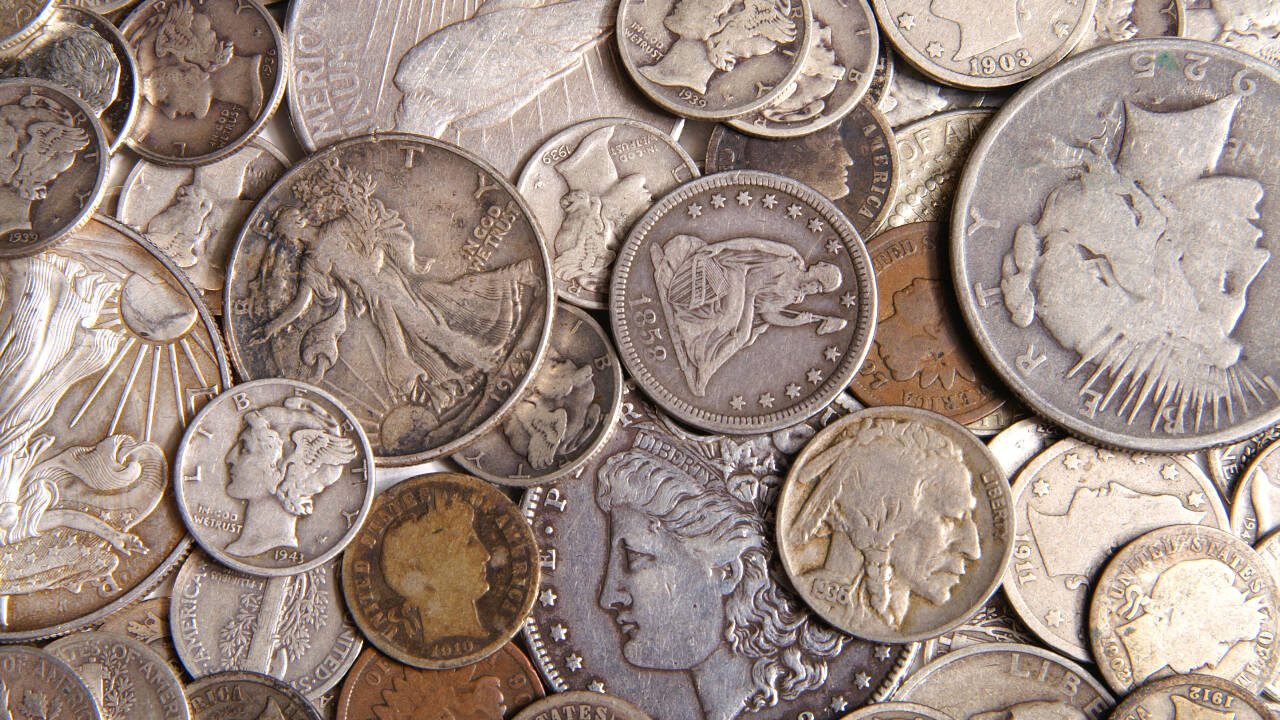
Fifteen silver coins sat in the dirt, and Oliver Riedl made a choice most treasure hunters fail to make: he stopped digging and called the state. That restraint near Wesseling, south of Cologne, unlocked a cache of 934 Roman silver denarii—roughly 6.8 pounds of silver and the largest known hoard from Emperor Hadrian's reign ever recovered in Germany.
Surface-level coverage treats this discovery like a fairy tale about luck and buried loot. It isn't. A hoard of 934 denarii spanning nearly three centuries—from a Roman Republican coin struck around 148 BC to issues from Hadrian's reign around 124 or 125 AD—is a forensic ledger of frontier economics, military payrolls, and a property system that left savers with zero institutional safety nets.
The Restraint That Saved the Context
Anyone who has covered archaeology long enough knows how easily a major find gets ruined before the first trowel hits the soil. A hobbyist gets a strong signal, pulls out a handful of coins, panics about laws or buyers, and turns a stratified archaeological deposit into a jumbled bucket of metal.
Riedl was searching legally with official permission. Once the first 15 denarii came out and his detector kept singing, he read the room—or rather, the soil—and notified the LVR Office for Archaeological Heritage Management in the Rhineland. Heritage specialists from the Nideggen branch stepped in, lifted the remaining deposit as a block of earth, and X-rayed it at the LVR-LandesMuseum Bonn restoration workshop.
That decision mattered because centuries of plowing had already cracked the original clay container and scattered pieces through the topsoil. Excavating the block and analyzing residue—including fragments of a clay pot and traces of straw lining—preserved physical clues that loose digging would have smeared away.
- Stratigraphy over speed: Lifting soil blocks allows conservators to map coin clusters, organic traces, and container fragments before cleaning.
- Legal alignment: Searching with permission and reporting immediately turns a private windfall into verified provenance, which determines whether a hoard can be researched seriously or disappears into grey-market auctions.
- Institutional friction remains: Even when a detectorist follows every rule, tension persists across Europe between state heritage laws, landowner rights, and hobbyists who worry that reporting means forfeiting financial upside.
Why a Frontier Fortune Held 270-Year-Old Silver
Most readers assume ancient people spent coins as soon as they got them, the way modern shoppers swipe a card and forget the transaction. A hoard stretching from 148 BC to the second quarter of the second century AD proves how slow and selective money circulation could be along a militarized border.
By the early second century AD, the Rhine frontier formed the backbone of Roman Lower Germany, anchored by urban hubs like Cologne and military bases such as the legionary fortress at Bonn. Silver denarii moved through trade, estates, and pay chests, and older Republican and Flavian pieces—including coins from the Flavian dynasty of AD 69 to 96—remained trusted units of account long after newer emperors sat on the throne.
Think of it like a modern safe containing crisp new bills mixed with decades-old silver certificates and heavy bullion held because people trust the metal and the purchasing power behind it. In an economy without deposit insurance, central banks, or electronic ledgers, silver was wealth you could hold in your hand—and hide when trouble felt close.
A hoard is never just a pile of money; it is a freeze-frame of trust, fear, and unfinished business.
Researchers at the Rhineland heritage office noted that a typical legionary earned around 300 denarii a year, with roughly half of that gross pay deducted for food and equipment. Depending on whether you measure against gross pay or net savings, 934 denarii represents roughly three years of gross soldier wages or six or more years of disciplined saving.
| Metric or Era | Recorded Detail | Why It Matters |
|---|---|---|
| Total Count | 934 Roman silver denarii (~3.1 kg / 6.8 lbs) | Largest Hadrian-era coin hoard known in Germany; fifth largest worldwide from that period |
| Earliest Coin | Circa 148 BC (Roman Republic) | Over two and a half centuries old when buried in the second century AD |
| Latest Coins | Circa AD 124–125 (Emperor Hadrian) | Sets a hard terminus post quem—burial could not have happened before the mid-120s AD |
| Dominant Era | Flavian dynasty (AD 69–96) | Shows how heavily mid-to-late first-century silver circulated in the Rhineland |
| Container Clues | Clay pot fragments and straw padding | Indicates deliberate, padded storage underground rather than accidental loss |
The Trap of Romanticizing Every Hoard
Competitor stories love declaring that a buried cache belonged to a retiring soldier or a fleeing merchant. Honest historians push back on that certainty because the ground rarely signs a receipt.
Yes, the proximity to Cologne, Bonn, and the Lower German frontier makes a military or frontier-supply connection plausible. It is equally plausible that the owner worked a rural estate, ran trade or craft operations, or accumulated savings over years—say, as a hypothetical estate manager setting aside silver from seasonal harvests before dying suddenly without telling a soul.
There is also a deeper analytical flaw in how people read hoards: survivorship bias. We see the fortunes that were never dug back up, which makes ancient life look like an endless parade of lost treasures. In reality, most people who buried pots of silver probably retrieved them when the threat passed or when they needed cash; the ones left behind are the exceptions where illness, violence, debt, or sudden death broke the chain of memory.
What This Find Changes for Heritage Policy
If you care about archaeological preservation rather than armchair romance, the Wesseling hoard is a case study in incentives. Laws alone do not stop looting when a single rare coin can tempt someone into silence; clear permitting, respectful treatment of finders, and public recognition do far more to bring material into museums.
When an amateur detectorist calls specialists after 15 coins instead of racing to clear the hole, science gets the full dataset—the straw, the pot shards, the spatial distribution, and the exact coin mix. Heritage agencies that treat vetted detectorists as eyes on the ground rather than automatic suspects get better archaeology, while detectorists who document locations and stop when a cluster appears protect the very history they claim to love.
Look at the coins on display in Bonn and you are staring at almost two millennia of unspent caution. Someone packed silver into straw inside a clay pot, lowered it into Rhineland soil, and walked away expecting to come back. They never did, and 934 silver arguments for patience ended up waiting for a detectorist who knew when to put the shovel down.