A Hong Kong taxi driver was arrested on suspicion of dangerous driving after his cab struck two British nationals on a busy street in Wan Chai, sending both pedestrians to the hospital and reigniting urgent questions about road safety in the city's commercial core. Police took the driver into custody at the scene following the collision, which occurred in a district notorious for dense foot traffic, narrow carriageways, and late-night congestion. While local authorities have opened a formal investigation into the exact mechanics of the crash, the incident exposes a much deeper structural problem within Hong Kong's iconic red-taxi industry—one defined by an aging workforce, grueling shift structures, and an infrastructure struggling to separate vehicles from pedestrians.
To understand how two visitors ended up on the asphalt in one of Asia's most tightly regulated cities, you have to look beyond the police blotter. Traffic collisions in Wan Chai rarely happen in a vacuum. They are almost always the result of predictable friction points where high-volume vehicular transit meets unyielding urban density. Meanwhile, you can explore similar events here: The Flawed Logic Behind Trading Donbas for a NATO Seat.
The Anatomy of a Wan Chai Collision
Wan Chai is a study in urban compression. During daylight hours, its arteries—Hennessy Road, Johnston Road, Gloucester Road—serve as primary transit corridors for buses, trams, delivery vans, and thousands of taxis. By night, the blocks radiating off Lockhart and Jaffe Roads transform into one of Hong Kong's busiest entertainment zones, drawing tourists, expatriates, and local office workers onto sidewalks that were never designed for modern pedestrian volumes.
When a taxi strikes pedestrians in this environment, investigators immediately look at three variables: visibility, sightlines, and driver reaction time. To explore the complete picture, check out the recent article by NPR.
The physical layout of Wan Chai works against drivers. Double-parked delivery trucks frequently block outer lanes, forcing cabs to weave abruptly into adjacent traffic or hug the curb too closely. Tram tracks create uneven road surfaces that require constant micro-adjustments at the steering wheel, especially when wet. Add the visual clutter of neon signage, scaffolding from ongoing building maintenance, and pedestrians stepping off curbs between parked cars, and the margin for error shrinks to inches.
For visitors from the United Kingdom, there is also a subtle psychological trap. While both the UK and Hong Kong drive on the left side of the road—a legacy of British administration that theoretically reduces pedestrian confusion—the rhythm of Hong Kong traffic is markedly different. Vehicles accelerate aggressively into small gaps, and pedestrian crossings often feature staggered islands where traffic approaches from unexpected angles due to one-way street grids. A split-second miscalculation by a pedestrian stepping into a bus-only lane or a taxi lane can intersect fatally with a driver whose attention is divided.
Under Hong Kong's Road Traffic Ordinance, an arrest for dangerous driving is standard procedure when a collision results in significant injury, even before fault is definitively established in court. Police investigators reconstruct the scene using skid marks, vehicle telemetry, nearby CCTV footage, and dashcam recordings—which are nearly ubiquitous in Hong Kong commercial vehicles. The arrest preserves the legal chain of custody and allows officers to conduct breathalyzer and drug screenings, check licensing records, and inspect the mechanical condition of the cab.
The Demographic Time Bomb Behind the Wheel
Strip away the specifics of the Wan Chai incident, and a stark statistical reality emerges. Hong Kong's taxi industry is facing a severe demographic bottleneck that directly impacts road safety.
Decades ago, driving a taxi in Hong Kong was a lucrative, sought-after trade for young and middle-aged men. Today, the profession struggles to attract new entrants. Younger workers overwhelmingly reject the long hours, stagnant fare structures, and high vehicle rental costs, opting instead for logistics, gig-economy delivery, or service-sector jobs. As a result, the average age of a Hong Kong taxi driver has climbed steadily into the late fifties and early sixties, with a substantial portion of active drivers in their seventies and even eighties.
Age alone does not make a driver unsafe. Experience often compensates for slower reflexes. However, when advanced age is combined with the grueling economics of the Hong Kong cab trade, fatigue becomes a systemic hazard.
Most Hong Kong taxi drivers do not own their vehicles. They rent them on a shift basis—typically a 12-hour day shift or a 12-hour night shift—from fleet owners or taxi management companies. Because the daily rental fee is fixed regardless of how many fares the driver picks up, the financial pressure to stay on the road for the entire duration of the shift is immense.
Consider a hypothetical scenario that plays out every night across Hong Kong Island. A 68-year-old driver starts his shift at 5:00 PM. By 11:00 PM, after six hours of navigating stop-and-go traffic in Causeway Bay and Central, he has barely covered his vehicle rent and fuel costs. To turn a profit for the night, he pushes through the post-midnight rush in Wan Chai, his concentration dulled by six hours of continuous sensory overload, squinting against oncoming headlights and scanning the curbs for raised hands.
When an unexpected obstacle appears in front of the bumper under those conditions, human biology imposes hard limits. Reaction times lengthen. Peripheral awareness narrows. The mechanical act of moving a foot from the accelerator to the brake pedal takes fractions of a second longer than it would at the start of a shift. At 40 kilometers per hour, a half-second delay translates to more than five meters of uncontrolled forward momentum—easily the difference between a near-miss and a hospital admission.
Technology Gaps in an Iconic Fleet
Walk down any street in Wan Chai and you will notice that the vast majority of Hong Kong's taxis are variations of the same boxy Toyota Crown Comfort platform that has dominated the city's roads since the 1990s. While reliable and easy to repair, thousands of these older vehicles lack the active safety systems that have become standard on modern passenger cars over the past decade.
Modern Advanced Driver Assistance Systems (ADAS)—such as autonomous emergency braking, pedestrian detection radar, and blind-spot monitoring—are specifically engineered to mitigate the exact kind of urban collisions seen in Wan Chai. If a pedestrian steps into the path of a vehicle equipped with forward-collision mitigation, onboard sensors detect the heat signature and trajectory faster than the human eye can process them, automatically applying maximum braking force.
In Hong Kong, the transition to newer hybrid taxi models equipped with these safety suites has been slow and uneven. High upfront vehicle costs, combined with resistance from a fragmented ownership structure where taxi licenses are traded as speculative financial assets rather than operational tools, have kept aging vehicles in service far past their technological prime.
The government has introduced subsidies and regulatory incentives to encourage the adoption of newer, safer, and more accessible cabs, alongside trials for smart dashcams that monitor driver fatigue and lane departure. Yet rollout remains piecemeal. Until automated braking and pedestrian-detection sensors become mandatory across the entire commercial fleet, safety in districts like Wan Chai relies almost entirely on the unassisted eyesight and reflexes of overworked drivers.
The Regulatory Friction Between Cabs and Ride-Hailing
You cannot analyze any high-profile taxi incident in Hong Kong without addressing the elephant in the room: the long-running turf war between licensed taxis and app-based ride-hailing platforms.
For years, Hong Kong has maintained a strict regulatory posture against unlicensed ride-hailing services, protecting the value of roughly 18,000 government-issued taxi licenses. While this policy preserved the traditional fleet, it also insulated the industry from the competitive pressures that forced taxi operators in London, Singapore, and New York to modernize their fleets, upgrade driver training, and adopt strict digital accountability metrics.
In an app-based ecosystem, every trip is logged via GPS. Speeding, harsh braking, and excessive driving hours trigger automated warnings or temporary account suspensions. Drivers know that erratic behavior results in immediate financial penalties via customer ratings and platform algorithms.
Traditional street-hail taxis operate with far less continuous telemetry. While the Transport Department enforces periodic medical checks for older drivers—requiring annual physical examinations for commercial license holders aged 70 and above—these exams assess baseline health at a single point in time. They cannot measure exhaustion at the end of a double shift, nor can they curb the aggressive lane-changing habits bred by decades of competing for street hails in congested corridors.
Public frustration over service quality, refusal of hires, and driving standards has steadily eroded sympathy for the taxi trade. Every time a headline breaks involving a cab striking pedestrians in a central district, it fuels renewed calls from commuters, expatriate groups, and lawmakers for comprehensive regulatory reform—including mandatory digital monitoring, stricter age and health thresholds, and the legalization of regulated ride-hailing alternatives to ease the pressure on street-hail drivers.
Pedestrian Infrastructure and the Shared Blame of Urban Design
Focusing exclusively on the driver, however, misses half the equation. Urban planners and traffic engineers have long pointed out that Hong Kong's street design prioritizes vehicular throughput over pedestrian safety, particularly in older districts like Wan Chai.
Take a close look at the railings lining the sidewalks along Hennessy Road and Johnston Road. Hong Kong relies heavily on steel pedestrian barriers to channel foot traffic toward designated signalized crossings. In theory, these fences prevent jaywalking. In practice, they often create deadly traps.
When sidewalks become overcrowded—a daily occurrence in Wan Chai—pedestrians frequently spill onto the roadway outside the railings to bypass slow-moving crowds, walking with their backs to oncoming traffic with no way to step back onto the pavement if a vehicle swerves. Conversely, when pedestrians cross mid-block by squeezing through gaps in the railings left open for loading zones, they emerge suddenly from behind parked vans directly into active traffic lanes, completely obscured from an approaching driver's line of sight until the moment of impact.
Traffic light timing further compounds the risk. Many pedestrian crossings in Hong Kong feature brief green phases followed by long wait times, encouraging locals and tourists alike to dash across intersections during the flashing green interval or gamble on gaps in traffic. For visitors unfamiliar with local signal patterns, judging whether an approaching taxi intends to slow down for a zebra crossing or accelerate through an amber light is a dangerous guessing game.
The Transport Department has experimented with widening footpaths, installing low-speed zones, and deploying red-light projection systems on sidewalks to alert smartphone-distracted pedestrians. Yet these interventions remain localized. Across much of Wan Chai, the fundamental geometry of the street grid still forces high-speed commercial vehicles and dense crowds of pedestrians to share tight, unforgiving spaces with minimal physical buffering.
What Happens Next in the Investigation
Following the arrest in Wan Chai, the legal and administrative machinery moves along a predictable track. Police traffic units will analyze the digital footprint of the collision—pulling footage from nearby commercial buildings, municipal traffic cameras, and the taxi's internal recording devices.
In Hong Kong courts, prosecutions for dangerous driving causing grievous bodily harm carry severe penalties, including substantial fines, lengthy license disqualifications, and potential custodial sentences, depending on the degree of negligence proven. If investigators determine that the driver ran a red light, exceeded the speed limit, or was distracted by a mobile device—many Hong Kong cabbies famously mount three or four smartphones on their dashboards to monitor multiple dispatch apps simultaneously—prosecutors will pursue the strictest available charges.
Conversely, if forensic evidence shows that the pedestrians stepped abruptly into the roadway outside a designated crossing, leaving the driver with no physical possibility of stopping in time, the charge may be downgraded to careless driving or dropped entirely. Hong Kong law evaluates driver culpability based on the standard of a competent and careful driver; it does not impose automatic strict liability merely because a pedestrian was injured.
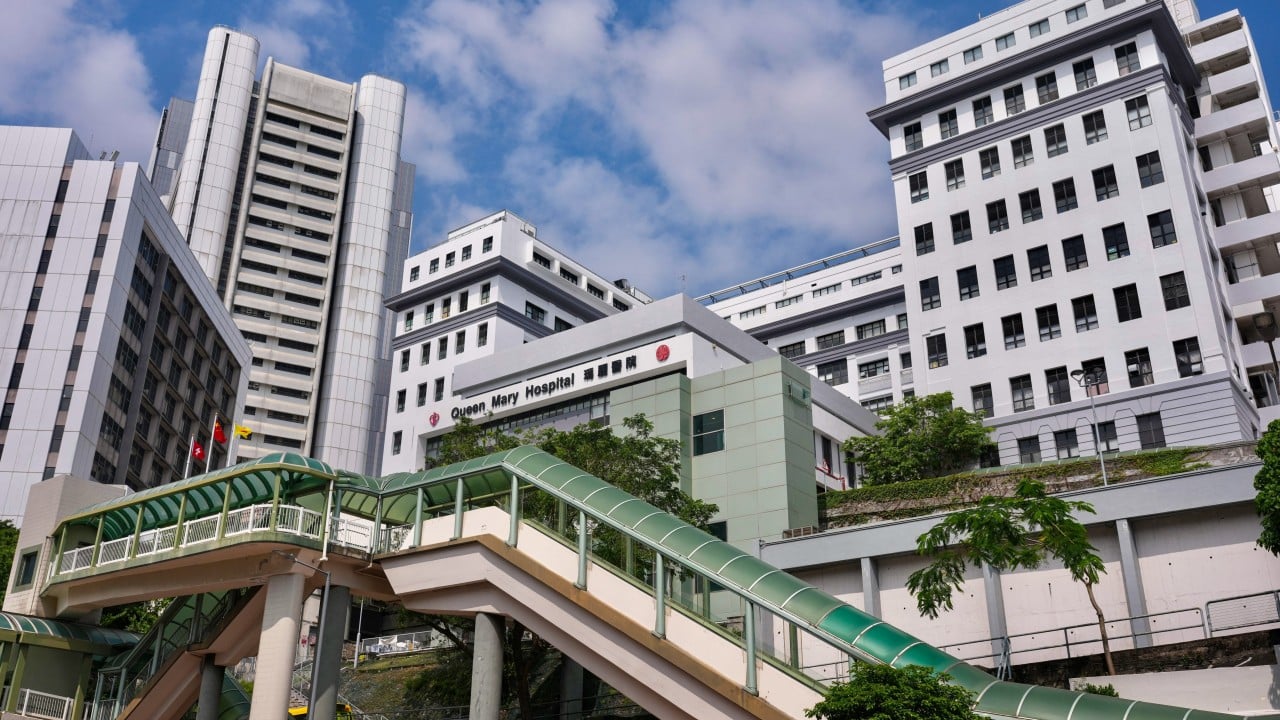
For the two injured Britons, the immediate aftermath involves navigating emergency medical care in Hong Kong's public hospital system—likely Ruttonjee Hospital, located just minutes from the crash site in Wan Chai—alongside consular support and insurance claims. For the city's transport authorities, however, the incident serves as another uncomfortable data point in a trend that refuses to go away.
Until Hong Kong confronts the interlocking realities of an aging driver pool, outdated vehicle safety hardware, and pedestrian-hostile street geometry, arrests on the streets of Wan Chai will remain a recurring headline rather than an isolated anomaly.