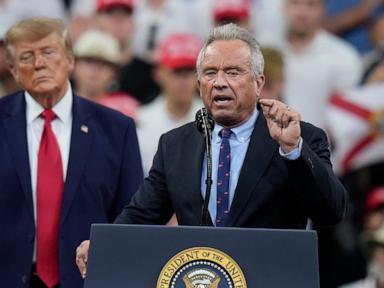
Robert F. Kennedy Jr. has spent months signaling his intention to dismantle federal restrictions on unapproved peptide injections, a move that would fundamentally alter how compounding pharmacies, longevity clinics, and everyday patients access experimental biologics in the United States. By targeting the Food and Drug Administration’s aggressive crackdown on substances like BPC-157, TB-500, and CJC-1295, the Department of Health and Human Services is preparing to reopen a massive gray-market pipeline that regulators spent the last three years trying to seal shut.
The shift is not merely a deregulation play. It represents a collision between two irreconcilable philosophies of medicine. On one side stands the traditional pharmaceutical apparatus, built on multi-phase randomized controlled trials, strict manufacturing oversight, and slow-moving federal gatekeeping. On the other sits the rapidly expanding "Make America Healthy Again" coalition, alongside cash-pay wellness clinics, biohackers, and integrative physicians who view the FDA’s restrictions as an unconstitutional barrier to bodily autonomy and preventative care. Meanwhile, you can explore similar events here: Inside the Ebola Outbreak Warning Nobody Is Reading Right.
For patients caught in the middle, the stakes are immediate. Millions of Americans have already turned to injectable peptides for tendon repair, gut healing, cognitive enhancement, and fat loss, often sourcing them from domestic compounding pharmacies or, when those supplies dried up, from overseas research chemical websites stamped with "not for human consumption" disclaimers. Lifting the federal blockade would bring these compounds back into legitimate clinical settings, yet it simultaneously strips away the traditional safety nets designed to protect consumers from contaminated, misdosed, or biologically unpredictable drugs.
The Mechanics of the Peptide Crackdown
To understand why Kennedy’s proposed rollback is generating seismic tremors across the healthcare sector, you have to look at what happened in late 2023. For years, compounding pharmacies operated in a lucrative regulatory gray zone, producing custom formulations of popular peptides under Section 503A of the Federal Food, Drug, and Cosmetic Act. Physicians wrote prescriptions, pharmacies mixed the vials, and patients injected them at home. To understand the bigger picture, check out the excellent article by Healthline.
Then the FDA dropped the hammer.
Citing safety risks, immunogenicity concerns, and a lack of sufficient human clinical data, the agency placed roughly two dozen popular peptides onto Category 2 of its Interim Bulks List. In regulatory speak, a Category 2 designation is a death sentence for legal compounding. It officially classifies a bulk drug substance as presenting significant safety risks, immediately prohibiting compounding pharmacies from producing or dispensing it.
The ban hit the longevity and sports medicine industries like a freight train. Suddenly, staples of functional medicine vanished from legitimate pharmacy shelves overnight:
- BPC-157 (Body Protection Compound-157): A synthetic pentadecapeptide derived from a protein found in human gastric juice, widely used off-label for accelerating tendon, ligament, and gastrointestinal healing.
- TB-500 (Thymosin Beta-4 fragment): Favored by athletes and physical therapy clinics for reducing systemic inflammation and promoting cellular migration in damaged tissue.
- CJC-1295 and Ipamorelin: Growth hormone secretagogues prescribed to stimulate endogenous pituitary output, touted for improving sleep architecture, muscle recovery, and body composition without the side effects of exogenous HGH.
- AOD-9604: A modified fragment of human growth hormone marketed heavily for targeted lipolysis and metabolic optimization.
- Semax and Selank: Nootropic peptides originally developed in Russia for stroke recovery and anxiety, adopted by American biohackers for cognitive focus.
The FDA’s rationale was straightforward from a statutory standpoint. Most of these compounds had never completed Phase III human trials in the United States. While animal studies—particularly in rodents—showed remarkable tissue-regenerating properties for compounds like BPC-157, the agency argued that human safety profiles remained incomplete. Regulators pointed specifically to peptide impurities and endotoxin contamination during the synthesis process, noting that improperly manufactured amino acid chains can trigger severe autoimmune reactions or anaphylaxis.
Why Kennedy Wants to Open the Floodgates
Kennedy has repeatedly framed the FDA’s enforcement actions not as consumer protection, but as institutional capture. Throughout his tenure and public appearances, he has accused federal health agencies of suppressing low-cost, non-patentable therapeutics that threaten the revenue models of major pharmaceutical manufacturers.
Peptides sit squarely in that crosshairs. Because many foundational peptide sequences are naturally occurring fragments or decades-old discoveries, pharmaceutical giants struggle to secure the ironclad, twenty-year composition-of-matter patents required to justify the billion-dollar cost of an FDA New Drug Application. Without patent exclusivity, Big Pharma has zero financial incentive to fund massive clinical trials for BPC-157.
Kennedy’s argument resonates deeply with a growing demographic of disillusioned patients. When a person with a chronic rotator cuff tear or debilitating ulcerative colitis finds relief through a $150 vial of compounded peptides after failing standard-of-care treatments, telling them the substance is "unproven" rings hollow.
Reversing the FDA’s Category 2 restrictions does not require passing sweeping new legislation through Congress. Under executive authority, the HHS Secretary wields immense influence over agency enforcement priorities, advisory committee appointments, and the formal rulemaking processes governing the Pharmacy Compounding Advisory Committee (PCAC). By directing the FDA to re-evaluate the bulk drug substance lists or issue enforcement discretion guidelines, HHS can effectively neutralize the 2023 ban with the stroke of a pen.
What Peptides Actually Do Inside the Body
Stripped of the marketing hype from influencer podcasts, peptides are simply short chains of amino acids—usually between two and fifty units long—linked by peptide bonds. Think of them as the body's native signaling text messages. While full-length proteins like insulin or human growth hormone are massive, complex structures that fold into intricate three-dimensional shapes, peptides are smaller, targeted keys designed to fit specific cellular locks.
When injected subcutaneously, a peptide enters the bloodstream and binds to specialized receptors on the surface of target cells, triggering a localized cascade of biochemical events.
Take BPC-157 as a mechanistic example. In preclinical animal models, the compound appears to upregulate the expression of Vascular Endothelial Growth Factor (VEGF) receptors, promoting angiogenesis—the formation of new blood vessels. Tendons and ligaments are notoriously slow to heal precisely because they are avascular; they receive very little blood flow compared to muscle tissue. By theoretically stimulating localized blood vessel growth and modulating nitric oxide pathways, BPC-157 aims to deliver nutrients and repair cells to areas the body normally struggles to reach.
Similarly, growth hormone secretagogues like Ipamorelin work by mimicking ghrelin, the hunger hormone, and binding to the growth hormone secretagogue receptor (GHS-R) in the pituitary gland. Rather than flooding the body with synthetic human growth hormone—which shuts down natural production via negative feedback loops—these peptides nudge the pituitary to release its own stored hormone in natural, pulsatile waves.
The biological elegance of these mechanisms is undeniable. The problem lies in the gap between theoretical mechanism and proven human clinical reality.
The Uncomfortable Truth About the Underground Market
One of the strongest arguments supporting Kennedy’s position is an unintended consequence of the FDA’s own crackdown. Banning compounding pharmacies from making peptides did not stop Americans from injecting them. It simply drove the entire market underground.
When state-licensed 503A and 503B pharmacies—which are subject to regular inspections, sterility testing, and potency verification—were forced to halt production, demand immediately shifted to unregulated "research chemical" websites. These online vendors operate through a flimsy legal loophole: they sell lyophilized (freeze-dried) peptide powders labeled strictly for laboratory use, complete with warnings stating the vials are not for human or veterinary consumption.
In practice, everyone knows what is happening. Customers buy the vials with a credit card, purchase bacteriostatic water separately, reconstitute the powder on their kitchen counters, and inject it into their abdominal fat using insulin syringes.
| Supply Channel | Regulatory Oversight | Sterility & Potency Testing | Legal Status for Human Use |
|---|---|---|---|
| FDA-Approved Drugs (e.g., Semaglutide) | Full FDA NDA approval, cGMP manufacturing | Mandatory batch testing for purity, endotoxins, and stability | Fully legal with valid prescription |
| 503A/503B Compounding Pharmacies | State Boards of Pharmacy & FDA oversight (USP 797 standards) | Required third-party testing for potency and sterility | Legal only if bulk substance is on FDA approved/Category 1 list |
| Research Chemical Websites | None; operates outside pharmaceutical regulations | Self-reported Certificates of Analysis (COAs), frequently forged or unverified | Illegal to market or sell for human consumption |
| Overseas Gray-Market Suppliers | Zero domestic oversight; customs seizure risk | Rarely tested; high risk of heavy metals, bacteria, or under-dosing | Illegal to import for personal administration |
Independent testing of gray-market research peptides consistently reveals alarming quality control failures. Laboratories analyzing vials purchased online frequently find under-dosed products containing less than 60 percent of the advertised active ingredient, vials containing entirely different substances than what is printed on the label, and samples contaminated with trifluoroacetic acid (TFA)—a toxic solvent used during chemical synthesis that must be carefully stripped out before human administration.
By restoring legal pathways for licensed compounding pharmacies, HHS could theoretically pull millions of consumers out of this unregulated Wild West and back under the supervision of licensed physicians and sterile compounding facilities.
The Medical Counter-Argument Nobody Wants to Hear
Despite the compelling case against prohibition, mainstream medical researchers, toxicologists, and bioethicists warn that throwing open the doors to unapproved peptides carries profound, systemic risks that wellness influencers routinely gloss over.
The core issue is biological pleiotropy—the fact that a single signaling molecule rarely performs just one neat, isolated job in the human body.
Consider the angiogenesis mechanism behind BPC-157. Growing new blood vessels is fantastic if you are trying to heal a torn Achilles tendon or an intestinal ulcer. It is potentially catastrophic if you have an undiagnosed, microscopic cluster of malignant cells quietly sitting in your colon or breast tissue. Tumors rely heavily on angiogenesis to hijack blood supply and metastasize. Because BPC-157 has never undergone long-term, multi-year carcinogenicity studies in humans, no physician on earth can definitively tell a patient whether chronic use accelerates dormant tumor growth.
The same uncertainty applies to immunogenicity. When you inject a synthetic peptide repeatedly over months, the human immune system can occasionally recognize the foreign amino acid sequence—or microscopic aggregates formed during improper storage—as an invading pathogen. Once the body generates antibodies against a synthetic peptide, those antibodies can cross-react with the body's own naturally occurring endogenous proteins, triggering chronic autoimmune conditions that cannot be reversed simply by stopping the injections.
Furthermore, deregulating access before establishing clinical efficacy creates a massive financial extraction machine. Without rigorous trial data proving a compound actually works better than a saline placebo, predatory cash-pay clinics can charge desperate patients thousands of dollars a month for protocols built entirely on anecdotes, rodent studies, and slick marketing.
The Compounding Pharmacy Lobby and the Money Trail
Behind the ideological battle over health freedom sits a massive, rapidly consolidating financial ecosystem. Over the past five years, private equity firms have poured hundreds of millions of dollars into telehealth platforms, concierge longevity clinics, and large-scale compounding pharmacies.
When the FDA restricted peptides in 2023—and subsequently moved to shut down compounded versions of blockbuster GLP-1 weight-loss drugs like tirzepatide and semaglutide—it threatened the core revenue engine of the entire cash-pay telehealth industry.
These companies have spent heavily on lobbying efforts in Washington, framing regulatory access as a populist crusade against Big Pharma monopolies. While their critique of pharmaceutical pricing and FDA bureaucracy holds genuine merit, analysts watching the sector note that compounding trade groups are fighting just as fiercely to protect high-margin, unpatented revenue streams that require zero investment in clinical research.
If Kennedy’s HHS removes the Category 2 roadblocks, it will trigger an immediate gold rush. Telehealth startups will roll out subscription peptide bundles within weeks. Brick-and-mortar med-spas will add injectable recovery protocols alongside Botox and IV vitamin drips. And the volume of unapproved biologics circulating through the American bloodstream will surge exponentially overnight.
Navigating the Regulatory Gray Zone Ahead
Even if HHS moves aggressively to clear the federal path for peptide compounding, the rollout will not be frictionless. The American pharmaceutical system is governed by overlapping jurisdictions, and removing an FDA enforcement barrier does not automatically eliminate liability elsewhere.
State Boards of Pharmacy maintain independent authority over compounding standards within their borders, and several states—including California and Texas—have historically enforced strict interpretations of federal compounding laws regardless of shifting political winds in Washington. Medical malpractice insurers remain deeply skeptical of physicians prescribing unapproved biologics, meaning doctors who write high volumes of peptide prescriptions still face personal professional exposure if a patient experiences an adverse event.
Meanwhile, major pharmaceutical companies are unlikely to sit quietly while compounding pharmacies undercut their markets with non-approved alternatives. Expect immediate legal challenges under the Administrative Procedure Act, with industry groups arguing that HHS cannot arbitrarily bypass statutory safety requirements for bulk drug substances without formal scientific review.
For consumers watching this unfold, the fundamental reality of biological risk remains unchanged regardless of who runs HHS. A policy shift in Washington can make an unapproved peptide legal to compound, easier to buy, and cleaner to inject, but a federal directive cannot manufacture the missing human safety data that science has yet to produce.