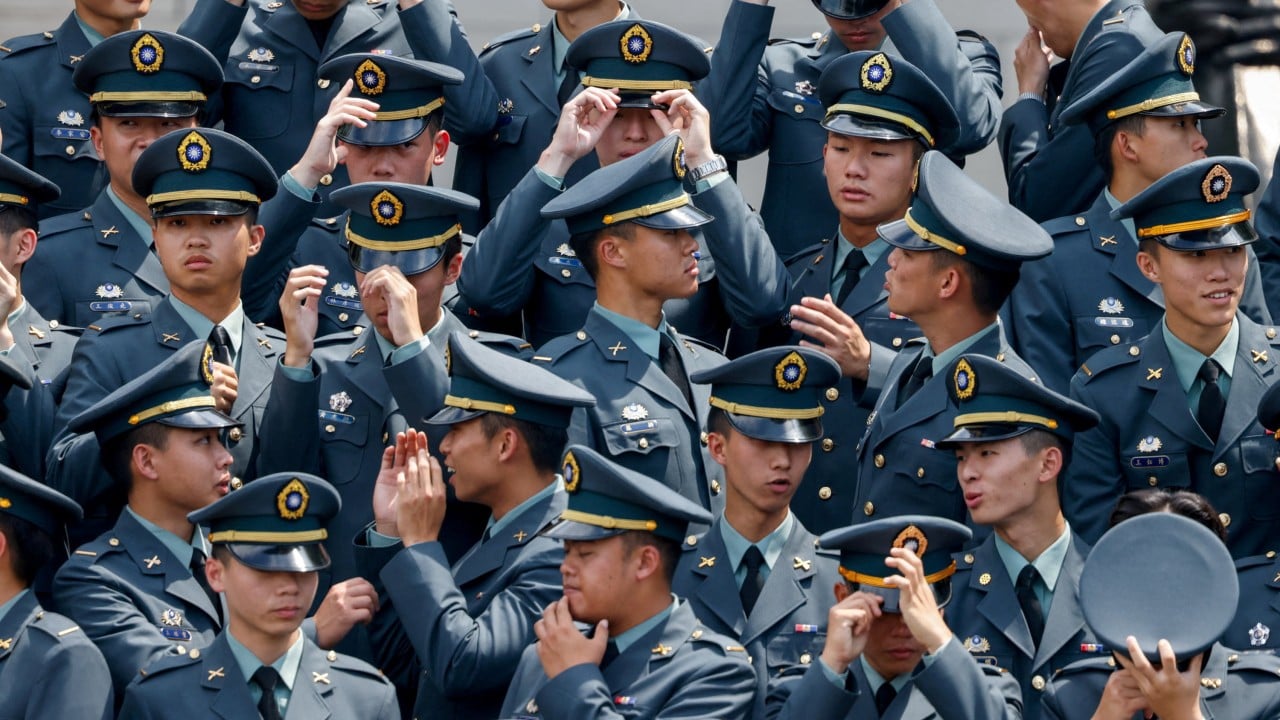
Taiwan's defense ministry recently celebrated an unexpected windfall of 5,000 new volunteer soldiers, a statistical bump that papered over a much darker demographic reality. The influx brings the military's personnel fill rate to roughly 80 percent, a modest improvement in a decade-long struggle to staff frontline units. Yet this numerical surge fails to solve Taipei's foundational defense vulnerability. The government is buying short-term bodies with pay raises while losing the experienced non-commissioned officers and specialized technicians needed to operate modern Western hardware. Taiwan does not just have a recruitment issue; it has a systemic retention failure that threatens its territorial sovereignty.
The underlying math of Taiwan's defense strategy is colliding with a devastating demographic winter. While a recent injection of financial incentives managed to lure several thousand young citizens into uniform, the broader pool of eligible conscripts is shrinking exponentially. In 2021, the number of young men available for mandatory service was projected based on healthy historical birth rates. By 2027, the total number of eligible males scheduled for annual service will drop below 80,000. No amount of creative recruiting can alter the reality of an aging society.
The Paper Soldier Illusion
Taipei's legislative reports highlight an increase of over 5,000 volunteer personnel over the past year. Lawmakers point to these numbers as evidence that recent institutional reforms and basic pay raises are working. The reality on the ground is far less comforting.
The spike in volunteers is driven almost entirely by economic factors rather than a sudden shift in civic duty or strategic commitment among the island’s youth. When the Ministry of National Defense relaxed enlistment qualifications and boosted starting salaries, it successfully captured a segment of the labor market that was struggling to find well-paying entry-level civilian employment.
This creates a workforce of placeholders rather than a professional fighting force. A volunteer who enlists strictly for a stable paycheck is the first person to exit when civilian economic conditions improve or when the operational tempo becomes too demanding. The military's internal target for personnel retention sits at 76 percent. While current official metrics claim an average retention rate of over 86 percent, these figures mask a critical imbalance in who is staying and who is leaving.
The individuals walking out the door are the precise personnel Taiwan can least afford to lose.
- Radar Technicians: Specialized operators trained to manage high-end early warning systems are fleeing to Taiwan’s booming private semiconductor sector.
- Aviation Mechanics: Technicians capable of maintaining F-16V fighter jets are being poached by commercial airlines offering double the salary with a fraction of the stress.
- Junior Officers: Company commanders who bear the brunt of administrative burdens and grueling operational schedules are choosing civilian life the moment their initial service obligations expire.
The Cost of High Tech Monopolies
Taiwan's greatest economic shield is also its military’s greatest human resources rival. The island’s domestic semiconductor sector, anchored by giants like TSMC, creates a massive economic pull that the Ministry of National Defense cannot match.
A young engineer or technician with the aptitude to service complex military hardware can command a starting salary in the private tech sector that makes a military officer's stipend look like pocket change. This wage gap creates an unsustainable talent drain. The military invests millions of local dollars training an individual to maintain advanced missile defense systems, only to watch that investment walk into a civilian fabrication plant after four years.
Furthermore, the operational culture within the armed forces exacerbates the exodus. Taiwan’s military hierarchy remains deeply bureaucratic, saddled with legacy administrative traditions that date back decades. Junior officers and NCOs frequently complain that their days are consumed by redundant paperwork, ceremonial preparation, and rigid top-down management rather than actual tactical training. When a young, tech-savvy citizen is forced to choose between an innovative, high-paying corporate environment and a rigid, paperwork-heavy military base, the choice is obvious.
The Conscription Band Aid
To offset the chronic shortage of long-term volunteers, Taiwan reinstated its one-year mandatory conscription policy, moving away from the previous, highly criticized four-month training stint. While this move provides a temporary boost to the total number of personnel assigned to coastal defense brigades, it introduces a severe operational bottleneck.
Conscripts require significant oversight. Experienced volunteer NCOs must be diverted from frontline combat readiness roles to serve as drill instructors and managers for thousands of temporary soldiers. Instead of honing their own skills or maintaining sophisticated weapon systems, Taiwan’s elite troops are stuck teaching basic marksmanship and military discipline to reluctant young men who count down the days until their release.
The data reveals the friction in this system. Out of more than 15,000 individuals scheduled for mandatory service in recent cycles, barely half began their training on time due to medical deferments, educational extensions, and bureaucratic delays. The system is inefficient, expensive, and fails to produce the highly specialized personnel required to counter a modern, high-technology adversary across the strait.
The Attrition Crisis in the Fleet
Nowhere is the retention crisis more dangerous than in the Navy and Air Force. These branches operate the complex platforms tasked with intercepting near-daily gray-zone incursions by mainland forces.
The constant state of high alert has placed an unprecedented operational burden on crews. Ship deployments that used to last days are now extended indefinitely to shadow opposing vessels. Pilots are scrambled repeatedly, burning through flight hours and maintenance schedules at an alarming rate.
"The equipment can be repaired or replaced with Western support, but the human wear and tear is permanent. Crews are burning out faster than we can recruit their replacements." — Senior Taiwanese naval official, speaking anonymously.
This relentless operational tempo eats away at morale. When a sailor spends months at sea with minimal port leave, watching their civilian peers enjoy flexible remote work and rising wages, the motivation to re-enlist evaporates. The result is a dangerous paradox: Taiwan is acquiring advanced naval vessels and upgraded fighter aircraft from the United States, but it lacks the stable, experienced crew depth required to deploy them effectively during a prolonged crisis.
The 5,000-volunteer headline is an administrative distraction. Until Taipei addresses the toxic combination of structural bureaucracy, uncompetitive compensation for skilled specialists, and the crushing operational tempo imposed by gray-zone warfare, those numbers will remain a revolving door. Taiwan's defense capability cannot be measured by headcount alone; it depends entirely on holding onto the trained professionals who actually know how to fight.