.png?width=1200&auto=webp&trim=0%2C0%2C0%2C0)
Silicon Valley is supposed to be the place where tomorrow gets built. Lately, it is where tomorrow gets locked down.
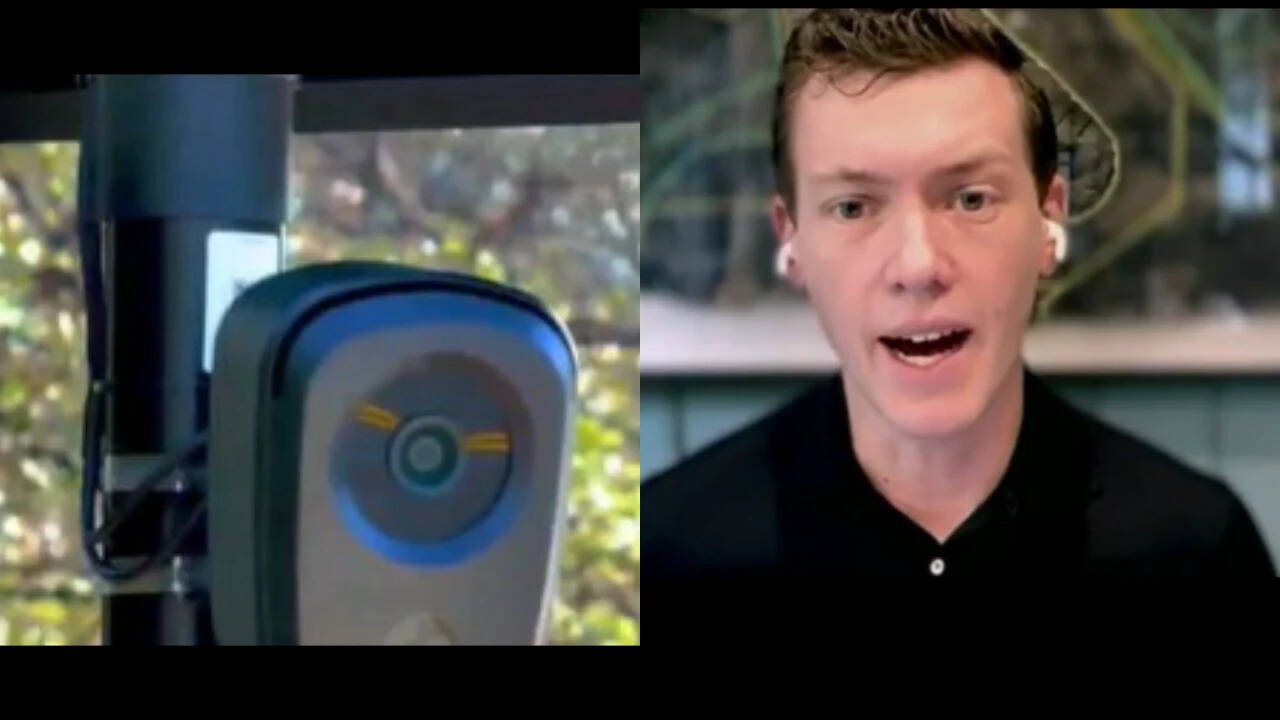
Across the country, automated license plate readers manufactured by companies like Flock Safety have transformed suburban streets into monitored checkpoints. These solar-powered, pole-mounted cameras do much more than capture numbers. They log make, model, color, bumper stickers, and partial body modifications of every passing car, creating a searchable, permanent archive of civilian movement.
Nowhere is the fracture more visible than in the backyard of the tech elite. Palo Alto is currently scrambling to audit its municipal contracts after public trust evaporated over data-sharing fears and potential federal overreach. Citizens who once welcomed any gadget promising frictionless convenience are looking up at these digital sentinels and seeing something entirely different.
An administrative tool meant to catch stolen vehicles has instead triggered a nationwide panic over privacy, abuse, and the creeping mechanics of the modern panopticon.
The Anatomy of the Surveillance Creep
The pitch from tech vendors is always clean. Public safety wrapped in a modern software-as-a-service wrapper.
Police departments sign up because the system offers automated alerts whenever a hot-list vehicle enters city limits. Officers can query historical databases to track a suspect's routine across weeks or months. But the architecture of mass tracking demands an enormous volume of collateral data. Every innocent commuter, school bus, and grocery getter gets logged alongside the targets of active investigations.
Consider a hypothetical commuter driving through a suburban intersection. Their vehicle passes a reader. The system captures the plate, notes a specific roof rack, and records a timestamp. That record streams into a shared database accessible by hundreds of separate agencies.
When data collection scales to this magnitude, the margin for error becomes a civil liberties hazard. A recent municipal police audit revealed that automated readers misread license plates in a staggering majority of generated alerts, throwing erroneous flags that pull ordinary citizens into unnecessary police encounters.
The friction is not just ideological. It is mechanical and immediate.
When the Protectors Become the Threat
The promise of automated policing relies entirely on institutional integrity. That foundation cracked open following investigative reports detailing widespread administrative abuse.
Internal tracking and media investigations revealed dozens of instances where law enforcement officers utilized automated tracking networks to stalk romantic partners or dig into personal vendettas. Instead of catching violent criminals, the technology occasionally supplied bad actors inside badge-carrying ranks with a turnkey surveillance engine for personal harassment.
Public outrage followed swiftly. Grassroots coalitions began mapping camera poles with open-source toolkits, while vigilantes took matters into their own hands by disabling units across multiple states. Municipalities that rushed into multi-year contracts during political panic are now facing angry town halls where working-class families and privacy advocates stand shoulder-to-shoulder against local police boards.
The company behind the hardware has attempted to patch the PR disaster. Leadership rolled out shortened data retention timelines, dropping default storage windows down from thirty days to seven, alongside emergency settings designed to lock down data only when tied to active warrants.
Yet these adjustments miss the deeper systemic critique. Shortening the retention window does not solve the fundamental constitutional question of whether continuous, dragnet tracking of innocent citizens violates core protections against unreasonable search.
The Bipartisan Rebellion
For decades, the political fault lines over surveillance followed a predictable script. Progressive urban centers worried about over-policing, while suburban enclaves demanded maximum security at any cost.
Automated plate readers broke that binary.
In conservative rural counties and liberal tech capitals alike, residents are reaching the same conclusion. The trade-off between perceived safety and total civic transparency is structurally flawed. When local councils discover that municipal traffic data can cross paths with federal immigration enforcement databases or out-of-state regulatory crackdowns, the pushback crosses traditional political boundaries.
Municipal leaders are caught in the middle. They bought a software package to solve property crimes, only to inherit a raging proxy war over the future of public space.
As cities from California to the East Coast begin severing ties, the tech sector is forced to confront an uncomfortable reality. People do not want their daily routines monetized, optimized, or archived by private corporations partnering with local police.
The poles remain on the corners, blinking quietly in the sun, waiting for the next car to pass.