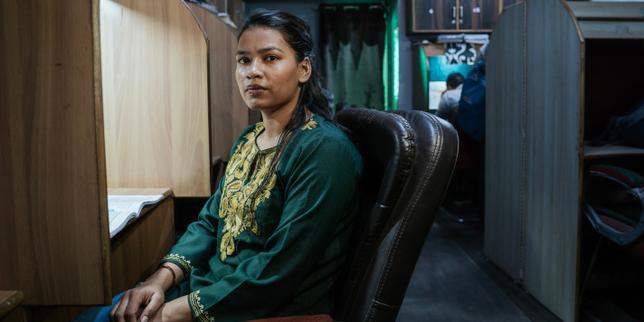
The poverty trap in India does not merely limit what a household can afford at the grocery store or how many bedrooms a family shares; it dictates which schools a child can attend, which hospitals will treat an acute illness, and how much risk a young adult can afford to take before they are twenty-five. When young voices like Puja Kumar express despair over being born into deprivation in India, they are reacting to a compounding economic and social architecture where early disadvantages multiply faster than public safety nets or personal effort can correct them.
Understanding why poverty in India feels inescapable requires looking past headline GDP growth figures. Aggregate economic expansion can look impressive on paper while leaving millions of households exposed to fragile informal wages, out-of-pocket medical shocks, and narrow generational mobility. A child born into a low-income household often starts behind on nutrition, enters under-resourced classrooms, and transitions into insecure work without family capital or institutional buffers.
How Early Deprivation Compounds Across a Lifetime
Poverty rarely hits all at once in a single dramatic event. It accumulates in small, compounding deficits that begin before a child even learns to tie their shoes.
Consider a hypothetical example of a family earning modest daily wages in an urban informal settlement. If the primary earner misses two weeks of work due to a respiratory infection or a minor injury, household cash reserves evaporate immediately. Meals shrink in nutritional variety, rent falls behind, and an older child may be pulled from classes to run errands, care for younger siblings, or pick up casual labor. None of those choices stems from parental indifference; each is a rational response to an immediate cash crunch.
Once educational disruption sets in, the gap widens quietly. Missing foundational literacy and numeracy in early grades makes later coursework feel alien, increasing dropout risk long before secondary school exams arrive. Even when students stay enrolled, low-income families often cannot afford private coaching, quiet study space, or reliable transport to stronger institutions.
Health shocks operate along the same punishing track. When public clinics face overcrowding, stockouts, or long travel times, families turn to private providers and pay out of pocket. A single hospitalization or surgical bill can wipe out years of meager savings or force the household into high-interest debt with local moneylenders. Once debt enters the picture, future earnings are already spoken for before the next paycheck arrives.
The Structural Friction Beneath Economic Headlines
India has seen sweeping shifts in digital infrastructure, physical connectivity, and commercial ambition over recent decades. Yet structural friction persists at the ground level where ordinary citizens interact with labor markets, credit systems, and public administration.
Economic growth is uneven across sectors and geographies. High-value services, specialized manufacturing, and modern urban enterprises reward credentials, English fluency, technical skills, and professional networks. Meanwhile, a vast share of the workforce remains concentrated in low-productivity agriculture, construction, street vending, domestic work, and micro-enterprises where pay is irregular and benefits are scarce.
Formal credit presents another hurdle. Banks rely on collateral, credit histories, and steady documentation that low-income households frequently lack. Without access to affordable working capital or emergency credit, starting a small business or weathering a seasonal slump becomes a high-wire act without a net.
Public programs often aim to bridge these gaps through food support, cash transfers, housing initiatives, and health coverage. In practice, execution varies sharply across states and districts. Bureaucratic hurdles, identity verification glitches, local gatekeeping, and uneven service quality mean that entitlements promised on paper do not always translate into timely relief when a crisis hits.
Why Formal Credentials Alone Do Not Guarantee Escape
A common belief holds that hard work and a degree offer a reliable ladder out of hardship. The reality is messier.
Many young people from modest backgrounds sacrifice to complete secondary school or college, only to find a crowded entry-level job market with stagnant starting pay. Degrees from underfunded institutions may carry limited signaling value to employers, while unpaid or low-paid internships are accessible mostly to peers whose parents can subsidize living costs in expensive cities.
Social capital matters just as much as classroom performance. Knowing someone who works at a firm, understanding how interviews are navigated, or having family contacts who can vouch for a candidate's reliability lowers hiring friction. First-generation job seekers often have to decode unwritten workplace norms by trial and error, where a single misstep can cost an opportunity they fought years to reach.
The Counter-Argument Agency Still Matters at the Margins
Saying that the poverty trap in India is heavily structural is not the same as saying individual choices are meaningless. Millions of people do move upward every year, and ignoring human agency risks turning systemic analysis into fatalism.
Local community networks, vocational training programs, targeted scholarships, and migration to higher-wage regions have all helped households lift themselves out of destitution. Small improvements in maternal health, girls' secondary school completion, or access to basic banking can shift trajectories over time.
At the same time, celebrating inspiring outliers can distort policy debates. When commentators point to exceptional individuals who beat the odds, they sometimes treat structural barriers as mere excuses rather than obstacles that policy and markets must fix. A healthy system should not require extraordinary luck or superhuman sacrifice just to achieve basic economic security.
The Overlooked Costs of Social Hierarchy and Gender
Economic statistics capture income and consumption, yet lived hardship in India is deeply shaped by social hierarchy and gender norms that interact with money in complex ways.
Caste and historical marginalization still influence land ownership, access to quality housing, occupational segregation, and everyday treatment in both rural and urban settings. Even when legal protections exist, informal bias can shape who gets hired, who gets promoted, and who feels safe speaking up in public or institutional spaces.
Gender adds another layer of constraint. Young women from low-income families frequently shoulder disproportionate unpaid care work at home, face tighter restrictions on mobility or migration for jobs, and contend with safety concerns during commutes or evening shifts. When families face tight budgets, sons are still too often prioritized for higher spending on education or healthcare.
Ignoring these overlapping pressures leads to shallow fixes. A skills program or job portal will fall short if young women cannot safely travel to training centers or if marginalized applicants face silent discrimination at the hiring desk.
Policy Trade-Offs and Uncomfortable Realities
Fixing entrenched poverty involves hard trade-offs that rarely fit neatly into political slogans. Every rupee spent on broad subsidies is a rupee not spent on hospital staffing, school infrastructure, or grid reliability; conversely, cutting support too abruptly can push vulnerable families straight into hunger or debt during a downturn.
Targeting welfare accurately is notoriously difficult. Strict eligibility rules can exclude deserving families who lack updated paperwork or fall just above an arbitrary income cutoff. Loose rules can leak resources or strain public budgets. No administrative system is immune to error, and pretending otherwise only breeds cynicism when mistakes happen.
Urbanization brings its own tension. Cities are engines of economic opportunity and higher wages, yet rapid growth without enough affordable housing, clean water, and mass transit pushes newcomers into overcrowded slums with poor sanitation and long commutes. Growth without livable urban infrastructure turns opportunity into exhaustion.
Measuring Progress Beyond Averages
National averages can be dangerously misleading when inequality is wide. A rise in average household income can mask stagnation at the bottom if gains are heavily concentrated near the top.
Tracking intergenerational mobility—how much a child's adult earnings or education depend on their parents' status—offers a sharper test of fairness than GDP alone. So does measuring household financial resilience, such as whether a family can absorb a sudden expense without borrowing at punishing rates or selling productive assets.
Real progress shows up in ordinary details. It looks like a clinic with medicines on the shelf, a public school where children actually read at grade level, a worker paid on time with basic protections, and a young person who can plan five years ahead without assuming disaster is one bad week away.
Young people voicing frustration over being born poor in India are pointing to a system that demands immense resilience while offering uneven footing. Addressing that frustration starts by pairing honest measurement of structural barriers with practical reforms in education quality, healthcare affordability, job creation, and fair access to credit—so that escaping poverty stops depending on heroic exceptions and becomes a realistic path for ordinary families.