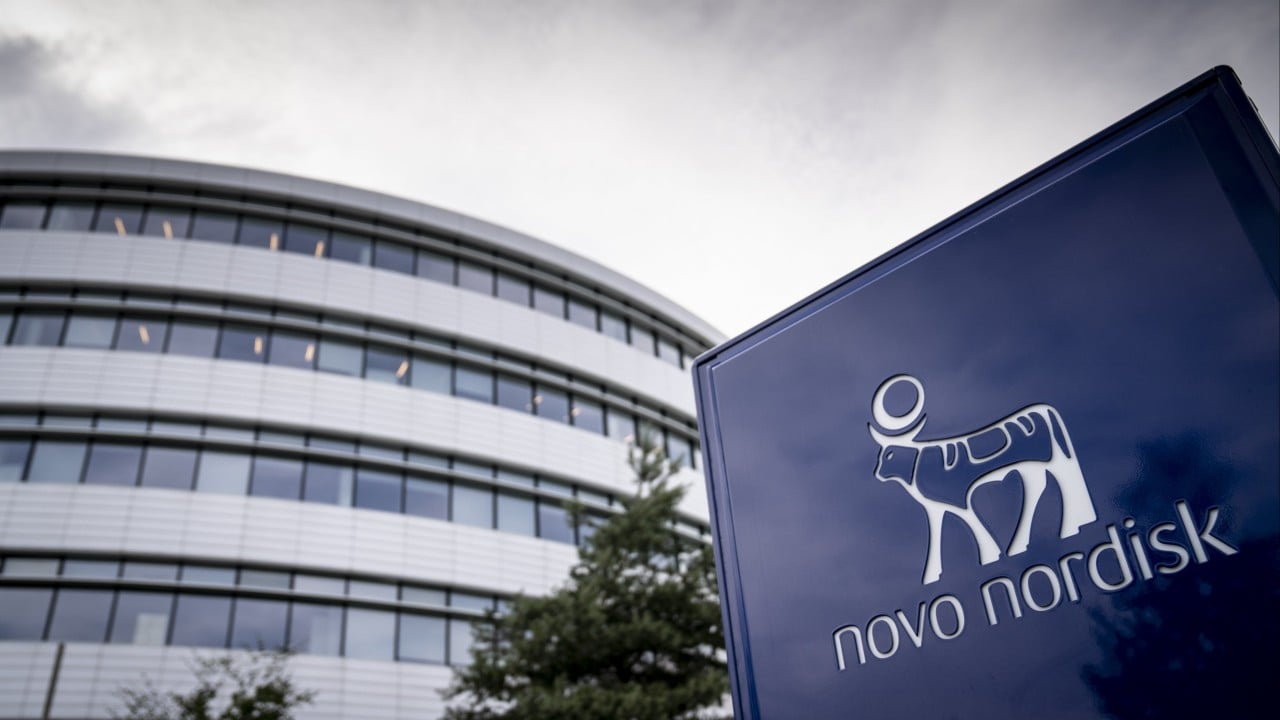
For more than forty years, the hyphenated weight of Novo Nordisk carried an aura of untouchable scientific majesty across global pharmaceutical markets. When the Danish drugmaker's blockbuster GLP-1 treatments, Ozempic and Wegovy, turned the century-old institution into Europe's most valuable enterprise, the corporate moniker felt like a fortress.
Today, that fortress is shedding its stone. In a high-stakes pivot under Chief Executive Maziar Mike Doustdar, the company has quietly dropped the second half of its name in its public-facing operations, becoming simply Novo. Wall Street analysts will parse the new visual identity—anchored by a fresh palette featuring 'Lasting Blue' and 'Now Turquoise'—as standard corporate window dressing. Veterans of the pharmaceutical beat, however, recognize a classic corporate distress signal when they see one.
Dropping 'Nordisk' is not an exercise in minimalist design. It is a calculated admission that the old ways of doing business in Copenhagen can no longer survive the onslaught of American competition, mounting patent cliffs, and a radically shifting healthcare consumer market.
The Competitive Squeeze Behind the Facelift
To understand why a pharmaceutical titan would voluntarily dilute a century of brand equity, one must look closely at the battlefield where the company lost its momentum. For years, Novo enjoyed a near-monopolistic grip on the burgeoning obesity and diabetes landscape. The clinical efficacy of semaglutide changed medical paradigms and consumer habits simultaneously.
Then came Indianapolis. Eli Lilly entered the arena with tirzepatide—marketed as Zepbound for weight management and Mounjaro for type 2 diabetes. By targeting both GLP-1 and GIP receptors simultaneously, Lilly's compound routinely demonstrated superior weight-loss metrics in clinical trials. More importantly, Lilly translated that scientific edge into aggressive commercial execution, steadily eroding Novo's market share.
Pipeline setbacks compounded the operational strain. Key diversification bets, such as the experimental combination therapy CagriSema and late-stage trials for the anti-inflammatory candidate ziltivekimab, failed to deliver the rapid expansion investors demanded. Faced with a dramatic slowdown in growth and subsequent pressure on its share price, leadership initiated a sweeping internal restructuring that included cutting thousands of positions worldwide. The rebrand is the external manifestation of that internal bloodletting.
Decoding the Novo Way
Accompanying the name change is a new operational framework christened The Novo Way, resting on four distinct pillars: customer obsession, competitiveness, clarity, and care and integrity.
In corporate communications, such frameworks are frequently dismissed as generic buzzwords. In this context, however, the inclusion of "competitiveness" as a core corporate behavior reveals a profound psychological shift. Companies operating from a position of unchallenged dominance do not formally mandate competitiveness as a cultural reform; they do it when they realize they have fallen behind and need to explicitly name the deficit before they can repair it.
Furthermore, the explicit pivot toward treating patients as "consumers" marks a stark departure from traditional pharmaceutical marketing. Historically, medications like insulin were prescribed to patients who accepted whatever brand their physician or formulary mandated. Modern weight-loss therapeutics operate differently. Patients demand specific brands by name, navigating private insurance, telehealth platforms, and out-of-pocket compounding pharmacies with the selectivity of retail shoppers. By trimming the corporate title down to a punchy, consumer-friendly syllable, the organization is attempting to transform itself from a clinical institution into a lifestyle brand.
The Oral Frontier and the Road Ahead
Not all the news from Copenhagen is defensive. While the injectable market remains fiercely contested by American rivals, the company holds a critical card in the race for oral GLP-1 therapies. Early commercial signals indicate that oral formulations of semaglutide are capturing considerable attention as they square off against emerging oral candidates like Eli Lilly's orforglipron.
For millions of patients who experience needle hesitation or face logistical barriers to injection-trained providers, an effective daily pill represents an entirely new access vector. If leadership can secure a dominant foothold in oral delivery while simultaneously defending its manufacturing capacity through strategic partnerships with advanced particle-engineering and cloud-computing giants, the identity reset may yet serve as the launching pad for a second golden era.
A shorter name will not fix a stalled pipeline, nor will a fresh coat of turquoise paint halt a surging competitor. The market cares little about typography when margins compress and supply chains strain under global demand. The real test of the newly minted enterprise will be determined entirely in the laboratories and manufacturing plants where the next generation of therapies must be forged before the competition outpaces them permanently.