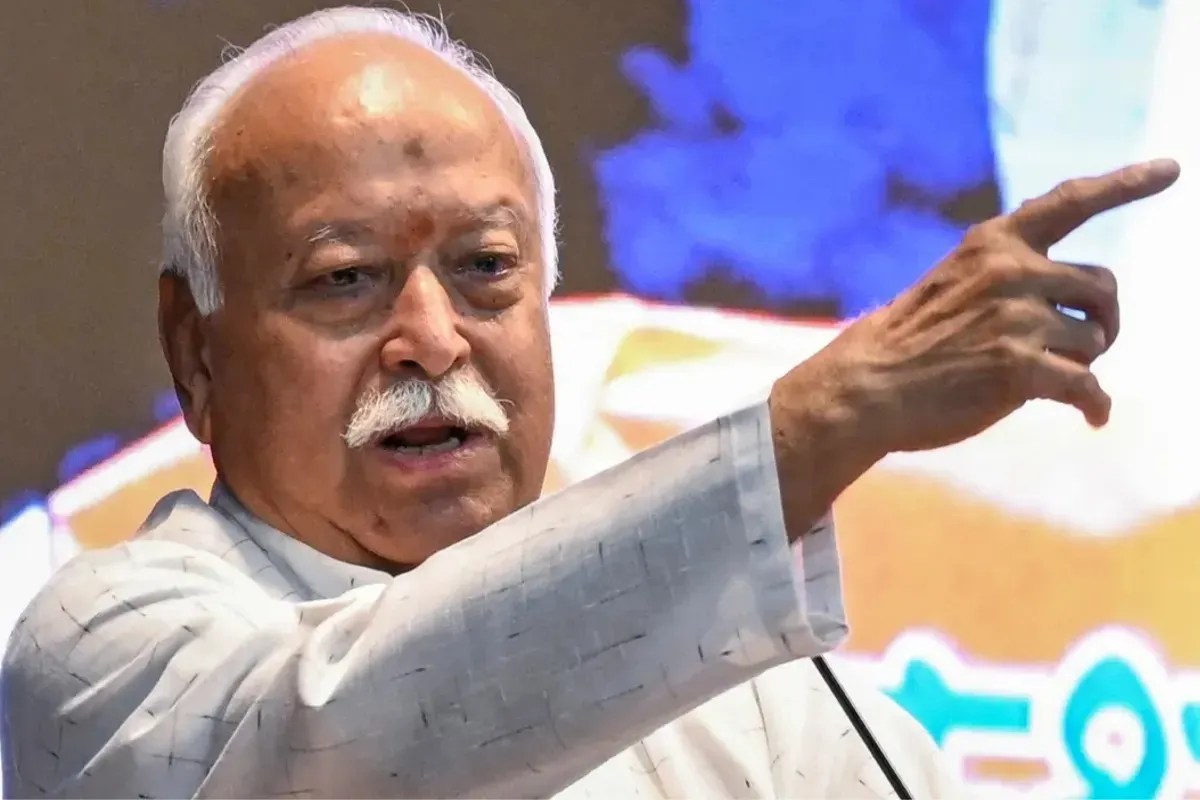
When Rashtriya Swayamsevak Sangh chief Mohan Bhagwat arrived in New York for an address at Madison Square Garden, the ensuing friction exposed the deepening fractures of diaspora politics. New York City Mayor Zohran Mamdani publicly voiced opposition to the gathering, setting off a fierce debate on free speech, municipal jurisdiction, and ideological projection abroad. This cross-continental confrontation is not merely about a single afternoon schedule at an iconic venue. It represents a calculated struggle for narrative dominance among millions of expatriates caught between competing political identities.
The Manhattan Stage and the Municipal Dilemma
The venue was the Infosys Theater at Madison Square Garden. The event was billed as the Universal Oneness Celebration. Yet, the moment the itinerary became public, local political lines hardened. Mayor Mamdani found himself in a delicate administrative corner. He stated his personal opposition to the ideology associated with the RSS, while simultaneously acknowledging that municipal authorities lacked clear legal ground to shut down a lawful private rental.
This tension illustrates a recurring headache for Western urban administrators. Free speech protections do not require local executives to endorse the visitors who use their public spaces. Still, refusing entry to controversial figures crosses into viewpoint discrimination under constitutional law. The organizers, operating under the banner of the AHEAD Forum, leaned heavily on this legal reality. They framed the program as an exercise in interfaith dialogue and open cultural exchange. Critics, however, viewed it as an aggressive export of majoritarian politics into North American urban centers.
Digital Friction and Domestic Echoes
Long before the doors opened in Manhattan, the digital infrastructure supporting the event began to buckle. The organizing forum experienced a temporary suspension of its account on X, an outage that quickly morphed into a secondary controversy regarding platform governance and political censorship.
Back in India, political actors lost no time weaponizing the incident. Samajwadi Party president Akhilesh Yadav seized on the digital disruption to mock the organizational apparatus behind the visit, dismissing key handlers with pointed rhetorical barbs. This domestic reaction highlights how foreign tours by Indian ideological leaders function as proxy battlegrounds for domestic elections. Every headline generated in New York instantly feeds into the daily news cycle in Lucknow and New Delhi, shaping perceptions of strength, vulnerability, and global reach.
Security concerns escalated concurrently. Advocacy groups like the Hindu American Foundation issued community alerts, urging attendees to remain vigilant amid planned demonstrations by opposing coalitions such as Hindus for Human Rights. Protesters argued that the RSS promotes an exclusionary nationalist framework that runs counter to pluralistic values. Supporters countered that denying a platform to mainstream Indian organizations alienates millions of practicing Hindus living abroad who seek cultural grounding.
The Strategic Shift in Overseas Outreach
Organizations like the RSS have historically focused their energies inward, anchoring their expansion in local shakhas and domestic social service networks across the Indian subcontinent. Over the past decade, however, the strategy has visibly pivoted toward the global stage. Engaging the diaspora is no longer an afterthought. It is a core pillar of long-term ideological consolidation.
Expatriate communities represent formidable reservoirs of financial capital, political lobbying power, and cultural influence in Western capitals. By securing high-profile venues in global financial hubs like New York, leadership seeks to normalize its worldview on an international canvas. This outward push attempts to reframe domestic criticisms as foreign misunderstandings, mobilizing sympathetic diaspora groups to push back against hostile local narratives.
The confrontation in New York demonstrates that this strategy carries steep costs. As ideological movements project their influence across borders, they inevitably import their bitter domestic rivalries into foreign municipal spaces. Local politicians are forced to navigate competing constituencies, and diaspora communities find themselves internally divided along ideological fault lines that resist easy reconciliation. The event at Madison Square Garden concluded under heavy security, but the underlying friction points will continue to define the contours of transnational politics for years to come.
Mohan Bhagwat NYC: Mamdani vs RSS at Madison Square Garden!
This analysis video breaks down the political and free-speech dimensions surrounding the RSS chief's New York appearance and the local municipal response.