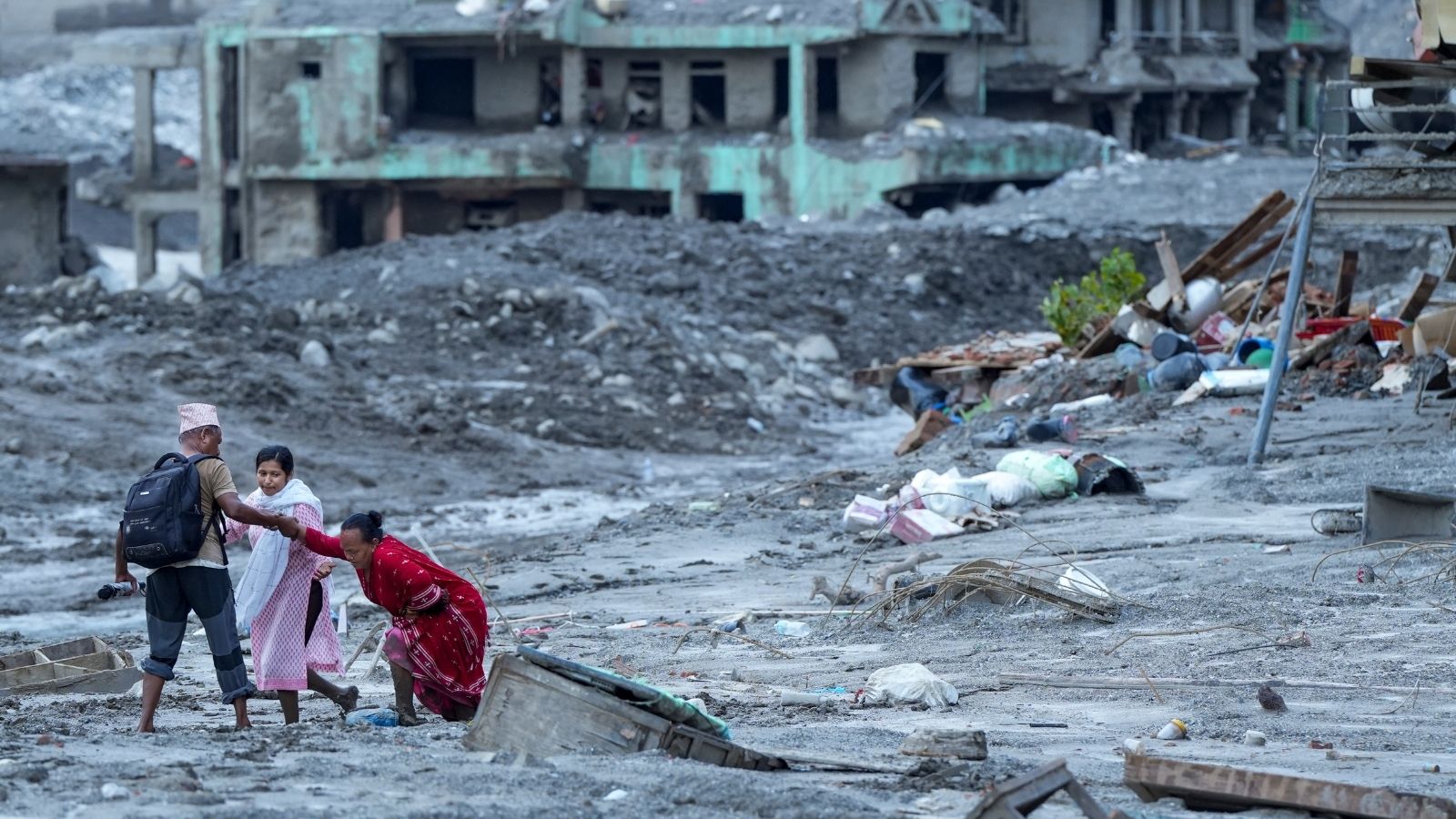
More than 900 workers remain unaccounted for or stranded across 11 major hydropower project sites in Nepal following catastrophic flash floods that tore through the Rasuwa and Nuwakot districts. A wall of water, ice, and debris obliterated access roads and slammed directly into tunnel systems, trapping laborers deep underground. While initial news reports focused simply on the headline figure of 933 trapped individuals, the structural failures behind this crisis run far deeper than an unexpected weather event. This disaster exposes systemic vulnerabilities in how high-risk Himalayan energy infrastructure is planned, staffed, and regulated.
The Anatomy of an Underground Entrapment
When the flash flood struck the Lhende-Bhote Koshi-Trishuli river corridors, the engineering reality of modern hydropower became a death trap. Project sites like Upper Trishuli 1 and Rasuwagadi rely on extensive networks of underground tunnels for water diversion, desanding basins, and powerhouse access.
Engineers on the ground reported that the torrent arrived with terrifying speed. Workers had less than a minute to react once warning klaxons or power failures signaled the breach. Those deep inside the excavation tunnels found their escape routes choked instantly by heavy muck, boulders, and up to twelve feet of dense silt.
The geography of these construction zones compounds the danger. Nestled within narrow gorges, the sites lack natural evacuation buffers. When the rivers swelled, the access bridges vanished first, turning active construction zones into isolated islands before the tunnels themselves sealed shut under tons of displaced earth.
The Invisible Workforce Problem
Official tallies place the missing and trapped at over 930 people, but disaster management veterans warn that the actual number is likely higher. The hidden variable lies in the transient nature of construction labor.
Under-construction sites frequently utilize subcontractor networks that fail to maintain rigorous, real-time headcount registries. Migrant workers from across the region, alongside technical specialists from China, South Korea, India, and European nations, move fluidly between shifts.
- Unregistered Laborers: Subcontractors often underreport local and migrant headcounts to bypass safety quotas or labor regulations.
- Foreign Specialists: Engineers and supervisors embedded in specialized tunneling tasks are frequently undocumented in central site ledgers during shift changes.
- Communication Blackouts: Power grid failures wiped out local cellular towers instantly, severing the telemetry needed to verify who was underground versus who had managed to reach higher ground.
This administrative vacuum means search-and-rescue teams are flying blind. Rescuers do not know whether a specific tunnel pocket holds twenty men or zero, forcing them to treat every blocked adit as a high-priority recovery zone.
Geological Volatility Meets Climate Pressures
The catastrophe cannot be dismissed as a simple act of God. The Himalayas represent the most fragile, rapidly changing mountain ecosystem on Earth. Seismic activity combined with accelerated glacial melting creates permanent instability in the upper basins.
Upstream barrier lakes, formed by previous landslides, pose a lingering threat. When these natural dams fail under monsoon pressure, they release kinetic energy equivalent to tactical weapons down narrow river chutes. Hydropower developers have long known about these glacial lake outburst flood risks. Yet, economic incentives frequently override conservative environmental setbacks.
Environmental impact assessments often underestimate peak discharge volumes in a warming climate. Planners design diversion tunnels and coffer dams based on historical water flow data from decades past—data that is utterly obsolete in an era of rapid atmospheric warming.
The Limits of Emergency Response
As rescue operations stretch into their crucial early days, the limitations of local response infrastructure have become glaringly apparent. Nepal’s domestic disaster response teams, while courageous, lack the specialized heavy-drilling equipment and micro-tunneling sensors required to pierce compacted mud and rubble without triggering secondary collapses inside unstable tunnels.
This technical deficit forced Kathmandu to appeal for specialized international assistance. Specialized rescue contingents, including tunnel experts and medical squads dispatched from neighboring nations, face grueling conditions. Heavy fog, continuous rain, and unstable slopes have repeatedly grounded reconnaissance helicopters, leaving ground crews to claw through thick, vacuum-like mud by hand.
The financial toll of the disaster matches the human tragedy. Preliminary government estimates suggest that rebuilding the shattered energy grid and stabilizing the affected river basins will require billions of dollars, casting a long shadow over Nepal's ambitions to become a regional energy powerhouse.
Rescue teams continue to pump oxygen into suspected air pockets inside the remaining accessible tunnels, racing against the clock as structural integrity degrades with every passing hour.