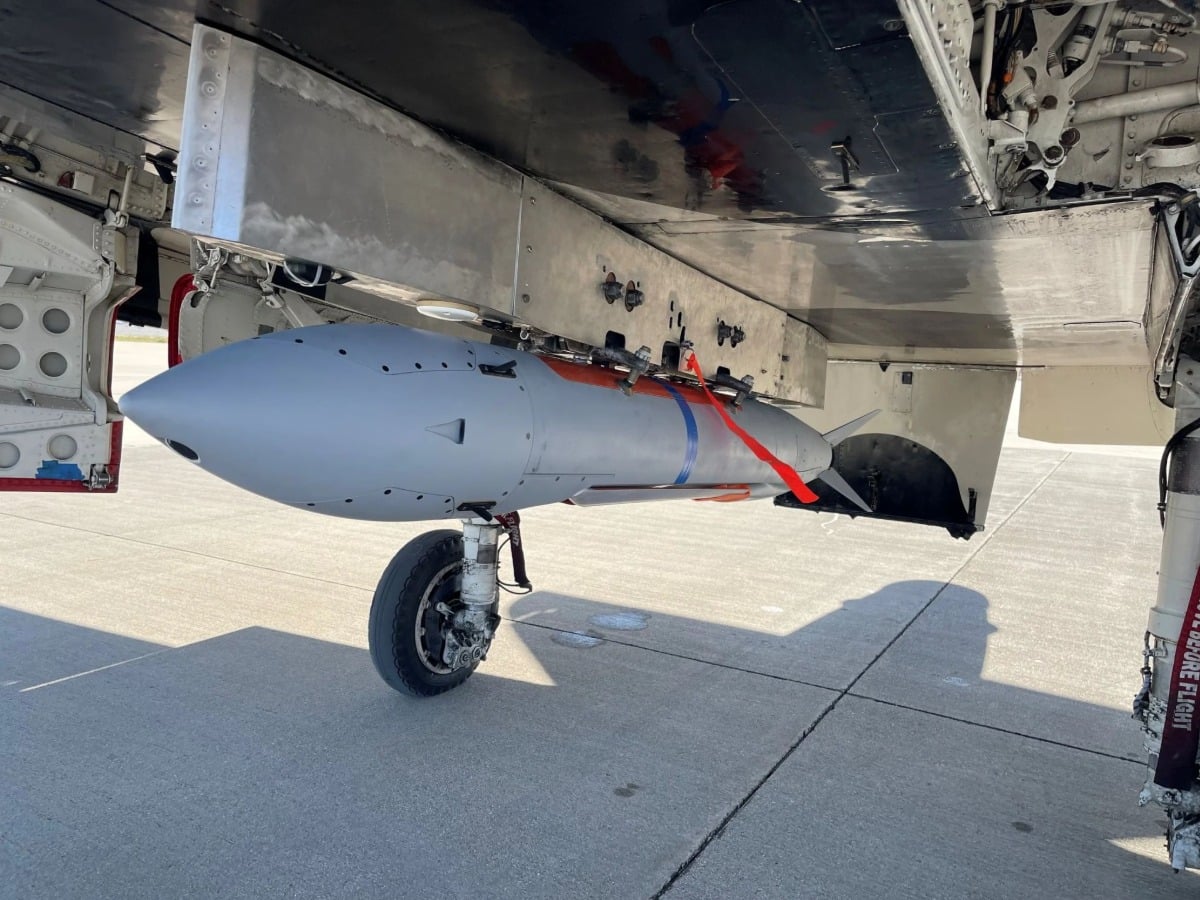
The United States Navy just handed a seventy-million-dollar prototype agreement to a defense startup named CoAspire to build a ground-launched, mid-range cruise missile for its new Coalition Heterogeneous Affordable Offensive Strike program, known as CHAOS. For decades, the military-industrial complex has treated precision munitions like boutique jewelry. Each weapon rolled off a low-volume, high-cost assembly line, wrapped in proprietary titanium and priced like real estate. The CHAOS initiative represents an abrupt departure from that model, focusing instead on delivering scale and affordability to allied foreign military sales customers who need to hit moving maritime targets without bankrupting their defense ministries.
The Anatomy of the CHAOS Contract
Under the Other Transactional Agreement secured through CMG Networks and the Naval Aviation Systems Consortium, CoAspire must design, build, test, and deliver a ground-launched variant of its Rapidly Adaptable Affordable Cruise Missile-Extended Range, or RAACM-ER. This weapon is built to bridge the operational gap between tactical battlefield rockets and strategic cruise missiles. It pairs the core turbojet-powered missile airframe with a heavy-duty rocket booster and a mobile ground launcher.
The primary utility of this system lies in its terminal guidance and propulsion choices. The missile features a GPS-assisted navigation system backed by a long-wave infrared seeker in the nose. Passive infrared seekers provide a massive tactical advantage over active radar systems because they do not emit electronic signals that alert an enemy ship or ground battery to an incoming attack. Furthermore, passive optics are inherently immune to standard radio frequency jamming and active electronic decoys. This guidance package allows the weapon to track and destroy stationary land infrastructure as well as maneuvering naval targets at ranges approaching five hundred nautical miles.
Escaping the Industrial Trap
To understand why the Pentagon is writing checks to a boutique engineering firm, look at the fragile state of traditional defense manufacturing. Major defense primes measure production runs in dozens per year, prioritizing high profit margins and exquisite engineering over mass production capacity. When a conflict consumes thousands of precision munitions in weeks, the traditional industrial base stalls.
CoAspire bypassed this bottleneck by leaning heavily on advanced additive manufacturing, commonly known as 3D printing. Traditional missile components require heavy custom tooling, dedicated casting molds, and extensive manual touch labor. By printing major structural parts, the company maximizes internal volume for fuel and payload while collapsing production timelines.
Changes that traditionally required factory retooling and multi-year delays can now be executed in months. For a hypothetical example, if engineers need to alter an internal fuel line routing to accommodate a new sensor package, an additive manufacturing workflow allows them to update the digital blueprint and print a revised chassis section the same week, keeping production lines moving without interruption.
Arming the Coalition
The strategic intent behind CHAOS extends far beyond U.S. inventory needs. The end-use customers for this weapon are international allies and coalition partners who require credible anti-ship and land-attack capabilities without access to restricted U.S. arsenals. Many allied nations find themselves priced out of standard American and European cruise missiles, leaving them dangerously vulnerable in contested maritime zones.
By designing the RAACM-ER family from the ground up for foreign military sales, the Navy is attempting to arm partners at scale. This approach shares DNA with other recent low-cost munitions efforts, such as the Army's Low-Cost Containerized Munition program and the Air Force's Family of Affordable Mass Missiles initiative. The defense establishment is finally acknowledging that quantity has a quality of its own, especially when facing adversaries who can manufacture thousands of low-cost drones and anti-ship systems.
The Reality Check on Startup Defense
Handing a seventy-million-dollar contract to a lean firm sounds revolutionary, but execution remains the ultimate hurdle. Transitioning from a polished prototype at a defense trade show to a mass-produced weapon rolling off assembly lines across fifty-six first-tier suppliers is a brutal test of logistics. Supply chain choke points, component quality control, and rigorous flight testing under electronic warfare conditions will determine whether this initiative succeeds or stalls out like so many defense tech experiments before it.
The Navy is placing its bets on speed and economics. If the gamble pays off, the defense market will see a permanent shift away from heavy, gold-plated munitions toward agile, software-driven hardware built for the realities of modern attrition warfare.