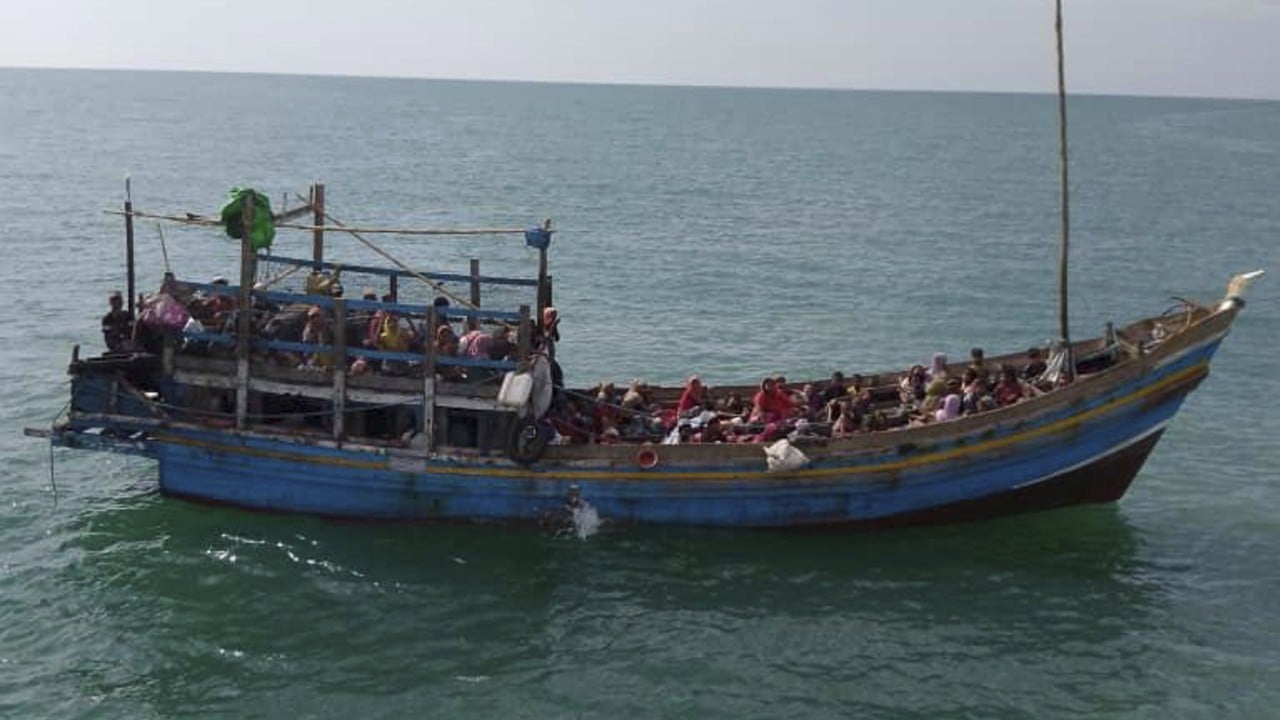
Malaysia has abruptly ordered the United Nations High Commissioner for Refugees to halt all new refugee registrations. Deputy Foreign Minister Lukanisman Awang Sauni confirmed the directive in parliament, announcing that Putrajaya is seizing total control of asylum tracking through a national system known as the Refugee Registration Document programme. The decision strips incoming asylum seekers of international protection mechanisms at the exact moment regional conflicts intensify. Without UN coverage or a fully operational state alternative, hundreds of thousands of people escaping violence in Myanmar now face immediate risk of arbitrary arrest, prolonged detention, and forced deportation into active combat zones.
The political maneuver arrives alongside state plans to deploy navy warships to deport approximately 5,000 Myanmar nationals currently held in overcrowded immigration detention centers. Putrajaya frames the move as an overdue assertion of national sovereignty. Human rights advocates, grassroots organizations, and legal experts view it as an impending humanitarian breakdown. By cutting off access to international status determination without establishing clear legal rights for state identity card holders, Malaysia has engineered a legal black hole.
The Sovereign Takeover of Asylum Tracking
For decades, the United Nations refugee agency operated as the de facto authority for displacement in Malaysia. The country never signed the 1951 UN Refugee Convention, meaning the state legally classifies every asylum seeker as an irregular migrant. Despite this legal refusal, authorities allowed international officers to process claims, issue identity documentation, and provide a basic layer of protection against police roundups.
That working arrangement has now collapsed.
Under the government's newly mandated Refugee Registration Document framework, state authorities intend to build a central database to track, verify, and monitor every displaced person within Malaysian borders. Government ministers argue that relying on foreign entity records compromises national security. They insist that centralizing data under domestic law enforcement will prevent unauthorized entries and organize data across government agencies.
This centralization hides a structural flaw. State-issued registration under previous initiatives, such as the Tracking Refugees Information System, failed to grant cardholders any legal status, right to work, or protection from state security forces. Migrants who paid for state-sanctioned identity cards were routinely arrested in workplace raids and sent to detention facilities anyway. Replacing international refugee processing with domestic police oversight shifts the objective from humanitarian protection to state control and expulsion.
+-------------------------------------------------------------------------------+
|                      MALAYSIAN REFUGEE MANAGEMENT TIMELINE                    |
+-------------------------------------------------------------------------------+
| 2019       - Government denies UNHCR access to immigration detention centers.  |
| 2022       - Introduction of Tracking Refugees Information System (TRIS).     |
| Jan 2026   - Rollout of national Refugee Registration Document (DPP) system.  |
| July 2026  - Executive order instructing UNHCR to freeze all registrations.   |
+-------------------------------------------------------------------------------+
The Human Cost of an Information Blackout
The suspension of international processing creates immediate fallout on the streets. Over 215,000 registered refugees currently reside in Malaysia, with ethnic Rohingya from Myanmar making up the majority. Tens of thousands more remain unregistered, having arrived after enduring hazardous maritime journeys or overland smuggling routes through Thailand.
An unregistered refugee in Malaysia lives in perpetual stealth.
Without a registration card or pending asylum interview slip, a displaced person cannot rent an apartment, buy a SIM card, or seek treatment at public medical clinics without facing immediate report to immigration enforcement. Simple daily tasks turn into dangerous calculated risks.
                                [NEW ARRIVAL]
                                      |
                         +------------+------------+
                         |                         |
                 (UNHCR Processing)         (Current Policy)
                         |                         |
                 [Protection Slip]           [No Status]
                         |                         |
                 [Temporary Safety]        [Immediate Risk]
                                                   |
                                       +-----------+-----------+
                                       |                       |
                                [Arrest/Detention]     [Workplace Exploitation]
Escalating Workplace Exploitation
Without recognized paperwork, new arrivals are forced directly into the underground economy. Unscrupulous employers in construction, agriculture, and manufacturing exploit this legal vulnerability. Displaced workers face non-payment of wages, extreme shifts, and unsafe working conditions, aware that filing a grievance will result in immigration arrest rather than labor justice.
Denial of Medical Care
Public hospitals require identification upon admission. Undocumented patients face inflated foreign-national fees and the threat of healthcare staff contacting police authorities. Expectant mothers delay prenatal care until dangerous complications arise, while chronic illnesses go unmanaged until patients require emergency intervention.
Criminalization of Survival
Without international status recognition, walking to a corner store or traveling across town to find day labor can lead directly to an immigration raid. Local police forces possess broad statutory powers to stop, interrogate, and detain anyone suspected of lacking legal residency.
The Navy Ship Repatriation Mandate
The timing of the registration freeze exposes a broader, coordinated push for mass expulsion. When Deputy Foreign Minister Lukanisman Awang Sauni announced the freeze in the upper house of parliament, he simultaneously revealed plans to use Malaysian navy ships to forcibly transport around 5,000 Myanmar nationals out of detention depots.
+-------------------------------------------------------------------------------+
|                         THE DEPORTATION CONUNDRUM                             |
+-------------------------------------------------------------------------------+
|  Detention Center Population  --->  [ 5,000 Scheduled for Naval Removal ]    |
|                                                     |                         |
|                                                     v                         |
|                                       [ Myanmar Military Junta ]              |
|                                                     |                         |
|                                                     v                         |
|                                       [ Non-Refoulement Breach ]              |
+-------------------------------------------------------------------------------+
Forcing displaced persons back into Myanmar directly violates international customary law. The customary principle of non-refoulement strictly forbids any nation from returning individuals to territories where their life or freedom would be threatened. Myanmar remains engulfed in a brutal civil conflict following the February 2021 military coup. Forced conscription, widespread artillery strikes, and systemic burning of civilian villages continue across multiple states.
Surrendering thousands of fleeing civilians to a hostile military junta is not an administrative transfer. It is a direct expulsion into active conflict. Because authorities barred UN personnel from accessing immigration detention centers in 2019, the government lacks any independent mechanism to determine whether individuals slated for naval deportation possess valid claims for international protection.
The state is operating without independent oversight. It collects names, denies external access, locks individuals away in overcrowded cells, and prepares military transport ships to return them to the regime they fled.
Xenophobia and Political Expediency
The administrative crackdown did not happen in a vacuum. It follows an intensive, calculated surge of xenophobic rhetoric across domestic social media platforms. Online disinformation campaigns have targeted displaced populations, blaming them for rising living costs, crime rates, and strained municipal services.
Political leaders have leaned into these populist grievances rather than correcting false narratives. Framing vulnerable populations as security threats allows government officials to project tough-on-crime stances to conservative voting blocs.
| Policy Approach | International UN Framework | Domestic DPP Framework |
|---|---|---|
| Primary Administrator | United Nations Refugee Agency (UNHCR) | Malaysian Ministry of Home Affairs / Police |
| Legal Basis | International Protection Principles | Domestic Immigration & Security Acts |
| Work Authorization | Informal Tolerance | None (Subject to Workplace Arrest) |
| Detention Shield | Partial Protection via UN Identity Cards | Zero Protection (Subjugated to Raids) |
| Oversight | Independent External Review | Internal State Agencies Only |
This political strategy ignores basic economic realities. Malaysian industries rely heavily on low-wage migrant labor to fill jobs in plantation agriculture, construction, and service sectors. Denying legal rights to hundreds of thousands of residents does not reduce their presence. It forces them further into shadow economies where extortion, human trafficking, and criminal exploitation flourish unchecked.
Broken Resettlement Promises
Government officials often argue that freezing registrations will force international agencies to focus exclusively on resettling refugees into third countries like the United States, Australia, or European nations.
This argument ignores global resettlement metrics.
Third-country resettlement slots have plummeted globally. Policy shifts in Western capitals, combined with strict immigration caps, have reduced formal resettlement numbers to negligible levels. In 2025, fewer than 2,000 refugees successfully resettled out of Malaysia. At that processing rate, clearing the current registered population would take over a century.
Telling displaced families that they must wait for third-country resettlement while blocking their ability to register locally is a policy of exhaustion. It is designed to make daily existence so precarious that people choose dangerous sea voyages or return to active war zones rather than remain trapped in legal limbo.
The Flawed Sovereignty Argument
Proponents of the new state registration model insist that Malaysia, as a sovereign nation, must control its own population registry without foreign interference. They point out that European nations and regional neighbors maintain domestic immigration controls.
That argument ignores a fundamental reality.
Countries that manage domestic asylum registration frameworks do so within comprehensive statutory boundaries. They establish clear administrative tribunals, grant temporary work authorizations, provide access to public education, and recognize non-refoulement protections under national law.
Malaysia has constructed the opposite. The state is establishing a centralized tracking system while deliberately withholding legal status, labor rights, and protection against arbitrary deportation.
Creating a government database designed solely for monitoring and law enforcement enforcement operations, while stripping away international oversight, is not modernizing asylum management. It turns public administration into an instrument of mass expulsion.
An Impending Breakdown
Stopping international registrations without a functional, rights-respecting domestic alternative creates dangerous instability. Ground operations will not stop people from escaping air strikes, ethnic persecution, or political violence in Myanmar. Desperate people will continue to arrive at the borders.
Instead of orderly processing, Malaysia will face an expanding undocumented population operating completely outside the legal economy. Law enforcement agencies will divert massive public resources toward endless detention raids. Local communities will suffer from degraded labor standards, while regional security will weaken as human trafficking networks profit from the legal vacuum.
Policy makers must immediately establish clear legal safeguards within the domestic framework. That requires granting complete access to independent monitors, guaranteeing protection from forced deportation to conflict zones, and providing temporary legal work permits for all registered residents. Continuing down the current path of arbitrary freezes, naval expulsions, and institutional exclusion will produce a humanitarian disaster of the state's own making.


