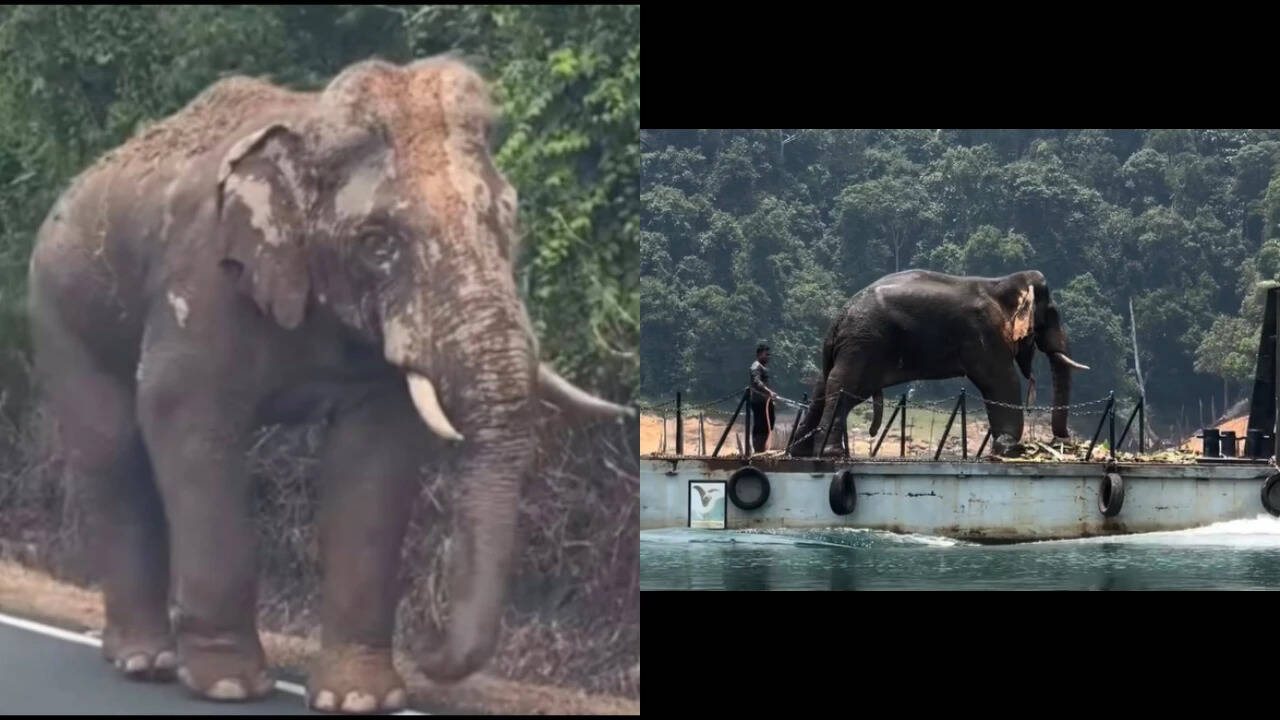
The viral imagery of Sulong Chalil limping down the East-West Highway captured global attention, painting a portrait of an injured wild Asian elephant navigating asphalt and heavy traffic for over 100 kilometers in a desperate bid to return home. Social media platforms flooded with heartbreak, outrage, and romanticized narratives of an animal searching for his lost family. Yet beneath the emotional digital spectacle lies a far more systemic institutional crisis. Sulong’s harrowing trek is not an isolated heartwarming anomaly. It is a glaring symptom of a fractured conservation strategy, highlighting how rapid habitat fragmentation and flawed wildlife translocation protocols routinely put both human lives and endangered species on a collision course.
To understand why Sulong walked back across the Titiwangsa Range, one must look past the viral optics and examine the mechanics of human-elephant conflict mitigation in Southeast Asia. Sulong originally lived near plantations and human settlements in the Malaysian state of Kelantan. As agricultural footprints expand and primary forests shrink, encounters between villagers and wild megafauna spike. When local complaints mount, wildlife authorities face intense political pressure to act swiftly. The standard operating procedure for Malaysia's Department of Wildlife and National Parks, known as Perhilitan, is translocation.
Translocation sounds clean on paper. Capture the animal from the conflict zone, load it onto transport, and release it deep into a protected forest hundreds of kilometers away. The reality on the ground is brutally complex. When authorities moved Sulong from Kelantan to a forest reserve in Perak—roughly 230 kilometers distant—they dropped an apex territorial mammal into an unfamiliar landscape already occupied by other dominant males and established social structures.
Elephants possess extraordinary spatial cognition and mental mapping capabilities. They navigate using ancient pathways, subterranean acoustic cues, and memory banks passed down through generations. Dropping a displaced bull elephant into a strange jungle does not reset his internal compass. It triggers a profound disorientation. Driven by instinct, Sulong did what evolutionary biology programmed him to do. He turned around and walked toward his ancestral home, navigating treacherous mountain passes and busy national highways with a compromised front right leg.
The Danger of Anthropomorphic Myths
The internet wanted Sulong to be a grieving family man. Commentators across social media platforms insisted the solitary bull was risking his life to reunite with his herd. Wildlife biologists, however, offered a vital corrective that public sentiment largely ignored. Adult male Asian elephants naturally lead solitary lives once they mature and leave their maternal herds. Sulong was not searching for a lost family unit. He was trying to reoccupy a familiar home range where resources, water sources, and spatial safety were known quantities.
This distinction matters. By framing the crisis through a purely sentimental lens, public discourse missed the structural failure of the initial relocation. When netizens blame agencies exclusively for the animal's physical wounds—with various unverified claims circulating online regarding how his leg was injured during capture—they obscure the deeper systemic issue. The core failure is not merely how a single animal was handled during a capture operation. The failure is that translocation is frequently deployed as a cosmetic band-aid for a much larger habitat loss epidemic.
Moving a wild animal across state lines does not solve the underlying friction between expanding human infrastructure and shrinking wilderness. It merely relocates the problem, trading a localized plantation dispute for a high-stakes highway hazard.
The Logistics of Crisis Management
When Sulong reemerged on the asphalt in August, monitoring him became a logistical nightmare for state personnel. Drones hovered overhead while ground patrols attempted to manage fast-moving commercial traffic along a major cross-peninsular artery. Motorists stopped dangerously close for photographs, treating a wounded, stressed four-ton mammal like a roadside tourist attraction.
Perhilitan officials faced an impossible trade-off. Leave the animal to continue his dangerous march toward Kelantan and risk a catastrophic vehicular collision, or intervene once more. On August 30, authorities executed a second capture operation. This time, the state deployed trained elephants—named Rambai and Cheri—alongside police units to guide the stressed bull. In a striking logistical pivot, officials loaded Sulong onto a houseboat, transporting him across the vast expanse of Tasik Kenyir to the heavily protected depths of Taman Negara Terengganu.
The images of an enormous wild elephant standing stoically on a vessel floating across an artificial lake provided a dramatic bookend to his weeks-long ordeal. Veterinary assessments indicated that his leg wound showed signs of improvement under ongoing medical management. Yet, transferring an animal deeper into a massive national park does not guarantee long-term stability. Taman Negara is vast, but it is also bounded by human development, logging concessions, and localized pressures. If the new habitat fails to meet his behavioral needs, or if his home range instincts override the artificial boundaries imposed by wildlife management, history risks repeating itself.
The Structural Blind Spot
Malaysia is far from alone in grappling with this dilemma. Across Asia and Africa, wildlife departments are trapped in an unwinnable cycle of reactive management. Conservation budgets are perpetually stretched thin, forcing agencies to rely on emergency capture-and-release cycles rather than investing in permanent, landscape-level structural solutions.
Building effective ecological corridors—such as dedicated wildlife overpasses and underpasses along major highways like the East-West route—requires immense capital expenditure and cross-ministerial political will. Without these safe passages, linear infrastructure chops vital ecosystems into isolated fragments. Animals attempting to forage or return to familiar territories find themselves funnelled directly into lanes of high-speed traffic.
Furthermore, local communities living adjacent to forest fringes bear the brunt of crop damage and property destruction. Compensation schemes are often bureaucratic, slow, and inadequate, breeding local resentment toward conservation initiatives. When rural populations feel economically threatened by wildlife, tolerance evaporates, and pressure on authorities to remove animals permanently intensifies. Translocation becomes the path of least resistance for bureaucrats desperate to appease both agricultural stakeholders and urban conservation advocates.
Sulong’s journey exposed the fragility of this status quo. He survived the highway, dodged oncoming transport trucks, and endured the trauma of double displacement. He now resides within a protected national park under veterinary supervision. However, celebrating his safe arrival at Tasik Kenyir masks the uncomfortable truth that our current conservation playbook remains entirely reactive. Until regional planners prioritize genuine habitat connectivity over temporary relocation quick fixes, other displaced giants will inevitably find themselves limping down the shoulder of a highway, searching for a home that human expansion has erased.