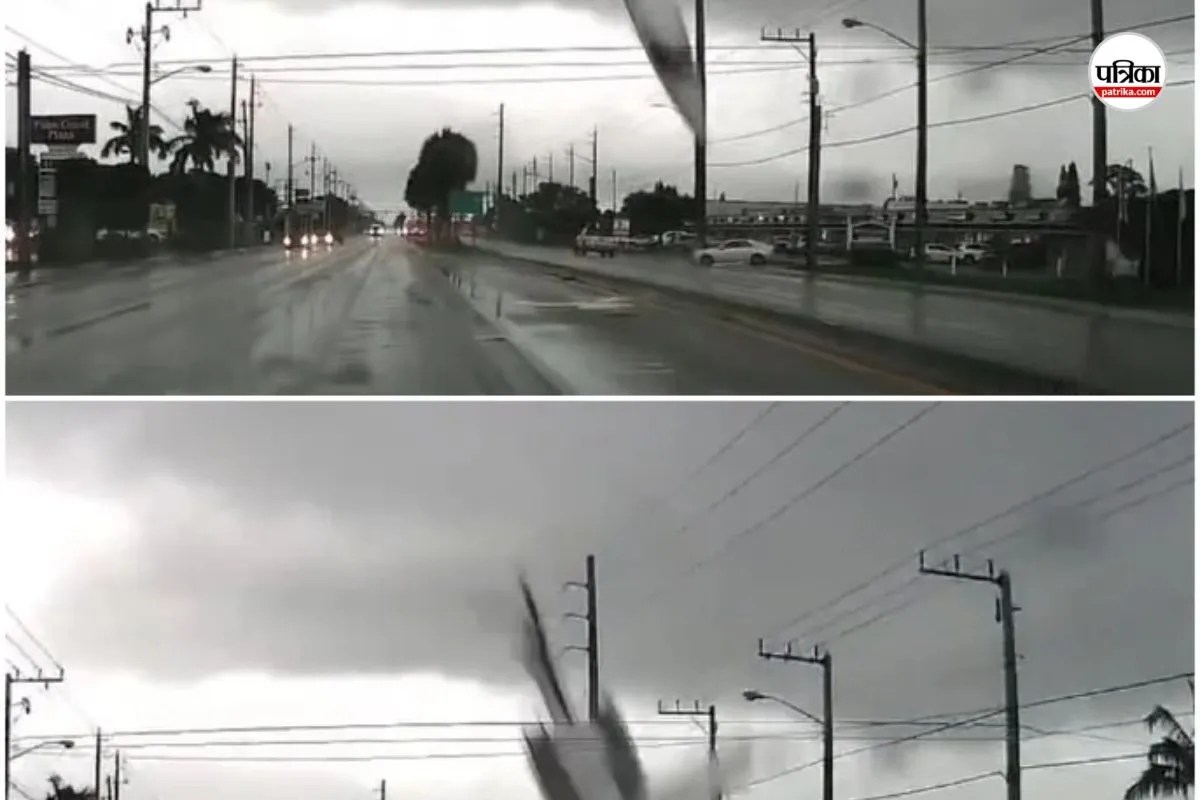
Investigators from the National Transportation Safety Board have already found pieces of the Learjet 60 left elevator scattered up to 3.8 miles away from the main impact crater in Greenacres, Florida. That detail alone tells seasoned aviation analysts that the November 1, 2026, crash—which killed all nine people aboard a flight from Austin, Texas, to North Eleuthera in the Bahamas—was far more complex than a simple weather encounter. Before the aircraft plunged at vertical speeds exceeding 20,000 to 32,000 feet per minute, the crew reported clear ice and moderate turbulence while navigating convective weather over South Florida.
When a high-speed business jet breaks apart in flight, public coverage almost always rushes toward a single villain: convective storms, severe icing, or pilot error. After decades covering air safety and accident reconstruction, I have learned that catastrophic mid-air breakups rarely come from one isolated trigger. They happen when aerodynamic loads, structural margins, and split-second flight-path decisions collide past the point of recovery. Don't forget to check out our previous post on this related article.
Why "Manageable" Ice Turns Deadly at Jet Speeds
On the surface, hearing a crew tell air traffic control that they have light, clear ice that is manageable sounds routine. Thousands of flights deal with light accretion every week without incident.
Clear ice is deceptive. Unlike opaque rime ice, which tends to form a rough, granular texture on leading edges, clear ice freezes from larger supercooled water droplets that spread backward before turning into a dense, smooth, glassy sheet. It clings tightly to airfoils and can alter the aerodynamic profile of wings and tail surfaces in ways that do not show up dramatically on a casual glance. To read more about the background here, NBC News provides an excellent breakdown.
Even a thin layer of ice changes local airflow separation and stall characteristics. On a swept-wing jet cruising at high altitude or maneuvering near convective cells, small shifts in lift distribution and pitching moments can catch a crew off guard. Add moderate turbulence into that equation, and the airframe is already absorbing sharp vertical gusts while the crew tries to maintain a clean climb or cruise profile.
Clear ice rarely announces itself with drama; it quietly reshapes airflow until a routine pitch or speed change demands more margin than the wing currently has.
Still, ice alone rarely rips a modern transport-category business jet apart in the sky. Certification standards require aircraft to handle certified icing envelopes and structural gusts well beyond normal operating limits. To reach an in-flight breakup, forces on the structure have to spike dramatically—typically through high airspeed, abrupt control inputs, severe convective updrafts and downdrafts, or a combination of all three.
The Physics of an Overspeed Dive and Tail Separation
Tracking data and air traffic control exchanges point to a harrowing sequence around 12:48 p.m. EST. After descending earlier near Naples and requesting a climb toward 37,000 feet, the aircraft entered a steep descent and the crew reported an overspeed condition.
High-speed dives are unforgiving on swept-wing jets. As indicated airspeed climbs toward or past maximum operating limits, two dangerous aerodynamic effects build rapidly:
- Control surface effectiveness shifts: Elevator and aileron authority can become heavy or nonlinear, making recovery from a nose-low attitude harder when G-loads are rising.
- Aeroelastic and buffet loads multiply: High dynamic pressure magnifies structural stress on the fuselage and empennage, especially if the jet passes through turbulent air or experiences Mach tuck or sudden pitch-up tendencies.
Finding fragments of the left elevator miles from the Greenacres crater is a major clue for NTSB structures specialists. When tail components separate prior to ground impact, investigators look closely at flutter, extreme tail loads during a high-speed pull-up or dive, or structural damage triggered by severe turbulence. Every fracture surface on aluminum skin, spars, and actuator fittings carries a story under a microscope—telling metallurgists whether a part failed from overload in one violent event or suffered prior fatigue or impact damage.
To see how quickly an upset can escalate without assuming any real-world blame, consider a hypothetical training scenario in a high-altitude simulator. A crew enters light icing and turbulence near building convective cells, requests a higher altitude to top the weather, and encounters a sudden updraft followed by a sharp downdraft. If the nose pitches down and airspeed builds rapidly while the crew fights both altitude loss and turbulent buffeting, pulling back too hard at high speed can generate immense vertical tail and wing loads in a matter of seconds. In real accident investigation, however, hypothetical scenarios are strictly a thinking aid—never a substitute for hard physical evidence and flight data recorder readouts.
Convective Storms and the Illusion of Radar Clarity
South Florida in November can still produce brisk, moisture-laden convective activity. Pilots flying business jets rely heavily on onboard weather radar and ground-based NEXRAD imagery to pick their way through gaps between cells.
Onboard weather radar has real limitations that experienced crews know well, yet still get caught by. Radar returns measure precipitation droplets and hail—not invisible wind shear, turbulent outflow boundaries, or sub-visual moisture plumes where supercooled liquid water can linger. A pilot looking at a narrow corridor between bright red or yellow cores might see what looks like an open path, only to hit turbulent shear or heavy icing right on the edge of a growing cell.
| Investigative Factor | What Investigators Look For | Why It Matters in a High-Speed Breakup |
|---|---|---|
| Airframe Icing | Weather soundings, anti-ice system status, leading-edge ice type | Alters lift and stall margins; complicates high-altitude climbs |
| Turbulence and Convection | Storm cell tops, radar reflectivity, vertical wind shear | Imposes sudden G-loads and can trigger rapid pitch or roll upsets |
| Overspeed and Dive Dynamics | Altitude/speed trends, descent rates above 20,000–32,000 fpm | Drives dynamic pressure up sharply, pushing structural limits |
| Tail and Structural Debris | Debris scatter distance, fracture patterns, control linkages | Distinguishes in-flight breakup sequence from ground impact destruction |
There is also a human factor that rarely gets enough scrutiny in fast-moving news cycles. When a flight is heading toward a destination like the Bahamas with passengers aboard, crews naturally want to keep forward momentum and avoid long detours if conditions initially seem manageable. That pressure is rarely reckless; it is often incremental—accepting a slightly tighter route around weather or a climb to get above a layer—until conditions shift faster than expected.
What the NTSB Wreckage Hunt Actually Proves—and What It Doesn't
Recovering parts of the aircraft from a flooded impact crater and surrounding neighborhood streets in Palm Beach County is painstaking work. Heavy rain and a water-filled crater slowed recovery in the days after the crash, while investigators secured the cockpit voice recorder for analysis at the NTSB laboratory in Washington, D.C., and worked to account for flight data.
Some early commentary online jumped straight to blaming a single factor—pointing either to icing, storm turbulence, or the young age of the first officer. That kind of instant verdict misses how complex high-speed upsets really are. In a two-pilot cockpit, crew coordination, workload division, automation management, startle response, and spatial orientation under high G-loads interact in ways that only careful reconstruction can untangle. Even NTSB officials have emphasized that a thorough investigation takes many months—often over a year—before probable cause and contributing factors are formally established.
A gray area remains until all wreckage and recorded parameters are correlated: a pilot can report ice as "manageable" at one minute while hidden aerodynamic or atmospheric changes are already building momentum toward a crisis the next. Separating what the crew perceived in real time from what the airframe actually experienced requires patience, physical evidence, and zero rush to judgment.
For operators of light and midsize business jets flying through convective corridors, the practical takeaway is straightforward: treat any combination of icing and convective turbulence near climb or cruise transitions as a high-vigilance envelope, give storm cells generous lateral separation well before turbulence builds, and brief explicit airspeed and pitch-recovery priorities before entering turbulent weather.
NTSB Details Learjet Crew's Final Moments Before Fatal Crash
This video provides a timely breakdown of the NTSB's early findings on the crew's final communications regarding ice and turbulence before the fatal Florida Learjet crash.