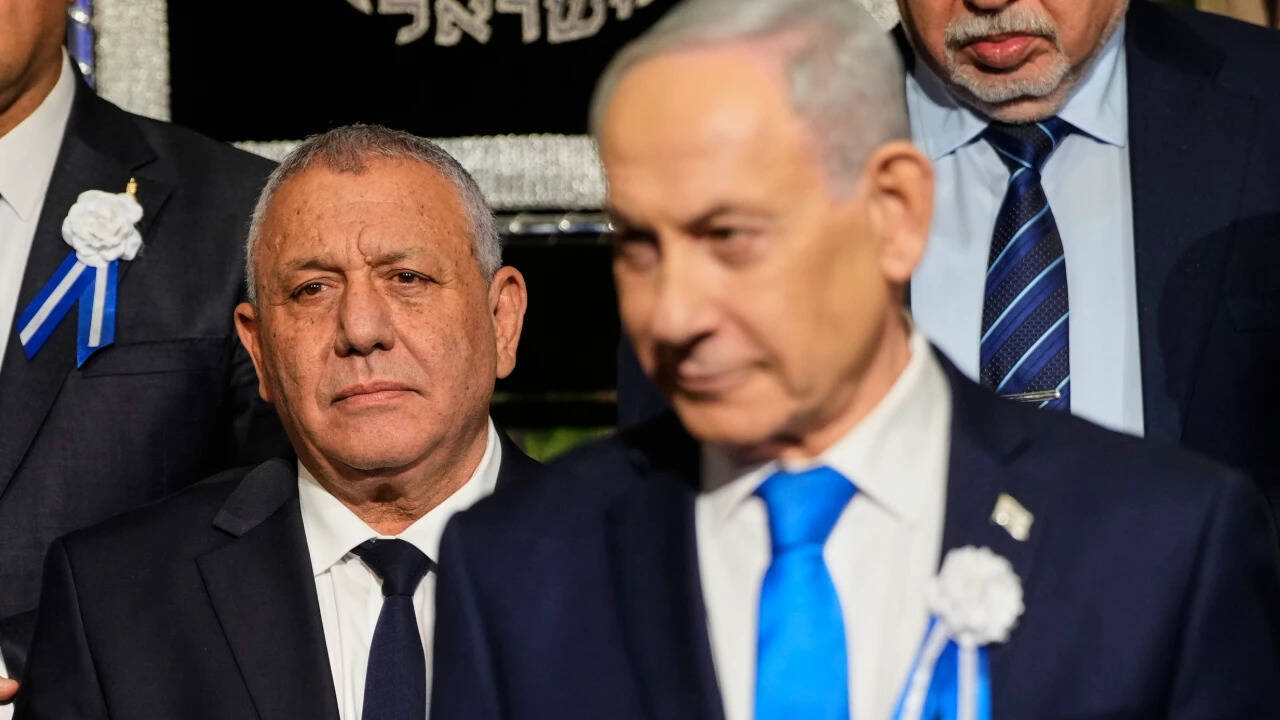
The floor of the Israeli parliament rarely offers moments of quiet consensus, yet the recent confrontation between former Israel Defense Forces Chief of Staff Gadi Eisenkot and Prime Minister Benjamin Netanyahu cut deeper than standard partisan theater. Following a fiery Knesset address by Netanyahu, Eisenkot publicly declared the prime minister unfit to remain in office, condemning the speech as divisive and hateful. The exchange highlights a widening rift at the highest levels of Israeli security and governance, pitting a career military strategist against the nation's longest-serving political leader.
Understanding this collision requires looking past the immediate soundbites. In parliamentary systems like Israel's, the Knesset serves as both a legislative chamber and the primary arena for political survival. Speeches delivered from the plenum podium are rarely aimed solely at the lawmakers sitting in the room; they are crafted for coalition partners, opposition voters, and international observers watching every syllable.
When Eisenkot stepped forward to rebuke Netanyahu, he did so carrying the weight of his background. Having served as the 21st Chief of Staff of the IDF from 2015 to 2019, and later joining the emergency war cabinet after the October 7 attacks before eventually departing the coalition, Eisenkot occupies a distinct lane in Israeli public life. His criticism is framed around statecraft, military cohesion, and institutional responsibility rather than routine ideological sparring.
The Anatomy of a Knesset Confrontation
To grasp why a single speech triggered such an acute reaction, one must examine how rhetoric functions inside Jerusalem's political ecosystem. The Knesset operates under rules that allow the prime minister and opposition figures to address the plenum during special debates, often called "40-signature debates," where the opposition can compel the prime minister to appear and respond to specific grievances.
During these sessions, the rhetoric frequently escalates. Netanyahu has built a decades-long political career on masterful oratory, frequently framing political disputes as existential struggles between his government's policies and what he characterizes as weak or misguided opposition approaches. Supporters view this style as resolute leadership under immense domestic and international pressure. They argue that a prime minister facing multi-front security challenges, hostage negotiations, and intense scrutiny must project unwavering strength and challenge critics who question the government's strategic direction.
Critics, including Eisenkot, interpret the exact same rhetoric as corrosive to national unity. In his response to the Knesset address, Eisenkot argued that the prime minister's words prioritized political self-preservation over the cohesion required to sustain a nation during prolonged conflict. By labeling the speech hateful and questioning Netanyahu's fitness for office, Eisenkot escalated the critique from a policy disagreement to a fundamental question of leadership legitimacy.
Why Military Backgrounds Carry Weight in Israeli Politics
Israel's civil-military relationship is unique among democracies. Because military service is mandatory for most citizens and senior commanders transition regularly into politics, former generals hold substantial credibility on matters of national security. However, entering the political arena strips away the insulation of military rank.
- Institutional Credibility: Voters often look to former chiefs of staff like Eisenkot for sober, non-partisan assessments of security threats and strategic planning.
- Political Vulnerability: Once in the Knesset, former generals face seasoned politicians who understand coalition arithmetic, media cycles, and voter mobilization far better than military doctrine.
- Divergent Timelines: Military planners think in terms of operational objectives, exit strategies, and long-term force readiness, whereas political leaders must also manage immediate coalition stability and electoral survival.
This structural tension explains much of the friction between the two men. Eisenkot approaches governance through the lens of military command—where accountability flows upward and clarity of mission is non-negotiable. Netanyahu operates through the prism of parliamentary statecraft, balancing competing demands from right-wing coalition partners, security agencies, and international allies.
The Broader Strategic Divide
The war of words over the Knesset speech did not emerge in a vacuum. It reflects deep, unresolved disagreements over strategy, accountability, and the trajectory of Israeli governance.
One central point of contention involves the management of ongoing military campaigns and hostage negotiations. During his time in the emergency government, Eisenkot repeatedly pushed for clear strategic objectives and raised concerns about the lack of a comprehensive post-war diplomatic framework. When he and National Unity party leader Benny Gantz left the government, they cited what they described as the prime minister's hesitation to make decisive strategic choices due to political considerations within his coalition.
Netanyahu and his allies reject that characterization entirely. From the prime minister's perspective, premature concessions or rigid timelines undermine Israel's negotiating leverage and jeopardize long-term security goals. Defenders of the government contend that maintaining pressure on adversaries while resisting international demands for an immediate halt to operations is the only viable path to achieving total security objectives. They view opposition calls for early elections or leadership changes during wartime as reckless maneuvers that weaken the country's negotiating hand.
The Question of Accountability and State Commissions
Another fault line beneath the Knesset clash is the debate over investigating the intelligence and operational failures surrounding October 7. Eisenkot, whose own son and nephew were killed in combat during the war, has consistently advocated for a formal state commission of inquiry—the highest-level investigative body under Israeli law, appointed by the president of the Supreme Court.
Netanyahu has maintained that any comprehensive investigation must wait until active military operations conclude, arguing that senior commanders and political leaders cannot simultaneously fight a war and prepare testimony for a legal inquiry. Critics suspect this delay is intended to postpone political reckoning, while supporters argue it reflects basic common sense during an active conflict.
How Coalition Arithmetic Shapes the Rhetoric
In Israel's proportional representation system, no single party has ever won an outright majority in the Knesset. Governing requires assembling a coalition of at least 61 seats out of 120, giving smaller factions significant leverage over the prime minister.
This mathematical reality shapes every speech delivered from the podium. When Netanyahu addresses the Knesset, he is speaking to multiple audiences simultaneously:
- His Core Base: Voters who trust his experience, share his skepticism of international pressure, and view him as a bulwark against security concessions.
- Coalition Partners: Religious and nationalist parties whose continued support keeps the government intact and prevents snap elections.
- The Opposition: Centrist and left-wing lawmakers seeking to peel away moderate coalition members or build momentum for a vote of no confidence.
Eisenkot's intervention targets the vulnerable seam between these audiences. By framing Netanyahu's rhetoric as harmful to the state itself, Eisenkot attempts to appeal to moderate right-wing voters and undecided citizens who may support strong security policies but feel alienated by sharp political polarization.
Yet political veterans know that harsh rhetoric in the Knesset rarely translates into immediate structural change. Unless members of the ruling coalition defect—a step that would likely trigger elections in which many of those lawmakers could lose their seats—opposition condemnations remain largely symbolic in the short term.
Historical Precedents in Israeli Parliamentary History
Sharp personal attacks between prime ministers and former security chiefs are not new to Israeli politics. The country's parliamentary history is filled with moments where former allies turned into bitter adversaries over questions of war, peace, and leadership fitness.
In the early 1980s, following the Lebanon War and the Sabra and Shatila massacre, intense public and parliamentary pressure led to the Kahan Commission, which ultimately forced Defense Minister Ariel Sharon to resign his portfolio. Decades later, clashes between Prime Minister Ehud Olmert and his critics following the 2006 Second Lebanon War sparked massive protests and the Winograd Commission, reshaping the political career of several key figures.
In each historical instance, the pattern followed a recognizable trajectory. A national crisis exposed deep strategic divisions, former military leaders stepped forward to challenge the political leadership's judgment, and the government fought to maintain coalition discipline while navigating public scrutiny.
What distinguishes the current era is the speed and intensity of information flow. Every remark made on the Knesset floor is clipped, amplified across social media, and debated on television panels within minutes. Nuance often evaporates in favor of binary framing, leaving little room for middle ground.
Evaluating the Competing Arguments
For observers trying to separate political theater from substantive critique, both sides present arguments rooted in distinct philosophies of leadership.
The case advanced by Eisenkot and the opposition rests on institutional norms and national cohesion. From this viewpoint, a prime minister bears a unique responsibility to lower the temperature of public discourse, especially when soldiers are in the field and families are grieving. When a leader uses the Knesset podium to attack critics or sow division, opponents argue, it erodes public trust in state institutions and damages the social solidarity essential for national resilience.
The counterargument advanced by Netanyahu and his supporters rests on democratic mandate and strategic resolve. In a parliamentary democracy, the prime minister holds office because a majority of elected representatives backed his coalition. Supporters argue that unelected officials, former generals, and opposition figures do not have the right to declare a sitting prime minister unfit outside the ballot box. Furthermore, they contend that robust, unapologetic pushback against critics is necessary to counter what they see as unfair media coverage and relentless political attacks from opponents who have failed to unseat the government through standard parliamentary procedures.
Both perspectives highlight real tensions within modern democracies. How does a nation balance the need for unified leadership during a crisis with the democratic imperative to hold leaders accountable for rhetoric and strategy? There is no simple formula.
The Mechanics of Political Survival in Jerusalem
While headlines focus on dramatic quotes like "unfit to remain in office," experienced analysts watch the quieter indicators of political stability. In the Knesset, power is measured by committee chairmanships, budget allocations, and legislative discipline rather than applause lines.
For the opposition to translate Eisenkot's critique into tangible political outcomes, it must overcome significant structural hurdles:
- Fragmentation: The opposition is composed of diverse parties ranging from secular centrists to right-wing critics of Netanyahu and Arab factions, making it difficult to agree on an alternative governing coalition.
- Coalition Discipline: Despite internal disagreements over issues like military conscription exemptions for ultra-Orthodox citizens and judicial reform, coalition partners share a strong incentive to avoid early elections while polls show uncertain outcomes.
- Timing: Under Israeli law, dissolving the Knesset requires passing a bill through three readings, a process that gives the prime minister multiple opportunities to negotiate compromises and shore up support.
Consequently, fiery exchanges on the Knesset floor often serve a longer-term purpose. They are efforts to shape the public narrative ahead of future electoral cycles, defining the terms of debate so that when voters eventually go to the polls, the core questions of leadership, accountability, and national direction remain front and center.
What the Clash Reveals About Israeli Governance
Strip away the partisan labels, and the confrontation between Gadi Eisenkot and Benjamin Netanyahu exposes a fundamental stress test for Israeli democracy. The country is navigating simultaneous military, diplomatic, and social pressures that would strain any political system.
Eisenkot's decision to confront the prime minister directly underscores how deeply those pressures have penetrated the upper echelons of the security establishment. When a former chief of staff concludes that the prime minister's rhetoric poses a threat to national cohesion, it signals that the consensus mechanisms that once bound Israel's political and military elites together are under severe strain.
At the same time, Netanyahu's refusal to yield ground demonstrates the enduring power of parliamentary coalition politics and his capacity to rally supporters around a message of defiance and continuity. As long as the 61-seat majority holds inside the Knesset, the prime minister retains the constitutional authority to govern, regardless of how sharply former commanders condemn his words.
The clash in Jerusalem leaves voters with a stark choice between two competing visions of leadership—one rooted in institutional restraint and military-style accountability, the other in relentless political combat and ideological determination—and the outcome will ultimately be decided not by speeches on the Knesset floor, but by the arithmetic of the next Israeli ballot box.