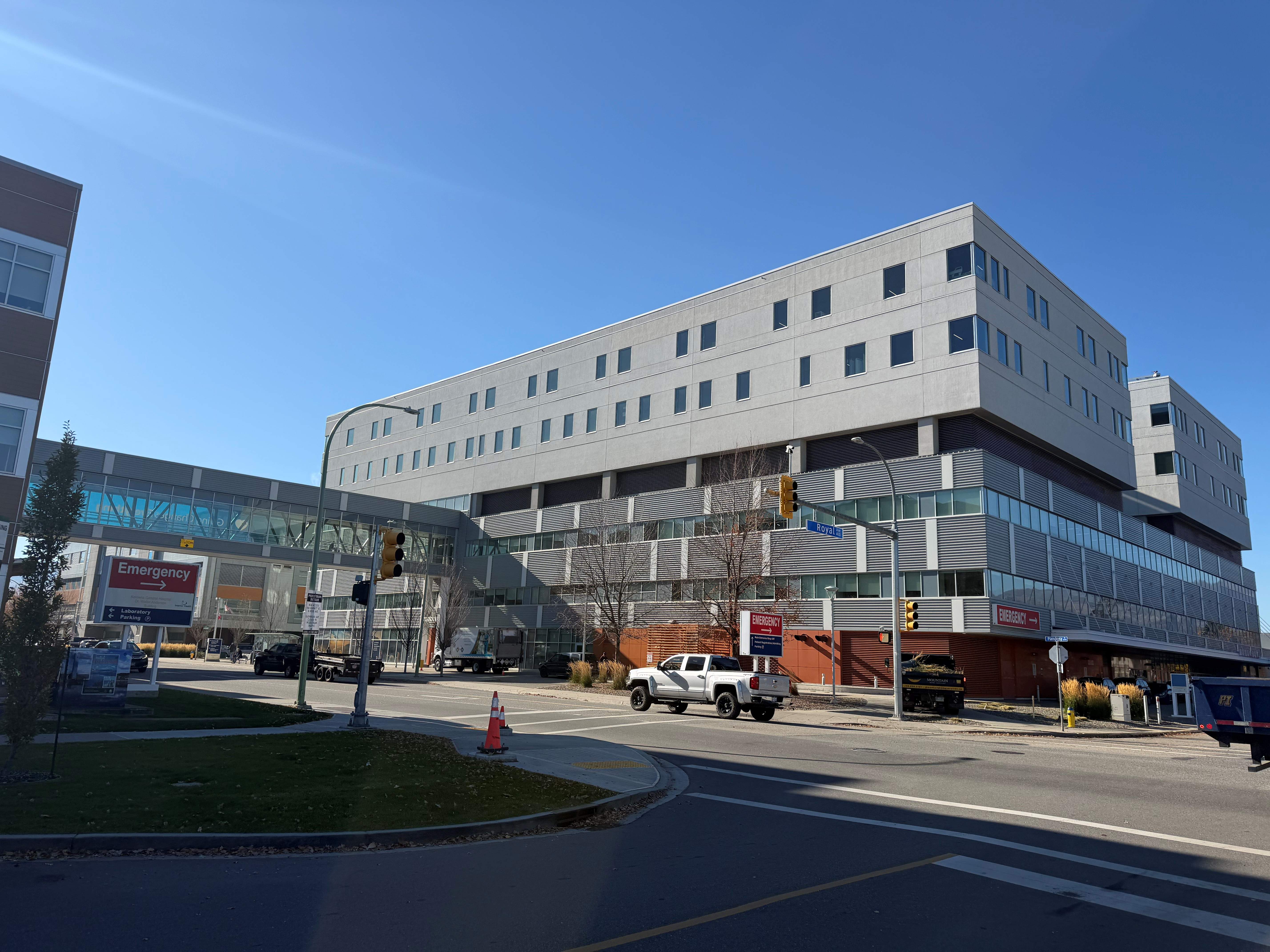
David Eby’s $30 million pledge to build out the sixth floor of Kelowna General Hospital arrived on October 20, 2026—four days before British Columbians voted in the snap provincial election—exposing a fourteen-year gap between hospital architecture and political urgency. The commitment targets unfinished space in the hospital’s Centennial Tower, which opened in 2012 with shell space built for future growth while patients waited on beds and in hallways across the Okanagan.
Politicians love ribbon cuttings and press conferences in front of brick and glass. Health authorities live with mechanical rooms, staffing ratios, and multi-year capital queues that rarely fit inside a thirty-second campaign clip.
Why the Timing Raised Eyebrows in the Okanagan
Announcing capital money four days before election day is standard retail politics, yet the optics in Kelowna were sharper than usual. Centennial Tower was designed to absorb population growth when it opened in 2012, leaving unfinished floors sitting idle while demand climbed steadily across the Central and North Okanagan. Voters and local opponents immediately asked why an obvious bottleneck took more than a decade to reach the front of the line, only to surface during the final sprint toward the October 24 ballot.
Eby pushed back by arguing that the funding sat inside a costed platform, backed by higher taxes on top earners, and built on preliminary planning already underway with the health authority. His message was simple: money on the table beats vague promises.
Opponents saw calculated desperation rather than long-range stewardship. Interim Conservative leader Lorne Doerkson and local candidates argued the pledge was timed to hold votes amid a chaotic race that followed an early election call. When a government waits fourteen years to finish space already framed inside a major building, late-hour urgency looks less like foresight and more like triage.
What Shell Space Actually Costs to Turn Into Care
Leaving an inpatient floor unfinished during initial construction is a common capital strategy. Developers and health planners pour concrete, run core risers, and weatherproof the envelope upfront so future build-outs avoid tearing open active clinical zones later.
It is not free space. Finishing an empty floor inside a working acute-care hospital costs far more than slapping drywall onto studs.
- Mechanical and air-handling tie-ins: Inpatient units require strict negative-pressure or infection-control airflow balancing, medical gas lines, emergency power tie-ins, and specialized plumbing that must connect to live hospital systems without shutting down neighboring wards.
- Phased construction drag: Work inside an active hospital happens under strict noise, dust, and infection rules, stretching timelines and inflating labor costs compared with greenfield builds.
- Operating budgets beyond capital: A $30 million capital cheque pays for construction and equipment, not the nurses, respiratory therapists, pharmacists, and ward clerks needed to staff beds twenty-four hours a day.
Even Eby acknowledged that additional recruitment will be required as Kelowna grows and new services come online. Capital announcements grab headlines because a single lump sum sounds decisive; operating commitments are quieter, recurring, and far harder to hide when budgets tighten.
Consider a hypothetical example of how a hospital board weighs a build-out request. Suppose a health authority has enough capital to finish twenty inpatient beds on an empty floor, yet regional vacancy rates for specialized nurses already leave existing telemetry or medical beds intermittently short-staffed. Opening the shell space adds physical capacity on paper, while clinical leaders still have to shuffle shifts or hold emergency patients elsewhere until staffing catches up. That tension sits underneath almost every hospital expansion announcement in Canada.
Budget Reality Behind the Pledge
A campaign promise does not exist in a vacuum. British Columbia entered the autumn 2026 campaign amid fierce arguments over fiscal restraint, public-sector job cuts, and a massive provincial deficit.
| Factor | NDP Pitch | Opposition Critique | Practical Bottleneck |
|---|---|---|---|
| Announcement timing | Four days before the October 24 vote, following prior planning | Last-minute bid to sway voters after years of inaction | Tenders, approvals, and site scheduling still take time |
| Funding source | Costed platform tied to higher taxes on top earners | Skepticism over fiscal credibility and spending discipline | Capital dollars still compete with wider provincial priorities |
| Bed readiness | Builds out sixth-floor inpatient capacity in Centennial Tower | Questions over delays while patients face hallway pressure | Clinical staffing and recruitment must match physical beds |
There is also a genuine gray area in judging election-week announcements. Critics reflexively label every late pledge a gimmick, yet governments routinely hold back final line-item rollouts until platforms are costed and finalized in the final stretch of a campaign. At the same time, voters have every reason to discount pledges made under electoral pressure if earlier capital plans moved at a crawl.
What Happens After the Ballots Are Counted
Campaign pledges live or die in treasury boards, procurement offices, and health authority workplans—not at podiums. In the 2026 election, the BC NDP surged back into a commanding legislative majority, giving Eby and his incoming cabinet direct authority over capital priorities rather than campaign talking points.
Winning the mandate removes one excuse and creates a sharper test. Thirty million dollars is modest by major hospital standards, which means the project’s real measure will not be the press release from October. It will be whether Interior Health moves quickly from concept to tender, whether construction avoids cost creep inside a busy facility, and whether trained staff are ready to open those doors when the drywall comes down.
Watch the capital plan updates, tender postings, and staffing numbers over the coming quarters—those line items tell the real story of whether the sixth floor opens on schedule or waits for another election cycle.