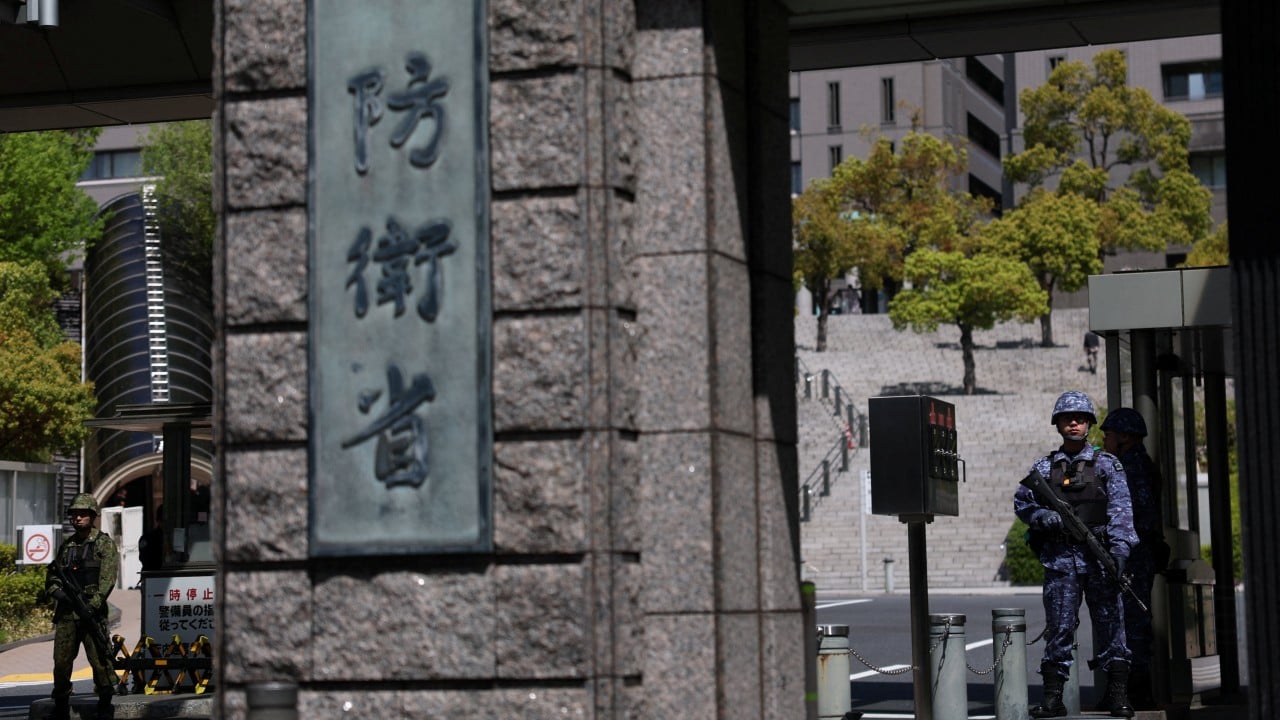
Tokyo is quietly drafting a multi-year defense budget approaching US$500 billion, a historic fiscal pivot designed to transform Japan’s Self-Defense Forces from a coastal shield into a long-range deterrent capable of surviving a regional war. Driven by escalating missile threats from North Korea, persistent Chinese naval encroachment in the East China Sea, and shifting security expectations from Washington, this massive spending package abandons decades of strict pacifist restraint. Yet beneath the headline-grabbing price tag lies a brutal economic reality. Japan is attempting to fund an unprecedented military buildup while managing the developed world's heaviest public debt burden, a rapidly shrinking workforce, and a domestic defense industry that has spent seventy years avoiding export markets.
For more than four decades after the Cold War, Tokyo operated under an informal but politically sacred ceiling that capped military outlays at roughly 1 percent of gross domestic product. That era ended abruptly in late 2022 when the government approved a five-year, 43-trillion-yen plan aimed at doubling annual defense spending to 2 percent of GDP by 2027. The current deliberations pushing the next multi-year cycle toward the US$500 billion mark—roughly 75 trillion yen depending on exchange rate fluctuations—represent the logical, if staggering, continuation of that trajectory. Exchange rates alone tell part of the story. A chronically weak yen has inflated the cost of foreign military hardware, forcing defense planners to request substantially larger yen allocations simply to buy the same number of American-made fighter jets, interceptors, and radar systems.
The Architecture of Deterrence
Money alone does not stop an incoming ballistic missile. To understand where half a trillion dollars actually goes, you have to look at the specific operational vulnerabilities that keep commanders in Ichigaya awake at night. For decades, Japan relied on a division of labor with the United States: Japan provided the shield, and the Pentagon provided the spear. That model broke down the moment regional adversaries fielded hypersonic glide vehicles and mobile, solid-fuel ballistic missiles capable of saturating existing air defenses within minutes.
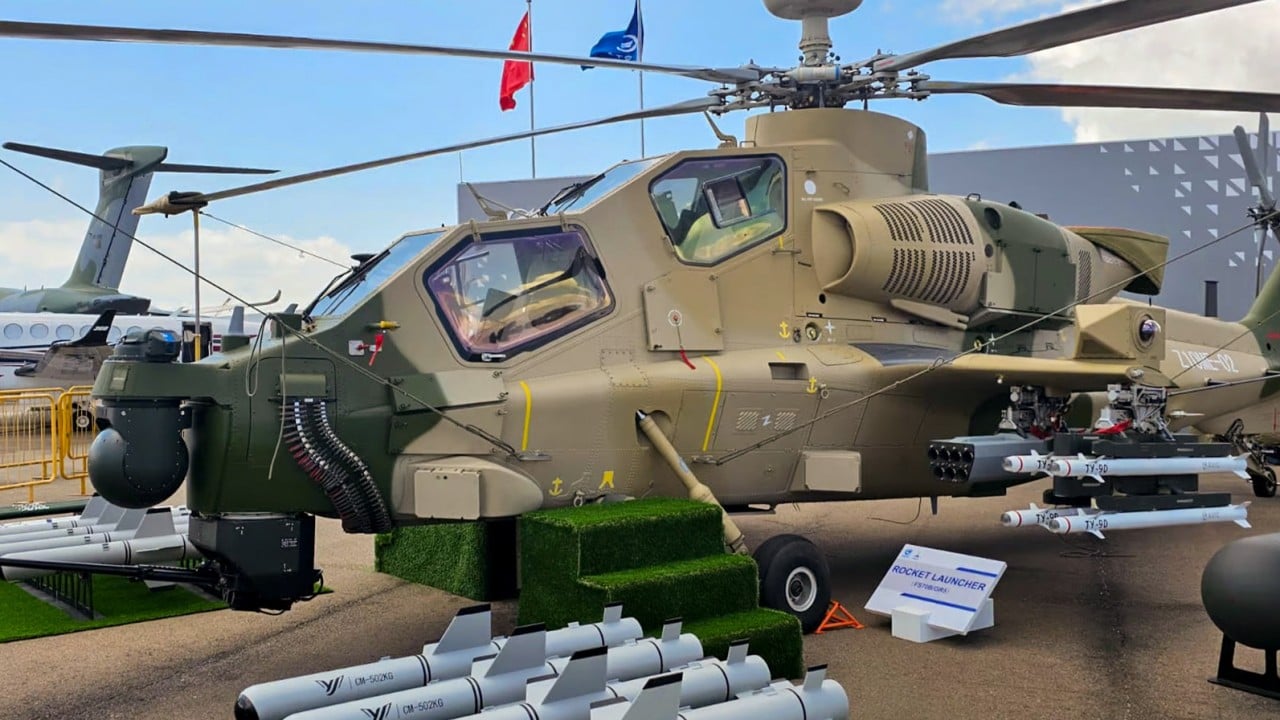
Counterstrike capability sits at the center of the new doctrine. Rather than waiting to intercept every incoming warhead over Japanese cities, Tokyo is buying the ability to hit enemy launch sites and command centers before a second salvo can be fired. This requires an entirely new ecosystem of hardware. It means purchasing hundreds of American Tomahawk cruise missiles as an immediate stopgap while domestic manufacturers rush to extend the range of the Type 12 surface-to-ship missile past 1,000 kilometers.
Hardening existing infrastructure consumes another massive slice of the pie. During a high-intensity conflict, the first targets would not be infantry divisions; they would be radar installations, fuel depots, and runways across the Ryukyu island chain stretching toward Taiwan. Billions are being earmarked to bury command posts underground, disperse aircraft shelters, and stockpile basic munitions. For years, the Japan Self-Defense Forces suffered from an open secret among defense attaches: if a major conflict broke out, several frontline units would run out of missiles and artillery shells within weeks. Fixing logistical endurance is unglamorous, expensive, and entirely necessary.
The Tax Revolt and the Bond Market
Finding 75 trillion yen in a country with a debt-to-GDP ratio exceeding 250 percent requires creative, and politically painful, accounting. When the government first announced its intention to double defense spending, officials promised that up to a quarter of the recurring annual increase would come from targeted tax hikes—specifically corporate, income, and tobacco taxes. That pledge immediately collided with political reality. Prime ministers since Fumio Kishida have repeatedly delayed implementing the tax increases, wary of voter anger amid stagnant real wages and persistent inflation.
Instead, Tokyo has leaned heavily on non-tax revenues, including raiding foreign exchange reserves, selling state-owned assets, and issuing construction bonds for defense facilities—a maneuver that stretches traditional fiscal rules designed to prevent debt-financed military expansion.
"You cannot sustainably fund a permanent structural increase in defense capability through one-off asset sales and accounting tricks. Eventually, the bill arrives at the Ministry of Finance."
That tension defines the current budget battle. The Ministry of Finance views unbridled defense spending as a direct threat to Japan's sovereign credit rating, especially as the Bank of Japan normalizes interest rates and ends the era of virtually free government borrowing. Every percentage point increase in bond yields adds trillions of yen in debt-servicing costs, squeezing the exact fiscal space defense planners need. Meanwhile, the Ministry of Defense argues that deterrence cannot be bought on an installment plan dictated by bond traders. If regional security deteriorates faster than Japan's tax base can adapt, the financial cost of a conflict would dwarf any peacetime budget deficit.
An Industrial Base Built for Peace
Even if the Ministry of Finance signs off on every yen, Japan faces an equally stubborn obstacle: there is no guarantee the domestic defense sector can actually absorb the money. Because Japan maintained a near-total ban on weapons exports from 1967 until 2014, its defense contractors never developed the economies of scale seen in the United States or Europe.
For conglomerates like Mitsubishi Heavy Industries, Kawasaki Heavy Industries, and IHI, defense manufacturing was historically a low-margin side business kept alive strictly by small, predictable orders from Tokyo. Profit margins on defense contracts hovered around 2 to 3 percent, prompting dozens of smaller tier-two and tier-three suppliers to exit the market altogether over the past two decades. When a single specialized bolt manufacturer in Osaka shuts down because the owner retires without a successor, an entire submarine or aircraft assembly line grinds to a halt.
To fix this, Tokyo has begun rewriting procurement rules to allow profit margins of up to 15 percent for contractors that meet cost and delivery targets. The government is also loosening export restrictions, most notably by permitting the transfer of domestically built Patriot interceptors back to the United States to replenish American stockpiles depleted by the war in Ukraine, and by co-developing the next-generation Global Combat Air Programme fighter jet with the United Kingdom and Italy.
| Structural Bottleneck | Historical Reality | Current Policy Shift |
|---|---|---|
| Contractor Margins | Capped at roughly 2–3%, driving smaller suppliers out of business | Raised up to 15% based on performance and efficiency benchmarks |
| Export Restrictions | Virtual ban on lethal hardware exports since 1967 | Selective easing for co-developed platforms and allied stockpiles |
| Supply Chain Depth | Single-source domestic bottlenecks across niche components | State-backed subsidies to rebuild and duplicate critical sub-tiers |
| R&D Integration | Strict separation between civilian universities and military labs | New dual-use research funds bridging commercial tech and defense |
Rebuilding an industrial base takes years, not budget cycles. Throwing tens of billions of dollars at factories lacking skilled machinists, specialized tooling, and raw materials risks triggering defense inflation—where prices surge while actual output barely moves.
The Missing Soldiers
Hardware is visible. You can photograph a new Aegis-equipped destroyer or a squadron of F-35 stealth fighters on a tarmac. Manpower is much harder to fix, and it remains the quiet crisis threatening to hollow out Japan’s US$500 billion investment.
Japan is aging faster than any major industrial nation. The pool of young adults aged 18 to 26—the core recruiting demographic for any military—has shrunk by nearly 40 percent since the early 1990s. The Self-Defense Forces routinely miss their annual recruitment targets, sometimes falling short by more than 20 percent. Ships sail undercrewed. Cyber defense units struggle to match private-sector salaries in Tokyo.
Money helps at the margins. Part of the expanded budget goes toward renovating aging barracks, improving internet access on naval vessels, and raising pay scales to compete with private logistics and tech firms. Automation is also being heavily funded, from unmanned surface vessels patrolling coastal waters to autonomous logistics drones. Yet machines still require trained operators, maintenance crews, and software engineers. Buying sophisticated weapons systems without enough personnel to maintain and operate them creates a hollow force—impressive on a spreadsheet, fragile in a crisis.
The Washington Equation
Behind every closed-door budget meeting in Tokyo sits an unspoken calculation regarding the United States. For seventy-five years, the U.S.-Japan security treaty has been the bedrock of stability in Northeast Asia. Under that umbrella, Japan focused on economic reconstruction while American aircraft carriers and nuclear deterrence kept regional aggressors at bay.
That certainty has eroded. Regardless of which party occupies the White House, policymakers in Washington have grown increasingly vocal that wealthy allies must carry a far heavier share of their own conventional defense. American defense industrial capacity is stretched thin across Eastern Europe, the Middle East, and the Indo-Pacific. Pentagon planners privately welcome Japan’s massive spending surge because U.S. forces in the Western Pacific cannot simultaneously deter China, contain North Korea, and defend every allied outpost alone.
At the same time, Tokyo’s buildup carries significant geopolitical risk. Beijing views Japan’s acquisition of long-range strike capabilities and its closer operational integration with U.S. and Australian forces not as defensive measures, but as part of a coordinated containment strategy. Every new missile battery deployed to islands near Taiwan prompts sharper diplomatic retaliation, economic coercion, and intensified Chinese naval patrols around the disputed Senkaku Islands.
South Korea watches with complex ambivalence. While Seoul and Tokyo have repaired intelligence-sharing agreements to counter North Korean missile launches, historical grievances remain close to the surface. A heavily armed Japan operating far beyond its traditional defensive perimeter still triggers deep political sensitivities across East Asia.
The Reality of the Price Tag
Strip away the diplomatic rhetoric and political posturing, and Japan's US$500 billion defense plan comes down to a brutal exercise in risk management. Tokyo is paying an enormous financial and social premium to buy time and deterrence in a neighborhood where the military balance has shifted rapidly against the status quo.
The success of this historic pivot will not be measured when the budget passes the Diet, nor when the first batch of foreign cruise missiles arrives at a Japanese port. It will be decided in the mundane, grinding execution over the next decade: whether the Ministry of Finance can fund the buildup without destabilizing the yen, whether domestic factories can scale production without suffocating in bureaucracy, and whether an aging society can convince enough of its young citizens to wear the uniform. Without solving those foundational problems, half a trillion dollars buys a very expensive illusion of security.