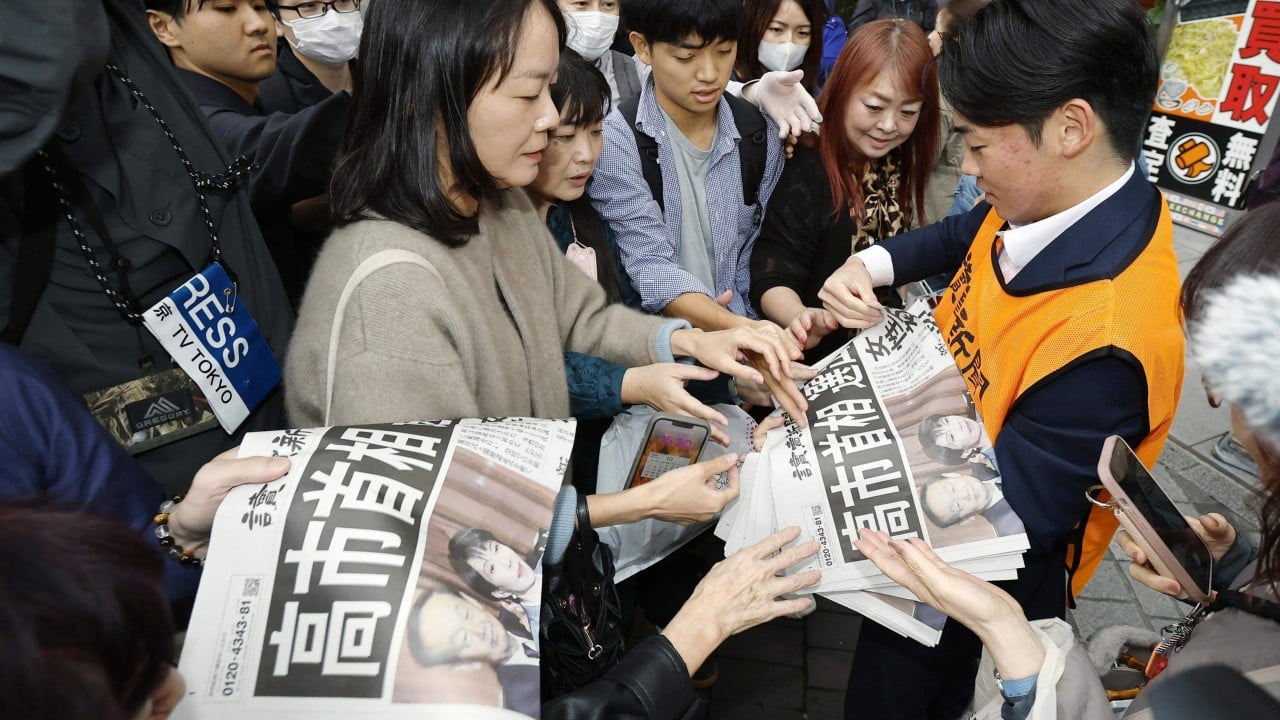
Japan is experiencing a quiet media contradiction that defies standard Western economic logic. Fewer people are buying print newspapers in Japan than at any point in modern history, yet public trust in those exact same publications remains overwhelmingly high compared to digital alternatives. While print circulation figures steadily erode year after year, Japanese readers continue to view physical newspapers as the ultimate arbiters of truth in an increasingly noisy information environment.
This split between consumption habits and institutional credibility comes down to three structural realities. First, Japan’s rapidly aging demographic is naturally shrinking the core subscriber base that historically relied on morning doorstep deliveries. Second, the proliferation of free, algorithm-driven news aggregators like Yahoo! News Japan has trained younger generations to consume journalism without ever paying for a physical copy or visiting a publisher’s website. Finally, Japan’s unique kisha club (press club) system and rigorous editorial verification standards create a high barrier to entry for misinformation, cementing print media’s reputation for accuracy even among citizens who no longer subscribe.
The Anatomy of a Slow-Motion Circulation Collapse
For decades, the Japanese newspaper industry was the envy of the global publishing world. National dailies like the Yomiuri Shimbun and the Asahi Shimbun boasted circulations that dwarfed anything in North America or Europe, routinely printing millions of copies twice a day. That era is dead.
Look at the numbers from the Japan Newspaper Publishers and Editors Association (NSK). Total daily circulation across the country has been on a relentless downward trajectory for over two decades, losing millions of subscribers every few years. Morning and evening combined sets—once a staple of the Japanese middle-class household—are disappearing fastest. The evening edition, in particular, is rapidly becoming a relic, with several regional papers eliminating it altogether to cut printing and distribution costs.
Why is the drop happening so steadily? Convenience and demographics.
Japan has the oldest population in the world. The loyal subscribers who viewed reading a physical broadsheet over morning tea as a non-negotiable daily ritual are passing away, and their grandchildren are not picking up the habit. A twenty-something salaryman commuting on the Tokyo Metro does not want to wrestle with a broadsheet during rush hour when he can scroll through headlines on a smartphone with one thumb.
The Distribution Bottleneck
Behind the circulation numbers lies a physical infrastructure crisis that rarely makes international headlines. Japan’s newspaper dominance was built on an intricate, hyper-efficient home delivery network. Local distribution agents—known as hanbaiten—employed armies of workers to deliver papers before dawn, rain or shine, with astonishing reliability.
Today, that labor model is breaking down. Japan faces a severe, chronic labor shortage across nearly every blue-collar sector, and waking up at 3:00 AM to deliver heavy bundles of paper on a scooter is a tough sell to young workers. Delivery costs are skyrocketing. Publishers are caught in a vise—they cannot easily raise subscription prices without accelerating cancellations, yet they cannot afford to subsidize their distribution networks indefinitely.
Why Trust Refuses to Die
In the United States and much of Europe, declining print circulation has gone hand-in-hand with collapsing institutional trust. Polarization, partisan cable news, and the rise of hyper-partisan blogs have turned "the media" into a punching bag.
Japan followed a completely different trajectory. Surveys conducted by the Japan Press Research Institute consistently show that newspapers enjoy significantly higher trust scores than television, radio, and especially the internet. Even respondents in their twenties and thirties—the very demographics least likely to pay for a subscription—routinely rank newspapers as the most reliable source of information.
This credibility is not an accident. It is baked into the operational DNA of Japanese journalism.
The Rigor of the Fact-Checking Machine
Japanese newsrooms operate with an almost obsessive aversion to factual error. Getting a name, a date, or a corporate figure wrong in print is treated not as a minor slip-up to be quietly corrected with an updated timestamp, but as a profound institutional failure.
Copy editors at major Japanese dailies scrutinize every sentence with multiple layers of verification before a plate ever touches a printing press. This culture of extreme caution makes Japanese print journalism notoriously dry and conservative, often frustrating foreign correspondents used to punchier prose and aggressive investigative exposés. Yet for the domestic audience, that exact restraint signals reliability. When a story appears in print in a major Japanese daily, readers assume it has been vetted to death.
The Kisha Club Double-Edged Sword
You cannot understand Japanese media trust without understanding the kisha club system. These are exclusive press associations stationed directly inside government ministries, major corporations, police headquarters, and political parties.
Critics, both domestic and international, have long attacked kisha clubs for fostering cozy relationships between reporters and officials, encouraging pack journalism, and freezing out independent or foreign journalists. Those criticisms have merit. The system often discourages the kind of adversarial reporting that holds power to account.
However, the kisha club model also produces an unintended side effect regarding public trust. Because reporters are embedded directly with primary institutional sources, the information flowing out of these clubs carries an aura of official legitimacy. Rumors, unverified leaks, and wild speculation rarely make it past the club consensus into print. The public knows that if a major newspaper reports a policy shift or a corporate scandal, the information came straight from the source, not from an anonymous social media thread.
The Digital Cannibalization Trap
If Japanese people trust newspaper journalism so much, why won't they pay for it online?
The answer lies in a strategic blunder made by Japanese publishers at the dawn of the internet era. Rather than building strong, independent digital destinations and training readers to pay for digital access early on, major newspapers licensed their content cheaply to massive portal sites.
Yahoo! News Japan became the ultimate beneficiary. For millions of Japanese internet users, Yahoo! News is the internet. It aggregates articles from virtually every major newspaper and broadcaster in the country, presenting them for free on a single, ubiquitous homepage.
Consider a hypothetical example of how this distorts the market. Imagine a major national daily spends weeks verifying a complex economic story. They publish it in their morning print edition, which costs a subscriber over 4,000 yen a month. An hour later, that same story appears on Yahoo! News for free. The reader gets the high-trust journalism of the newspaper brand without paying the newspaper a single yen, while the portal captures the user data and the lion's share of the digital advertising revenue.
Publishers realized the trap too late. By the time papers like the Nikkei and the Asahi Shimbun erected hard paywalls and invested heavily in digital subscriptions, user behavior was already set in stone. Expecting a generation raised on free portal news to suddenly pay 3,000 or 4,000 yen a month for a digital replica of a print paper proved wildly optimistic. Only the Nikkei, bolstered by its indispensable status among corporate executives and financial professionals, has successfully transitioned to a thriving digital subscription model. General-interest dailies remain painfully dependent on their shrinking print revenues.
The Social Media Backlash
Paradoxically, the chaos of the modern internet has actually strengthened the psychological appeal of print newspapers in Japan.
Social media platforms like X (formerly Twitter), LINE, and YouTube are massive in Japan. They are also rife with misinformation, clickbait, and coordinated harassment campaigns. During major crises—such as the 2011 Tohoku earthquake and tsunami, or the COVID-19 pandemic—Japanese internet users watched dangerous rumors spread like wildfire across social networks in real time.
Every time a viral hoax collapses online, the reputation of traditional print media gets a quiet boost.
Japanese consumers draw a sharp mental line between "net news" (netto nyūsu) and real journalism. Even though much of the legitimate news read online originates from newspaper reporters, the digital environment itself is viewed as inherently suspect. Comment sections on Japanese portals are notorious for toxic, nationalistic, or conspiratorial rants, which further degrades the perceived credibility of anything read on a screen.
Print, by contrast, is finite, tangible, and accountable. You cannot silently edit a printed page after it lands on a doorstep. A newspaper carries the physical weight of institutional responsibility. For older citizens, holding the paper is an anchor of stability. For younger citizens who rarely touch newsprint, the physical newspaper still exists in their minds as a gold standard—a reference point they turn to via digital clips when they need to verify whether a shocking rumor on X is actually true.
The Financial Cliff Ahead
Trust is a wonderful asset, but you cannot pay printing press operators or foreign correspondents with goodwill.
The Japanese newspaper industry is currently living off the accumulated capital—both financial and cultural—of its twentieth-century golden age. Many major newspaper companies own prime real estate in central Tokyo and Osaka, generating steady rental income that quietly subsidizes their struggling journalism operations. They also own television networks, publishing houses, and even professional baseball teams, creating diversified media conglomerates that cushion the blow of declining print sales.
This financial buffer explains why Japan has not experienced the sudden, catastrophic wave of newsroom closures and hedge-fund strip-mining that devastated local journalism in the United States. The decline in Japan is managed, orderly, and polite.
Yet math is math. As the post-war baby boom generation fades away over the next decade, print circulation will cross a critical threshold where the fixed costs of printing plants and daily home delivery become mathematically unsustainable. Consolidations, regional paper closures, and aggressive staff reductions are inevitable.
The Credibility Dilemma
The great tragedy of the Japanese newspaper paradox is that the industry solved the hardest problem in modern media—earning and keeping public trust—only to fail at the business model required to sustain it.
Western media executives would give anything to command the baseline institutional credibility that Japanese dailies enjoy every morning. They have spent billions trying to rebuild trust through transparency initiatives, reader engagement programs, and brand marketing, often with minimal success. Meanwhile, Japanese publishers sit atop a mountain of public trust, watching their paying customer base shrink every single month because they cannot bridge the gap between physical prestige and digital monetization.
If Japanese newspapers fail to convert their unmatched credibility into profitable digital subscriptions before their core print audience disappears, the country will face a dangerous vacuum. The high-trust journalism that anchors public discourse in Japan will hollow out from the inside, leaving behind a population that desperately wants reliable news, a digital ecosystem flooded with unverified noise, and no sustainable way to pay the people who actually check the facts.