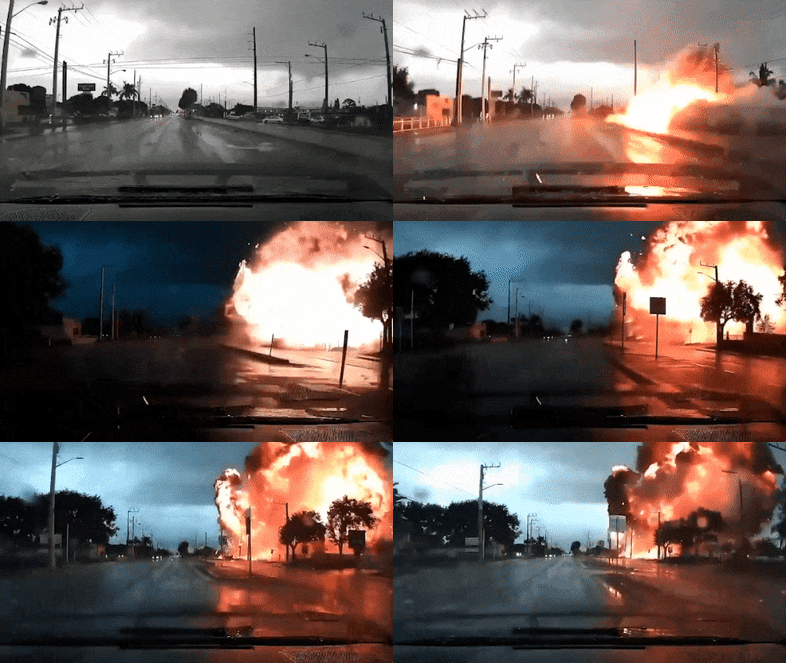
Two engines went silent three miles short of a Naples runway, leaving two veteran pilots seconds to drop a Bombardier Challenger 604 onto an interstate highway packed with Friday afternoon traffic. In the final audio transmission before the February 9, 2024 impact on Interstate 75, the crew’s voice remained remarkably steady as they reported losing both engines and confirmed they would not make the airport. That calm radio call masks a brutal aviation reality. Modern business jets are engineered to fly safely on one engine, yet simultaneous dual-engine failures still happen, often tracing back to fuel contamination, maintenance oversights, or cascading system errors that leave flight crews gliding a 40,000-pound aluminum tube toward concrete.
Most coverage of the Florida jet disaster stops at the dramatic cockpit audio and the fiery dashcam footage. Sensational headlines sell clicks, but they miss the systemic vulnerabilities that turn routine repositioning flights into highway emergencies. When Hop-A-Jet Flight 823 departed Columbus, Ohio, bound for Naples Municipal Airport with five people aboard, nobody on the ground expected a textbook demonstration of emergency gliding on a major Florida thoroughfare. Three people survived that afternoon. Two pilots died in the forward cabin while shielding the rear fuselage from the worst of the impact forces.
The Anatomy of a Dual-Engine Flameout
A twin-engine business jet does not simply run out of thrust by accident. Redundancy is the bedrock of commercial and corporate aviation design. Every certification standard written by the Federal Aviation Administration assumes that if one turbine fails during takeoff, cruise, or approach, the remaining engine possesses more than enough power to climb, maneuver, and land safely.
When both General Electric CF34-3B turbofans on a Challenger 604 quit within moments of each other, investigators immediately look for a common denominator. Engines on the same airframe rarely suffer independent mechanical breakdowns simultaneously. Instead, a shared vulnerability bridges the gap between two otherwise isolated systems.
Fuel Starvation and Contamination
Jet fuel is the lifeblood of any turbine, and it is also the single most common thread in dual-engine power loss. Even when fuel tanks contain thousands of pounds of Jet-A, that fuel cannot burn if water, microbial growth, or ice blocks the feed lines. In colder altitudes over the Midwest and Southeast, trace amounts of dissolved water in poorly maintained storage tanks can freeze into slush, starving both fuel control units at roughly the same time as the aircraft descends into warmer air.
Mechanical fuel mismanagement plays an equally dangerous role. The Challenger 604 uses a complex network of main, auxiliary, and tail tanks connected by transfer pumps and crossfeed valves. If a transfer valve sticks or a crew misreads fuel quantity indications during a routine ferry flight, the main collector tanks feeding the engines can run dry while usable fuel remains trapped elsewhere in the wings or tail cone.
Bird Strikes and Environmental Ingestion
At lower altitudes near coastal Florida airports, flocks of heavy waterfowl pose a constant threat. Unlike a single small bird that might damage fan blades on one side while leaving the core intact, flying through a dense flock can choke both intakes instantaneously. A turbine engine ingests massive volumes of air; disrupting that airflow causes compressor stalls, violent surging, and rapid thermal damage that forces an immediate flameout.
What the Naples Cockpit Audio Really Tells Us
Amateur observers often marvel at how composed pilots sound right before a crash. In the Naples air traffic control recordings, the pilot states clearly that they have lost both engines and are going down before reaching the runway. There is no screaming. There is no panic.
That composure is not superhuman bravery. It is muscle memory forged in full-motion flight simulators every six months. Pilots are trained from their earliest solo flights to follow a strict cognitive hierarchy during an emergency—aviate, navigate, communicate.
First, you fly the airplane. When both engines fail on final approach, airspeed bleeds off rapidly. The nose must be pitched down immediately to maintain best glide speed, trading altitude for airflow over the wings so the aircraft does not stall and spin into the ground.
Second, you pick a landing spot. With three miles between the jet and the threshold of Runway 23 at Naples, the math simply did not work. A Challenger 604 glides roughly ten to twelve feet forward for every foot of altitude it loses. At roughly 1,000 feet above the ground, the crew had less than two miles of gliding range left. Stretching the glide by pulling back on the yoke would have caused an aerodynamic stall, guaranteeing zero survivors.
Third, you talk to air traffic control. The radio call in Naples lasted barely four seconds because the pilot had already mentally written off the runway and was actively steering a powerless jet between highway overpasses, light poles, and moving cars.
The Invisible Risks of Part 135 Charter Operations
To understand the broader context behind the Florida jet crash, you have to look at how private charter operators function behind the scenes. Hop-A-Jet operated under Federal Aviation Regulations Part 135, which governs on-demand air taxi and charter flights. While Part 135 carriers must meet strict safety standards, they operate in a vastly different world than major commercial airlines flying under Part 121.
| Operational Factor | Commercial Airlines (Part 121) | On-Demand Charter (Part 135) |
|---|---|---|
| Scheduling Predictability | Fixed routes published months in advance | Dynamic, last-minute client bookings |
| Maintenance Infrastructure | Dedicated hangars and overnight hub teams | Reliant on FBOs and contract mechanics |
| Dispatch Oversight | Licensed flight dispatchers share legal responsibility | Pilots often handle flight planning solo |
| Repositioning Legs | Rare; aircraft stay on scheduled networks | Frequent empty "deadhead" flights between trips |
Empty repositioning flights—known in the industry as deadhead legs—carry unique psychological and operational pressures. Flight 823 had dropped passengers in Ohio and was repositioning to Naples to pick up its next charter. Without paying passengers in the cabin, crews sometimes treat deadhead legs with a slightly different cadence, rushing turnarounds to stay ahead of tight charter schedules or relying on unfamiliar fixed-base operators for fueling and line service.
Every time a private jet lands at a regional airport, it depends on local ground crews to pump clean, properly filtered fuel and verify fluid levels. Unlike major airline hubs where quality control is audited daily by internal teams, charter crews bounce between dozens of different municipal airports every month. A single contaminated fuel truck or an improperly secured fuel cap at a stopover airport can plant the seed for a catastrophic failure hours later.
Survivable Crashes and Cockpit Sacrifice
One detail from the Naples crash demands closer examination by anyone who studies aircraft crashworthiness. The Bombardier Challenger 604 struck the northbound lanes of Interstate 75, collided with a pickup truck and an SUV, slammed into a concrete sound barrier wall, and erupted into a massive post-crash fire. Yet the flight attendant and two passengers sitting in the main cabin escaped through an emergency exit with non-life-threatening injuries.
Modern business jets built to transport-category standards feature reinforced fuselage structures designed to absorb tremendous longitudinal deceleration without collapsing the passenger cabin. When the Challenger hit the asphalt and slid into the concrete barrier, the nose section and cockpit absorbed the brunt of the kinetic energy.
In aviation safety circles, this is known as the survivable envelope. The airframe crumpled where it needed to crumple, keeping the cabin shell intact long enough for the occupants in the back to unbuckle their harnesses and evacuate before smoke and flames consumed the interior. The two pilots in the front seats—Captain Edward Daniel Murphy and First Officer Ian Frederick Hofmann—had no crumple zone in front of them. By keeping the wings level and guiding the jet onto the widest available strip of pavement rather than crashing nose-first into residential neighborhoods bordering the highway, they bought the people behind them their lives.
Why Highway Landings Rarely End Without Fire
Putting an airliner or business jet down on an interstate sounds like a clean maneuver in theory. Highways are wide, flat, and straight. In reality, they are obstacle courses littered with vertical hazards that aircraft wings were never meant to survive.
Consider what a 64-foot wingspan encounters on a standard six-lane highway:
- Overhead signage and light poles act like giant guillotines, shearing off outer wing panels and rupturing integral fuel tanks.
- Concrete median dividers and sound walls catch landing gear or wingtips, violently spinning the fuselage sideways and tearing open the belly.
- Moving vehicles create unpredictable closing speeds, forcing pilots to aim for gaps in traffic while traveling at over 120 miles per hour.
When a wing ruptures on impact, hundreds of gallons of atomized Jet-A spray across hot turbine casings and sparking metal. Post-crash fire, not the initial ground impact, is what kills most occupants in off-airport landings. In the Naples accident, having the right-hand cabin door clear of debris and a trained flight attendant on board who immediately directed passengers out of the smoke made the difference between a miraculous evacuation and a total fatality count.
What Aviation Regulators Still Get Wrong About Engine Reliability
Whenever a high-profile private jet goes down, public attention fixates on the final transcript. Regulators release preliminary factual reports weeks later, followed by a final probable cause determination that often takes eighteen to twenty-four months to publish. During that long investigative gap, the industry tends to treat dual-engine failures as statistical anomalies—freak events too rare to justify sweeping rule changes.
That mindset is flawed. While turbine engines have achieved extraordinary mechanical reliability over the past forty years, the systems feeding those engines have grown vastly more complex. Digital engine controls, automated fuel balancing computers, and tightly integrated bleed-air networks mean that a single electrical fault, sensor miscalibration, or fuel supply disruption can still bring down an entire aircraft.
Furthermore, simulator training for dual-engine flameouts at low altitude remains inconsistent across corporate and charter aviation. Most simulator checkrides test a single engine failure right after takeoff—the classic V1 cut—because regulations require it. Far fewer training programs routinely throw a complete dual-engine loss at crews during a visual approach at 1,500 feet, where there is zero time to run a paper checklist and the only viable option is picking a road, a field, or a stretch of water and flying the jet all the way into the crash.
The final transmission from Hop-A-Jet Flight 823 will continue to circulate online because human beings are drawn to the raw reality of people facing the end with quiet professionalism. Yet listening to those calm voices should leave travelers and aviation insiders deeply uncomfortable. When two engines quit simultaneously three miles from a major resort airport, luck and pilot skill are the only things standing between a routine flight and a fireball on the interstate.


