The Border Control Breakdown
The chaos at Milan Linate Airport on April 13, 2026, was not an anomaly. It was a clear, unambiguous warning sign. An EasyJet flight scheduled for Manchester carried 156 passengers. Only 34 made it to their seats before departure. The remaining 122 travelers stood trapped in interminable passport control queues, watching their aircraft leave without them. Another departure on the first day of full operations left 51 passengers behind. These are not minor inconveniences. They are systemic failures of the newly minted EU Entry-Exit System, also known as EES.
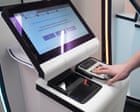
After a phased introduction that began on October 12, 2025, the system became fully mandatory across all 29 participating nations on April 10, 2026. Gone are the days of the simple passport stamp. Instead, border guards now collect facial images and fingerprints from every non-EU traveler entering the Schengen Zone. The stated goal is simple: enhance security, track overstayers, and modernize immigration management. But the infrastructure powering this transition has proven utterly incapable of handling the sheer volume of international movement.
The European Commission initially estimated that the registration process would take about 70 seconds per passenger under optimal conditions. In practice, the process frequently takes several minutes. Border guards must capture biometrics, scan travel documents, and query the central database. If a traveler's fingerprints are unreadable or if the system experiences latency, the line grinds to a halt. The margin for error is razor thin. When multiplied by millions of arrivals, these extra minutes create hours of delay.
Consider the financial and emotional toll on travelers. A family traveling from London to Rome spent £1,600 extra on rebooked flights and emergency accommodations after missing their connection at Leonardo da Vinci–Fiumicino Airport. They arrived at the border control area three hours before their flight. It was not enough. The automated kiosks malfunctioned, and the manual processing lines were severely understaffed.
The Flawed Physics of Biometric Processing
The core engineering failure of the EES lies in its reliance on centralized biometric matching at border checkpoints without adequate automated redundancy. To understand the scale of the problem, we must look at the technology deployed at the front lines. France, for instance, relies on Parafe e-gates for entry. Yet during the initial rollout, these gates were incompatible with certain non-EU passports. They required manual overrides by border police. When the technology fails, human beings must step in. The human element introduces the very bottlenecks the system was designed to eliminate.
The transition period created a unique backlog. Travelers who entered the Schengen area before the April 10, 2026, deadline were subjected to the full exit process for the first time. They had no digital entry record in the EES database. Border control authorities had to register them completely on their way out. This created an unexpected bottleneck. The system was forced to process millions of individuals simultaneously while they were leaving the continent.
The Real Cost of Administrative Failure
When processing finally began, officials demanded full fingerprints and facial scans from every traveler, even those who had already submitted both biometrics on a previous arrival. EES rules state that once both biometrics are registered in the system, only one should be taken on subsequent crossings. Yet on the ground, border control agents often defaulted to the most thorough and time-consuming procedure.
The discrepancy occurs because the system lacks the hardware and interoperability to read previous registration data reliably across different national databases. The friction between theory and practice is stark. The European Union designed a perfectly secure digital vault. They forgot to build the highway to access it.
Systemic Bottlenecks and Staffing Shortages
The human factor remains the most volatile variable in the entire system. Border guards are not merely stampers anymore. They are IT support technicians, data entry clerks, and biometric verifiers. The additional workload requires more personnel at a time when European border agencies are already struggling with recruitment and retention.
At Lisbon Airport in late 2025, Portuguese border authorities temporarily suspended EES use at certain checkpoints to prevent total gridlock. They deployed 24 officers from the National Republican Guard to help ease pressure. This was an emergency measure, not a sustainable solution.
When the full EES implementation went live on April 10, 2026, that safety valve was severely restricted. The European Commission removed the option to fully suspend EES checks. Now, only a partial suspension is permitted. This allows officials to skip biometric collection but not the full digital check.
The compromise does little to speed up the process. A digital check still requires a traveler to scan their passport and answer security questions. The time saved is negligible when compared to the physical bottleneck of hundreds of people queuing in a confined space.
The Airline Industry's Ultimatum
The aviation sector has run out of patience. Industry bodies including ACI Europe and Airlines for Europe (A4E) have issued stark warnings about the operational reality of the system. In mid-April 2026, the two organizations published a joint statement calling for immediate flexibility. They requested the authority to suspend EES operations entirely during peak summer travel periods. The logic is simple: keep the planes moving.
But the European Commission has been slow to respond to these urgent pleas, pointing to the security benefits of the system. Airlines bear the financial brunt of the disruption. When a flight is delayed because 50 passengers are stuck at border control, the airline must either delay the flight or leave without them. Delaying a flight creates a domino effect across the entire European airspace network. It disrupts crew schedules, incurs additional airport fees, and damages consumer trust.
On the other hand, leaving passengers behind generates significant compensation claims and public relations crises. EasyJet and other carriers have attempted to mitigate the damage by holding flights for a short period and offering free transfers, but this eats directly into their profit margins. The airlines are trapped between a regulatory mandate and the laws of fluid dynamics.
The Bureaucratic Stalemate
The disconnect between the European Commission and the airlines highlights a fundamental difference in priorities. The Commission views the border as a security checkpoint that must be fortified with advanced technology. The airlines view the border as a critical point of friction that must be minimized to ensure the smooth flow of goods and people.
The ETIAS is slated to launch later in 2026. This system will require non-EU travelers to obtain a pre-travel authorization before entering the Schengen area. While intended to streamline the process, it introduces yet another digital layer. If the EES rollout is any indication, the introduction of ETIAS could compound the current operational difficulties.
Travelers will need to navigate both systems, ensuring their data matches perfectly across multiple databases. A single typo could result in a denial of boarding at the departure gate, shifting the burden of verification from border guards to airline check-in agents.
The Legacy of the Progressive Rollout
To understand the current crisis, we must look at how the EES was introduced to the public and to border authorities. The phased rollout, which began in October 2025, was supposed to provide a smooth transition period. Instead, it created confusion. Different countries adopted the new rules at different speeds. Some airports installed dozens of automated kiosks, while others relied on a handful of legacy passport control booths.
The inconsistency was most apparent for travelers crossing multiple borders within the Schengen area. A traveler flying from London to Amsterdam might experience a rapid automated check upon entry. Then, when taking a train to Paris, they would face a completely manual, grueling process. The lack of standardized infrastructure means that the traveler experience depends entirely on the specific port of entry.
Dissecting the Fragmented Infrastructure
The fragmented deployment of automated kiosks is a prime example of the lack of centralized planning. The European Union provided the regulatory framework and the central database, but left the physical infrastructure up to individual member states.
Wealthier countries or those with heavy non-EU passenger volumes, such as France and Spain, invested heavily in digital kiosks. Smaller member states, or those with different border layouts, did not. This resulted in an unequal distribution of processing capacity. A passenger traveling from a smaller airport may face hours of delay, while a passenger at a major hub might breeze through in minutes.
The lack of standardization extends to the software itself. Border guards use different software interfaces across different countries to access the central EES database. A system that works efficiently in one country may suffer from lag or interface errors in another. These technical inconsistencies turn a standardized European regulation into a logistical nightmare for travelers and airlines alike.
Preparing for the Summer Crunch
The peak summer travel season is approaching. Millions of families, business travelers, and tourists will descend on European airports. The system is ill-prepared for this surge.
If processing times remain at several minutes per passenger, queues will stretch into the thousands. The flexibility measures currently allowed by the European Commission, which allow border authorities to temporarily suspend biometric collection, are insufficient to handle the volume of the summer peak.
Aviation experts suggest that a full, unrestricted suspension of EES checks during high-traffic hours may be the only way to prevent total airport gridlock. Yet such a move would undermine the very security objectives the system was designed to achieve. It leaves the European Union in a difficult position. The EU must choose between rigorous security and the economic health of its travel and tourism sector.
A Crossroads for European Mobility
The implementation of the system marks a fundamental shift in how the continent views its borders. It replaces the open, welcoming environment that characterized European travel for decades with a rigid, biometric perimeter.
For business travelers, the delays are more than just an inconvenience. They are a threat to the efficiency of cross-border operations. Time-sensitive executives, consultants, and technical workers can no longer rely on quick weekend trips to European branch offices without factoring in substantial border wait times.
The situation requires immediate, decisive action from the European Commission and member states. The technology must be updated to ensure rapid biometric matching across all national databases. Additional personnel must be deployed to assist with manual processing when kiosks fail. The current model of border management is unsustainable.
The disruption will continue until the infrastructure catches up with the legislation. Until then, travelers should expect delays, missed connections, and unpredictable border crossings. The promise of a modern, secure border has turned into a daily reality of long queues and stranded passengers.