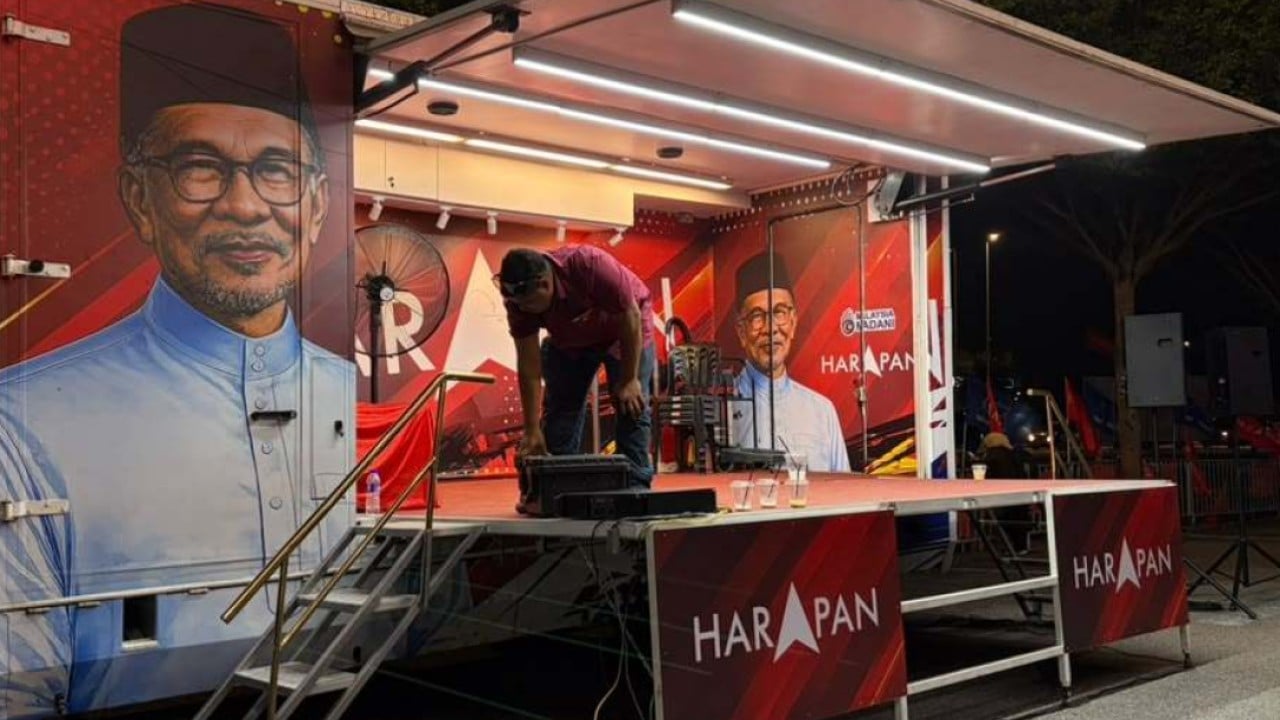
Malaysian Prime Minister Anwar Ibrahim’s ruling coalition faces a critical test of its governing mandate following a string of consecutive regional election setbacks. While coalition leaders frame these sub-national contests as localized administrative adjustments rather than national referendums, the repeated losses point to deeper structural friction within Malaysia's multi-ethnic political alliance. According to political analysts and electoral observers monitoring Malaysia's post-2022 unity government, the defeats expose persistent challenges in uniting disparate voter bases, managing economic expectations, and countering a consolidated opposition.
The numbers tell a sobering story, though the interpretation depends entirely on which side of the parliamentary aisle you ask.
In Malaysia’s fragmented political environment, national governance relies on an unprecedented alliance between Anwar’s Pakatan Harapan (PH) coalition and its longtime ideological rival, the United Malays National Organisation (UMNO), alongside regional blocs from Sabah and Sarawak. Formed in the wake of a hung parliament in late 2022, this unity government was designed to restore institutional stability after years of revolving-door leadership. Yet translating a parliamentary marriage of convenience into grassroots electoral strength has proven far more complicated at the state and local levels.
The Anatomy of a Regional Setback
Regional elections in Malaysia—whether state assembly contests or high-stakes by-elections—historically function as barometers for federal sentiment. When a ruling coalition drops three consecutive regional contests, the immediate impulse among opposition figures from the Perikatan Nasional (PN) bloc is to declare a collapse in federal legitimacy. Conversely, government strategists routinely argue that localized grievances, candidate selection quirks, and turnout disparities distort the broader national picture.
Both perspectives capture partial truths. To understand why Anwar’s coalition struggles in these contests, one must examine the mechanics of vote transferability.
For decades, Malaysian politics operated along clear, predictable fault lines. Pakatan Harapan drew its core strength from urban, multi-ethnic constituencies and reform-minded voters. UMNO commanded the rural Malay heartland through entrenched patronage networks and traditional institutional loyalty. When the two former adversaries joined forces in Putrajaya, strategists assumed their combined vote shares would mathematically overwhelm opposition challengers.
That arithmetic failed to materialize at the ballot box.
Political scientists tracking Malaysian voting behavior have repeatedly noted that voter bases do not behave like corporate assets that can be merged by executive decree. A significant portion of traditional UMNO supporters balked at casting ballots for candidates aligned with PH, particularly the Democratic Action Party (DAP), which UMNO spent decades portraying as an existential threat to Malay political primacy. Simultaneously, segments of PH’s progressive urban base expressed disillusionment over the coalition’s alliance with UMNO figures facing corruption allegations, resulting in depressed turnout among previously reliable reformist voters.
Economic Pressures and the Cost of Reform
Beyond ideological friction, the immediate daily reality for Malaysian households revolves around the cost of living. Anwar took office promising sweeping institutional reforms, fiscal discipline, and targeted economic relief. Implementing those promises, however, required politically painful decisions.
The government’s move toward subsidy rationalization—specifically restructuring blanket fuel and utility subsidies to plug massive fiscal deficits—drew praise from international credit rating agencies and institutional economists. On the ground, the reaction was far less enthusiastic.
- Diesel Subsidy Adjustments: The restructuring of diesel subsidies in Peninsular Malaysia triggered immediate anxieties over supply chain costs, despite government cash transfers intended to cushion lower-income households.
- Inflationary Perceptions: While official headline inflation figures remained relatively modest compared to regional neighbors, consumers felt acute price pressures in essential food items and dining out.
- Currency Volatility: Fluctuations in the Malaysian ringgit during the government's first two years fueled opposition narratives regarding economic stewardship, even as central bank interventions and foreign direct investment pledges eventually stabilized sentiment.
Opposition leaders capitalized on these economic anxieties with relentless efficiency. Perikatan Nasional framed every price hike and subsidy adjustment as evidence of a federal administration out of touch with working-class struggles. In rural and semi-urban constituencies—the exact battlegrounds where regional polls are decided—bread-and-butter grievances consistently outweigh macroeconomic stability indicators.
The Opposition’s Consolidation Strategy
A defeat is rarely just about the shortcomings of the incumbent; it is equally about the discipline of the challenger. While Anwar’s coalition wrestled with internal messaging conflicts, Perikatan Nasional solidified its identity as the primary vehicle for conservative Malay-Muslim sentiment.
Led by former Prime Minister Muhyiddin Yassin and bolstered by the formidable grassroots machinery of the Malaysian Islamic Party (PAS), PN successfully nationalized local contests. Rather than debating municipal drainage or state-level infrastructure, opposition campaigns framed regional elections as existential referendums on religious identity, Malay political representation, and federal overreach.
PAS’s organizational discipline proved particularly decisive. Unlike coalition partners that rely heavily on media campaigns and federal government resources, PAS operates through a dense network of local branches, religious schools, and community welfare programs that remain active year-round, not just during official campaign windows. When regional polls were called, that preexisting infrastructure allowed the opposition to mobilize voters efficiently while the unity government scrambled to coordinate campaign schedules across rival party machinery.
The Turnout Paradox
Veteran campaign operatives recognize a fundamental rule of off-cycle elections: anger motivates turnout faster than satisfaction.
In consecutive regional contests, data from Malaysia's Election Commission revealed a recurring pattern. Turnout among core opposition demographics remained remarkably resilient, hovering near general election levels in key polling districts. Meanwhile, participation among non-Malay and urban voters—demographics that historically tilt heavily toward Pakatan Harapan—dropped noticeably.
Analysts attribute this enthusiasm gap to two distinct factors:
- Outstation Voter Fatigue: Hundreds of thousands of Malaysians work in major economic hubs like Kuala Lumpur, Penang, or Singapore while remaining registered to vote in their home states. Returning home for a parliamentary general election feels consequential; making the expensive, time-consuming journey for a single state seat or regional poll feels optional.
- Reformist Disillusionment: Voters who backed Anwar expecting rapid abolition of restrictive security laws, immediate institutional overhauls, and uncompromising anti-corruption enforcement grew frustrated by the slow pace of legislative change. While government defenders argue that governing within a fragile coalition requires cautious compromise, disappointed supporters often register their protest not by voting for the opposition, but by staying home.
Navigating the Governance Tightrope
The structural dilemma facing Anwar Ibrahim is acute. Every policy lever available to win back one segment of the electorate risks alienating another.
If the Prime Minister leans harder into conservative social policies and expansive state-backed religious initiatives to compete with PAS for the rural Malay vote, he risks further eroding enthusiasm among urban progressives and non-Malay minorities. Conversely, if he accelerates secular institutional reforms and aggressive anti-corruption prosecutions that touch entrenched political elites, he risks destabilizing his own parliamentary coalition—specifically threatening the survival of UMNO’s current leadership, which already faces internal dissent over its alliance with PH.
Government spokespeople maintain that this delicate balancing act is precisely what mature multi-ethnic democracy requires. They point to steady foreign investment inflows, major semiconductor manufacturing commitments, and stabilized federal governance as proof that the unity government is delivering long-term structural value, even if short-term electoral rewards remain elusive.
Critics within civil society and independent political observers view the situation differently. They warn that relying solely on parliamentary arithmetic and macro-economic announcements cannot indefinitely substitute for a coherent, shared political narrative at the grassroots level.
What Regional Losses Mean for Federal Power
Does a string of three regional election defeats threaten the immediate survival of Anwar’s administration in Putrajaya? Structurally, the answer is no.
Malaysia’s anti-party hopping law, enacted prior to the 2022 general election, severely restricts individual lawmakers from switching allegiances mid-term without vacating their seats. Furthermore, the regional blocs from Sabah and Sarawak—Gabungan Parti Sarawak (GPS) and Gabungan Rakyat Sabah (GRS)—remain firmly anchored to the federal coalition, prioritizing state autonomy negotiations and federal development allocations over Peninsular ideological battles. As long as East Malaysian lawmakers remain aligned with Putrajaya, Anwar commands a comfortable parliamentary majority.
Yet political capital is not purely mathematical. Repeated losses at the ballot box carry severe indirect consequences for a sitting prime minister.
First, electoral vulnerability emboldens internal coalition rivals. Every time UMNO fails to deliver traditional Malay districts under the unity banner, pressure mounts on UMNO President Ahmad Zahid Hamidi from party factions arguing that the alliance is destroying the party’s long-term viability. A leadership shakeup within UMNO could fundamentally alter the dynamics inside the federal cabinet.
Second, perceived weakness slows bureaucratic momentum. In any Westminster-style parliamentary system, civil servants and state-level administrators closely watch electoral winds. When a ruling coalition appears politically vulnerable, ambitious policy implementations often encounter quiet institutional hesitation as bureaucrats hedge against potential regime change in the next general election cycle.
Third, consecutive defeats reshape media narratives. Opposition lawmakers gain leverage in parliamentary debates, civil society groups grow more vocal in their critiques, and international investors begin factoring political succession risks into medium-term capital allocation models.
The Structural Reality Moving Forward
The pattern emerging from these consecutive regional contests underscores a profound transformation in Malaysian politics. The era of single-party dominance—where one hegemonic coalition could reliably control both federal and state administrations through predictable demographic blocs—is permanently over.
Malaysia has entered an era of permanent coalition bargaining, where regional dynamics frequently diverge from federal imperatives. A voter in Kedah or Kelantan may prioritize religious governance and state-level identity; a voter in Selangor or Penang focuses on industrial policy and urban infrastructure; a voter in Sarawak evaluates federal leaders strictly through the lens of the Malaysia Agreement 1963 and resource revenue sharing.
Expecting a single political formula to sweep all these distinct political ecosystems simultaneously is no longer realistic. For Anwar Ibrahim and his coalition partners, the challenge is not merely surviving the fallout of three regional setbacks, but figuring out how to govern effectively when the electorate itself remains deeply divided over what kind of nation it wants Malaysia to become.