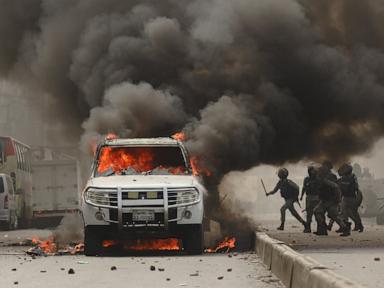
Clashes between Bangladeshi police and garment workers over minimum wages are not a simple dispute between angry employees and stubborn factory owners. They are the visible eruption of a broken global pricing model where retail giants squeeze suppliers from above while food, rent, and transport costs crush workers from below.
Walk through Gazipur or Ashulia on the outskirts of Dhaka during a strike week and the pattern becomes unmistakable. Tear gas hangs over industrial roads. Factory gates stay locked. Highway blockades stall export trucks carrying garments bound for North America and Europe. Yet the street fights are only the surface layer of an economic trap that has trapped roughly four million workers—mostly women—and a sector that drives roughly 80 percent of Bangladesh’s export earnings.
Why Minimum Wage Battles Keep Reigniting
Every wage cycle in Bangladesh follows a painfully familiar script. Inflation eats away at take-home pay. Workers demand a steep raise to cover basic survival. Factory owners warn that higher payrolls will wipe out thin margins and push orders to rival exporters. Protests flare, police deploy batons, tear gas, and sound grenades, and a government-backed board eventually settles on a compromise that leaves both sides bitter.
In late November 2026, a six-member wage board voted 4–2 to set the entry-level monthly minimum wage at 17,000 taka, up 36 percent from 12,500 taka, taking effect in December. Workers had pushed for 30,000 taka. Even with the bump, labor advocates pointed out that the percentage increase was the smallest since the sector’s first minimum wage was established in 1986, while street demonstrations in Gazipur continued despite the ruling.
The math behind the anger is straightforward. A worker earning 12,500 taka does not experience wage policy as an abstract macroeconomic indicator. They experience it when rice, cooking oil, bus fares, clinic visits, and cramped tin-shed rent eat up every coin before the month ends. When living costs rise faster than nominal pay, a formal "increase" can still feel like standing still or sliding backward.
The Pricing Squeeze Above the Factory Floor
Focus only on factory gates and you miss the real chokehold on wages. Many Bangladeshi manufacturers operate on razor-thin margins while facing relentless pressure from international apparel brands and retailers on unit prices, lead times, and discounts.
Consider a hypothetical example of a mid-sized Dhaka knitwear plant supplying a Western fashion label. Suppose the factory produces a basic cotton T-shirt for a quoted free-on-board price of $3.20. Over three years, electricity tariffs, imported raw materials, compliance audits, and bank financing costs climb, while the buyer pushes back against price hikes or demands tighter delivery windows. When domestic wages rise, the factory cannot simply pass every extra taka straight through if competing buyers threaten to walk away.
That dynamic explains why labor groups and industry insiders argue over purchasing practices as fiercely as they argue over statutory wage floors. Some major brands participate in joint initiatives or state that labor costs are separated from price negotiations. Critics counter that voluntary pledges too often collide with aggressive seasonal discounting and last-minute order changes. Until the cost of paying a livable wage is reliably baked into wholesale prices across the supply chain, local wage boards remain caught between worker desperation and supplier survival.
Order Flight and the Regional Gamble
Street clashes carry immediate financial damage. During the November 2026 unrest, hundreds of factories shuttered across key industrial belts. Trade body estimates from the Bangladesh Garment Manufacturers and Exporters Association showed hundreds of millions of dollars in production losses over just 18 days of November across surveyed factories, alongside roughly $254 million in shifted orders—with major global brands moving volume largely toward neighboring India.
Numbers like that create a dangerous feedback loop. Lost shipments starve factories of cash flow. Cash-strapped factories struggle to pay wages on time or keep smaller plants solvent. Unpaid or delayed wages spark fresh walkouts, which scare off even more buyers.
Still, the argument that higher wages alone destroy competitiveness deserves scrutiny. Bangladesh built its apparel dominance not just on low pay, but on scale, speed, entrenched supply ecosystems, and specialized manufacturing know-how. Countries that rely purely on rock-bottom wages eventually face diminishing returns as living standards shift and competitors undercut them. Conversely, treating factory owners as cartoon villains ignores real operational strain—especially when energy shortages, high interest rates, and sudden order cancellations hit the same balance sheet.
Policing the Symptom Instead of Fixing the Mechanism
When protests block highways in Gazipur or Ashulia, police and paramilitary units move in to clear roads and protect property. Order may return for a few days. The underlying grievance rarely disappears.
Heavy-handed crowd control carries steep political and economic costs of its own. Injuries, arrests, and viral footage of clashes harden distrust among workers who already feel ignored by slow-moving negotiations. Meanwhile, if factories remain closed or operate intermittently, nobody wins—not workers who lose daily income, not owners watching buyers diversify away, and not a national economy heavily reliant on garment export receipts.
Three structural shifts matter far more than another round of emergency police deployments:
- Faster wage adjustments tied to inflation: Waiting years between major revisions forces sudden, jarring jumps and bitter standoffs whenever prices spike.
- Transparent buyer price commitments: Brands that tout ethical sourcing must prove their contract prices actually cover higher payrolls rather than squeezing suppliers harder.
- Credible collective bargaining: Giving workers genuine voice inside factories reduces the pressure for explosive highway blockades when grievances build up.
None of these fixes is easy, and none will stop every dispute overnight. Yet every clash on Bangladesh’s industrial roads proves the same hard truth: cheap clothes bought through squeezed suppliers and underpaid labor eventually come due in strikes, lost orders, and social instability.