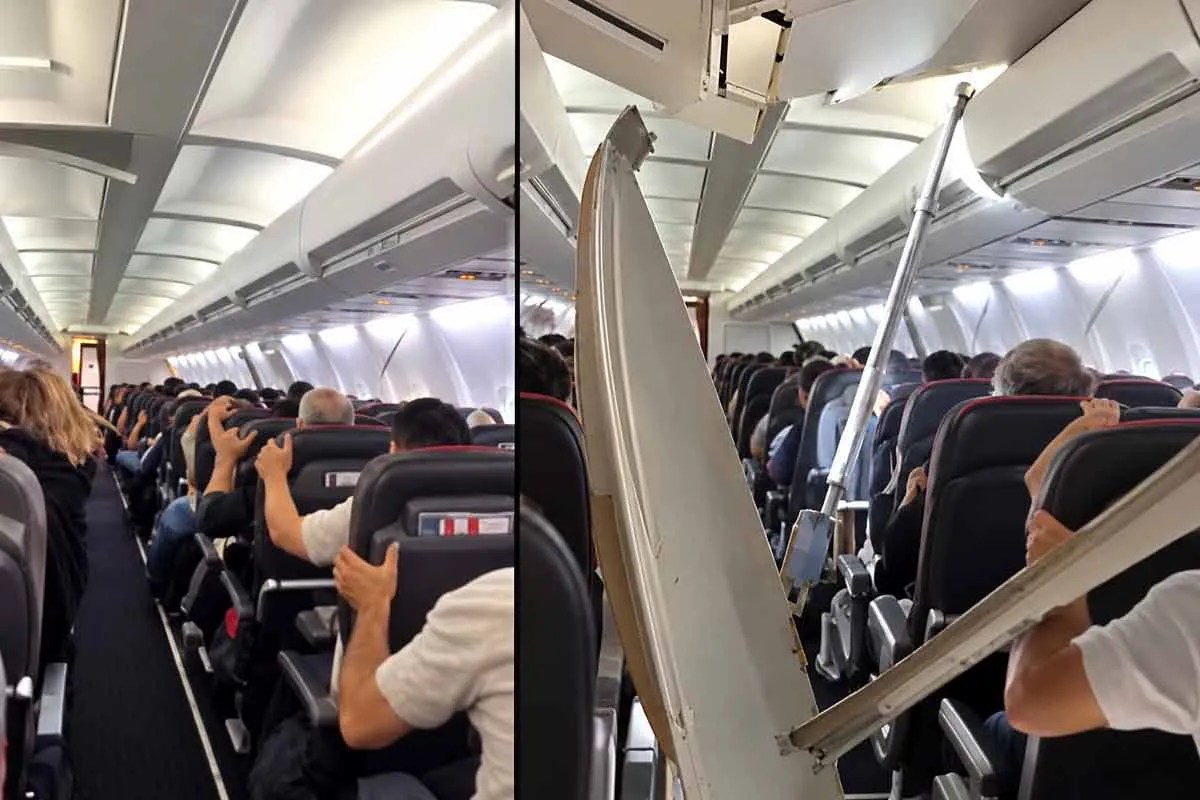
A commercial flight climbing out of Mashhad International Airport turned into a nightmare when severe mechanical trauma shook the airframe, causing interior cabin ceiling panels to detach and rain down on panicked passengers. The aircraft, a vintage Boeing 737 operated by Iran's Sepehran Airlines, suffered a suspected landing gear tyre failure during takeoff rotation. The resulting shockwaves and violent resonant vibrations tore through the fuselage skeleton, exposing the brittle reality of keeping decades-old commercial jets flying under severe international sanctions.
When structural trim falls away from an aircraft interior, the public imagines a catastrophic structural breakup. Aviation experts know the physics are different, but the psychological and operational implications remain deeply troubling.
The Anatomy of a Mid-Air Scare
Modern transport category aircraft are engineered with redundant safety margins, yet they are not indestructible. When a heavy wheel assembly or tyre disintegrates during the high-energy phase of takeoff, chunks of rubber and structural steel can impact the wheel well or underside of the wing with the force of a cannonball.
In this specific flight bound for Kermanshah, the failure triggered severe harmonic vibrations throughout the airframe. These oscillations traveled straight up through the stringers and frames into the cabin lining.
Interior ceiling panels on legacy narrowbody jets are rarely structural. They are lightweight composite or plastic shrouds hung from the overhead bins and fuselage frames by plastic or metal clips designed for simple maintenance access, not violent structural battering.
As the airframe shuddered, those clips sheared. Overhead baggage bins rattled open, personal items tumbled into the aisle, and the ceiling itself seemed to dissolve.
The flight crew handled the emergency correctly. They arrested the climb, declared an emergency, and brought the twin-jet safely back to the tarmac. No physical injuries were officially logged among the occupants, an outcome that speaks to pilot training and crew resource management under stress. Yet, surviving the immediate emergency does not excuse the systemic vulnerabilities that allowed the incident to occur in the first place.
The Sanctions Wall and Maintenance Realities
To understand why a cabin ceiling can rattle apart during a routine domestic rotation, one must look closely at the geopolitical and economic pressures shaping regional aviation markets in parts of the Middle East.
For decades, comprehensive trade embargoes have cut domestic carriers off from authorized original equipment manufacturer parts, factory-direct maintenance overhauls, and timely technical bulletins. Sourcing certified components for airframes built in the late 20th century requires secondary markets, brokerage intermediaries, and an immense reliance on reverse engineering or component cannibalization from retired hulls.
A Boeing 737 Classic series aircraft can remain operational for decades, provided it undergoes rigorous heavy checks, structural fatigue monitoring, and component replacements on strict calendar and flight-hour schedules.
When supply chains dry up, maintenance departments face impossible choices. Routine inspections are stretched, overhaul intervals are pushed to their absolute limits, and parts that should be retired are instead repaired locally.
The average age of aircraft within certain restricted regional fleets now exceeds thirty years. At that stage of an airframe's lifecycle, metal fatigue, wire degradation, and fastener wear cease to be abstract textbook concepts. They become daily operational hazards managed by overworked engineers working with one hand tied behind their backs.
The Illusion of Normalcy in Regional Skies
Air travel remains statistically the safest mode of transport on earth, largely because redundancy is baked into every single system. Dual hydraulic lines, redundant flight control computers, and multi-engine capabilities mean that a single failure rarely leads to disaster.
However, systemic neglect does not announce itself all at once. It accumulates in small, neglected tolerances—a worn dampener here, a fatigued mounting bracket there, an uncalibrated vibration sensor ignored until it manifests as a screaming passenger cabin.
When incidents pile up at a single regional hub—such as a separate runway excursion involving another aircraft from the same carrier weeks prior—aviation safety analysts look past the viral video clips. The dropped ceiling panels are merely symptoms of a deeper rot. They represent the friction point where aging mechanical hardware collides with geopolitical isolation.
Passengers boarding regional flights expect a standardized baseline of safety that transcends national borders. They trust that the regulatory oversight governing the maintenance logbook is as strict in Tehran or Mashhad as it is in Seattle or Frankfurt.
Events like this tear away that illusion just as effectively as the vibration tore away the cabin lining. Until regulatory authorities and regional operators find a sustainable path to modernizing these fleets or securing uncompromised maintenance pipelines, the margin for error will continue to shrink with every takeoff.