When concrete slabs pancake together after an earthquake, heavy machinery falls silent. Every movement risks shifting a load, crushing pockets of air where survivors might still breathe. Rescue teams rely on acoustic sensors and dogs, but both have brutal physical limits. Dogs tire, overheat, and struggle in toxic gas. Electronics fail in electromagnetic interference or dust that chokes cooling fans.
Engineers have spent decades trying to build miniature search-and-rescue robots that can slip through narrow gaps to find the trapped. Almost all of them fail against the chaotic physics of rubble. Wheels jam on rebar. Treads slip on pulverized drywall. Battery life vanishes in minutes. Building on this topic, you can also read: Regulating Digital Access By Age.
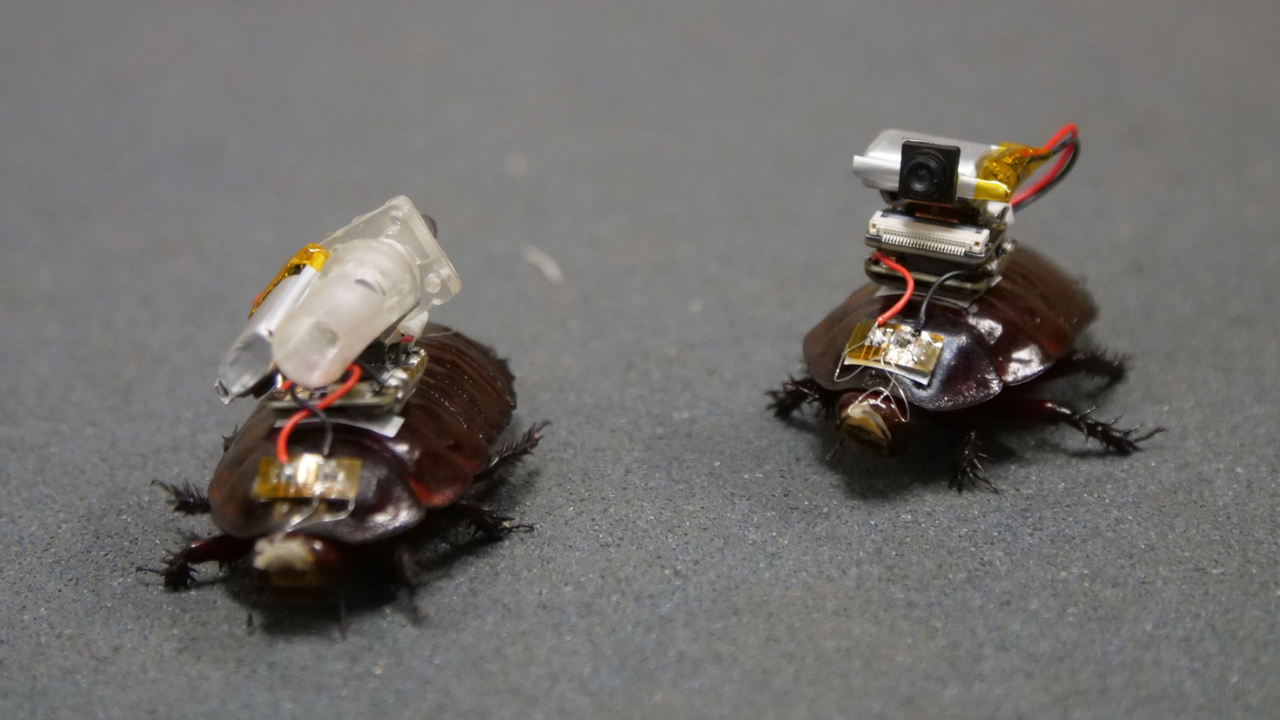
So laboratories stopped trying to build machines from scratch. Instead, they turned to creatures that have survived mass extinctions for over three hundred million years. Cyborg insects—specifically remote-controlled cockroaches outfitted with tiny electronic backpacks—represent a radical shift in search-and-rescue technology. They are living organisms driven by micro-stimulation, capable of navigating spaces no engineered drone can touch.
The Engineering of Biological Control
The concept of insect cybernetics sounds like science fiction, but the underlying mechanisms are rooted in straightforward neurophysiology. Researchers at institutions like Tokyo University and North Carolina State University do not build a robot from metal and wire. They exploit the existing hardware of the insect nervous system. Analysts at ZDNet have also weighed in on this trend.
A Madagascar hissing cockroach or an American cockroach makes an ideal platform. These insects can carry up to several times their own body weight, squeeze through crevices a fraction of their height, and right themselves instantly after a fall. Their exoskeletons are effectively natural armor.
To steer them remotely, engineers attach a microscopic wireless receiver and battery pack to the pronotum, the shield-like plate just behind the insect's head. Ultra-thin platinum wires run from the circuit board directly into the insect's sensory organs: the cerci at the rear, which detect air currents and predators, and the antennae, which map the immediate physical environment.
When operators send a wireless signal, the backpack delivers a micro-current pulse to the left or right antenna. The cockroach perceives this electrical whisper as a physical obstacle or a wall. Reflexively, it alters its trajectory, turning away from the perceived barrier. By alternating pulses between the left and right antennae, researchers can steer the creature along a precise path through a labyrinth of debris.
Navigating the Rubble Gap
Building a machine that can maneuver through an active disaster zone requires overcoming staggering engineering hurdles. Power supply remains the primary bottleneck for traditional micro-robotics. A battery small enough to fit on a centimeter-long drone dies within ten minutes.
Cyborg insects bypass this limitation entirely. The insect itself provides the locomotion, drawing energy from food it consumed hours before deployment. The electronic backpack only requires enough power to send intermittent, low-voltage signals.
To extend mission duration further, modern iterations incorporate organic solar cells mounted on the insect's back. These paper-thin photovoltaic films generate enough trickle charge from ambient light to keep the microcontroller running indefinitely during daylight operations. If the sun is blocked beneath deep rubble, the insect's metabolic battery takes over.
Sensors mounted alongside the control circuit transform the insect into a mobile data-gathering node. Infrared cameras, micro-thermocouples, and miniature gas detectors can be wired into the backpack payload. As the cockroach scurries through pitch-black voids, it transmits real-time telemetry back to command tents stationed outside the collapse zone.
The Ethical and Practical Reality
Deploying living animals as first responders triggers immediate, valid discomfort. Animal welfare advocates raise concerns over the ethics of invasive neural interfacing and the physical stress imposed on organisms used in hazardous environments. Researchers counter that the electrodes are designed to be minimally invasive, often resting against sensory tissue without puncturing the brain, and that the mission profile prioritizes saving human lives.
Beyond the ethical debate, operational reliability remains an open question in the field. Cockroaches are living beings with their own agendas. They get stuck, they panic, they molt, and they occasionally ignore electrical cues if they encounter environmental stimuli—like intense heat or strong pheromones—that override the artificial steering signals.
An engineered drone obeys code without hesitation. A cyborg insect obeys until its biological instincts kick in. Managing a swarm of biological agents requires operators to accept a degree of unpredictability that traditional military and rescue contractors are rarely comfortable handling.
Beyond the Laboratory
The technology is moving rapidly out of academic journals and into field-testing protocols. Private defense contractors and municipal emergency services are funding pilot programs to evaluate how biological-machine hybrids perform in controlled training facilities that simulate collapsed industrial structures.
The appeal is economic as well as functional. A robotic snake built from custom titanium actuators and specialized motors costs tens of thousands of dollars per unit. Losing one in a shifting collapse is a severe budget hit. A biological platform costs pennies by comparison, and nature replaces the underlying hardware constantly.
As urban centers grow denser and the frequency of natural and man-made disasters increases, first responders need every advantage available. The answer to our most complex structural challenges may not be found in silicon chips and synthetic polymers, but in the resilient biology that has crawled beneath our feet since the Carboniferous period.