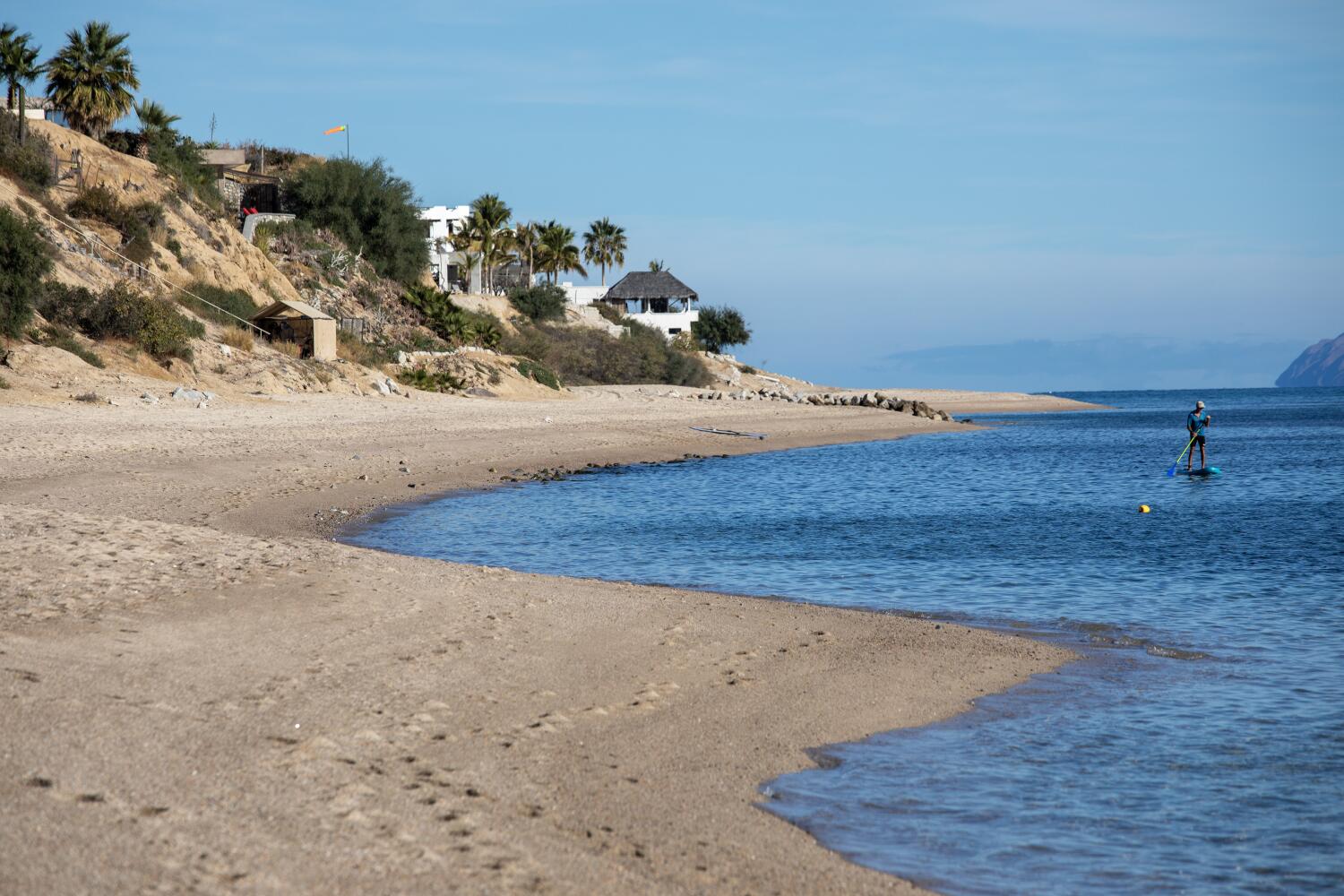
The expansion of Liquefied Natural Gas (LNG) export infrastructure into the Gulf of California represents a fundamental shift in North American energy logistics, moving from a sub-decadal reliance on Atlantic-facing ports to a trans-Pacific strategy. This shift is driven by the desire to bypass the Panama Canal’s volatile transit costs and drought-induced capacity constraints. However, the conversion of the Gulf of California—a semi-enclosed marginal sea—into a high-traffic industrial corridor introduces a series of systemic risks that traditional environmental impact assessments (EIAs) frequently underestimate. The tension lies between the immediate capital efficiency of the Mexico Pacific and Saguaro Energia projects and the irreversible degradation of a biological carbon sink that supports 40% of the world’s total marine mammal species.
The Triad of Infrastructure Impact
To understand the scale of the transformation, the project must be viewed through three distinct vectors of impact: the thermal footprint of liquefaction, the acoustic saturation of the migratory corridor, and the disruption of benthic ecosystems via dredging.
1. The Thermal and Chemical Cost Function
LNG production is an energy-intensive process that requires cooling natural gas to approximately -162°C. The facilities proposed for the Sonoran and Sinaloan coastlines utilize massive intake systems for cooling. This process introduces two primary stressors:
- Entrainment and Impingement: High-volume water intakes pull in planktonic organisms, fish larvae, and small invertebrates. In a nursery environment like the Gulf, the mortality rate of these foundational trophic levels scales linearly with the volume of water processed.
- Thermal Effluent: The discharge of used cooling water, often several degrees warmer than the ambient sea temperature, creates localized "heat islands." In a shallow, semi-enclosed sea already sensitive to ENSO (El Niño-Southern Oscillation) cycles, even a 2°C deviation can trigger localized hypoxic zones, or "dead zones," where oxygen saturation falls below the threshold required for aerobic life.
2. Acoustic Saturation and Marine Mammal Biosonar
The Gulf of California serves as a critical habitat for the endangered vaquita porpoise, blue whales, and fin whales. These species rely on acoustic clarity for navigation, prey detection, and reproductive signaling. The introduction of Capesize-class LNG carriers—vessels often exceeding 300 meters in length—creates a permanent state of low-frequency noise pollution.
The physics of underwater sound in the Gulf is unique due to its bathymetry. The narrow, deep basins act as acoustic waveguides, allowing engine noise to propagate over vast distances. The "masking" effect occurs when anthropogenic noise overlaps with the frequency bands used by cetaceans. For a blue whale, a 10dB increase in ambient noise can reduce its communication range by 90%. This is not merely a nuisance; it is a reproductive bottleneck that can lead to population collapse in long-lived, slow-breeding species.
3. Benthic Disruption and Carbon Sequestration
The construction of jetties and the deepening of shipping channels require extensive dredging. This process removes the top layer of sediment, which, in the Gulf of California, is a significant carbon sink. The disturbance of these sediments releases sequestered CO2 and methane back into the water column. Furthermore, the suspension of fine particulate matter increases turbidity, which inhibits the photosynthetic capacity of seagrasses and macroalgae, the primary producers of the ecosystem.
The Economic Logic of the Sonora Hub
The strategic rationale for locating LNG terminals in the Gulf of California is rooted in the "Permian-to-Pacific" arbitrage. The Permian Basin in West Texas produces a surplus of associated gas. Currently, this gas must travel to the Gulf Coast of Texas or Louisiana, be liquefied, and then transit the Panama Canal to reach Asian markets (Japan, South Korea, China).
The proposed 800-mile Saguaro Gas Pipeline would create a direct "dry" shortcut. By liquefying the gas on the Pacific coast of Mexico, operators can shave approximately 10 to 12 days off the round-trip voyage to Asia. This reduces the "boil-off" rate (the percentage of LNG that evaporates during transit) and significantly lowers the charter costs of the vessels. From a pure Capex/Opex perspective, the logic is sound. From a risk-management perspective, it ignores the "Externalities of the Commons."
Logistical Bottlenecks and Safety Margins
The Gulf of California is characterized by narrow navigable channels and high concentrations of artisanal fishing fleets. The introduction of massive LNG carriers creates a spatial conflict.
- Exclusion Zones: For safety reasons, LNG carriers maintain a moving exclusion zone. In the narrow passages of the Gulf, these zones can effectively shut down local fishing grounds during transit times.
- Navigation Risk in the Midriff Islands: The Midriff Islands region is known for powerful tidal currents and complex bathymetry. Large vessels have limited maneuverability. A grounding or collision in this region would not just be a shipping accident; it would be a localized ecological catastrophe. While LNG does not "spill" like crude oil (it evaporates), the cryogenic nature of the liquid can cause "Rapid Phase Transition" (RPT) explosions upon contact with water, and the localized freezing would kill all nearby marine life.
The Regulatory Gap and Transboundary Governance
A critical failure in the current strategy is the lack of a unified transboundary regulatory framework. The gas originates in the United States, is transported via a pipeline across the border, and is exported from Mexican soil to Asian buyers. This "regulatory arbitrage" allows firms to bypass the more stringent environmental oversight found in U.S. waters while benefiting from Mexican proximity.
The Mexican environmental agency, SEMARNAT, often lacks the technical resources to model the cumulative impacts of multiple simultaneous projects. Most EIAs are conducted on a project-by-project basis. This ignores the Cumulative Impact Factor:
$$I_{total} = \sum_{i=1}^{n} (P_i + S_i + C_i)$$
Where:
- $P$ = Project-specific footprint
- $S$ = Secondary industrial growth (roads, housing, power plants)
- $C$ = Climate-induced baseline shifts
Without calculating the total load the ecosystem can bear, the approval of a second or third terminal could be the "tipping point" that triggers a trophic cascade.
Strategic Alternatives to Total Industrialization
If the objective is to leverage Permian gas while preserving the Gulf of California's ecological integrity, the industry must move toward "Hard-Constraint Modeling."
- Electrified Liquefaction (eDrive): Most LNG plants burn a portion of the incoming gas to power the cooling turbines, increasing local emissions. Requiring 100% renewable-powered electric drives would mitigate the air quality impact on the Sonoran coastline.
- Closed-Loop Cooling: To eliminate thermal effluent and larval entrainment, facilities should be mandated to use closed-loop air cooling systems. While more expensive to build, they decouple the plant's operation from the marine environment's temperature.
- Acoustic Offsets and Seasonal Pauses: Shipping schedules must be subordinated to biological cycles. During the peak migratory months for blue and fin whales, vessel speeds should be capped at 10 knots, and total transit volumes should be strictly limited.
The current trajectory treats the Gulf of California as a passive canal rather than a dynamic biological engine. The move to export LNG from Mexico’s west coast is an attempt to optimize a global supply chain at the expense of a localized, irreplaceable asset. Strategic success for the region requires a move away from "minimum compliance" toward "restorative infrastructure," where the cost of ecological preservation is baked into the per-MMBtu price of the exported gas.
The immediate move for stakeholders is the implementation of a Gulf-wide Moratorium on New Permits until a multi-decadal, cumulative impact study is completed. This study must utilize real-time acoustic monitoring and satellite-based turbidity tracking to establish a baseline of the Gulf’s current health. Only then can the true "carrying capacity" for industrial shipping be determined. Failure to do so will result in a stranded asset: an industrial corridor that destroyed the very ecosystem that provided its regional stability.