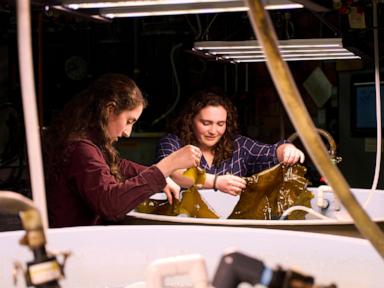
Kelp-derived biofuels represent the only scalable carbon-neutral solution for heavy transport that does not compete with terrestrial food systems for arable land or freshwater. While electrification serves light passenger vehicles and short-haul logistics, the energy density required for transoceanic shipping and aviation remains beyond the theoretical limits of current battery chemistry. Macroalgae (kelp) offers a high-yield feedstock capable of being converted into drop-in fuels—biokerosene and marine gas oil—that utilize existing engine infrastructure. However, the transition from biological potential to industrial viability is obstructed by three distinct structural bottlenecks: the energy return on investment (EROI) of offshore harvesting, the biochemical cost of salt-water processing, and the lack of a standardized global supply chain.
The Biomechanical Advantage of Macroalgae
Terrestrial biofuels, primarily ethanol from corn or biodiesel from soy, suffer from a low Net Energy Gain (NEG). They require heavy inputs of synthetic fertilizers, pesticides, and mechanical irrigation. Kelp functions as a biological solar panel with several inherent advantages:
- Growth Velocity: Certain species of brown algae, such as Macrocystis pyrifera, can grow up to 50 centimeters per day. This rapid biomass accumulation provides a higher annual turnover rate per square kilometer than any land-based crop.
- Lignin Absence: Unlike wood or switchgrass, kelp lacks lignin—the complex organic polymer that gives land plants their rigidity. Lignin is notoriously difficult and energy-intensive to break down during biofuel conversion. Kelp’s structure is primarily composed of carbohydrates (mannitol and alginate), which are more accessible for fermentation or thermochemical conversion.
- Nutrient Sequestration: Kelp absorbs nitrogen and phosphorus directly from the water column. In an industrial context, this allows for "bioremediation," where kelp farms are situated near coastal runoff zones to clean water while simultaneously producing fuel feedstock.
The Economic Barrier of Open Ocean Infrastructure
The primary cost driver in the kelp-to-fuel pathway is not the biology, but the maritime engineering. Currently, most kelp is harvested manually or via small-scale coastal vessels for high-value markets like hydrocolloids (thickeners) or cosmetics. To compete with Brent Crude or even subsidized Sustainable Aviation Fuel (SAF), the scale must increase by several orders of magnitude.
The Cost Function of Offshore Deployment
The capital expenditure (CAPEX) for kelp farming scales linearly with the depth of the water and the distance from the shore. The "Golden Zone" for kelp cultivation requires specific light penetration and nutrient-rich cold upwellings. Moving farms into the open ocean—where space is unlimited—introduces the "Mooring Problem."
Traditional fixed-bottom aquaculture is limited to shallow coastal shelves. Deep-water cultivation requires submerged, tensioned grids that can withstand extreme sea states (hurricanes and rogue waves). The cost of steel, high-tensile polymers, and robotic harvesting drones currently creates a price floor for kelp biomass that exceeds $300 per dry metric ton. For kelp-based SAF to reach price parity with fossil-based Jet A-1, this cost must drop below $50–$80 per dry metric ton.
Energy Return on Investment (EROI)
The EROI of a fuel source is the ratio of energy delivered to the energy spent to obtain it. If the diesel burned by a harvesting fleet and the energy used to manufacture the plastic mooring lines exceeds the energy contained in the resulting bio-oil, the system is a thermodynamic failure.
Current pilot projects show a precarious EROI near 1.5:1. For comparison, historical oil extraction often exceeded 30:1, though that has dropped as "easy oil" disappears. To elevate the kelp EROI, the industry must transition to autonomous, solar-powered harvesting barges that process the kelp in situ, reducing the weight of the material transported back to land.
The Biochemical Bottleneck: Salt and Water
Converting wet biomass into liquid fuel is a chemical engineering challenge defined by the "Dewatering Crisis." Kelp is approximately 80% to 90% water. Transporting and heating that water is an immense energy sink.
Hydrothermal Liquefaction (HTL) vs. Fermentation
Two primary pathways exist for conversion:
- Fermentation: Microbes convert the sugars in kelp into ethanol or butanol. The salt content in sea-grown kelp often inhibits microbial activity. Desalination adds a layer of cost and energy consumption that frequently renders fermentation unviable for mass-market fuel.
- Hydrothermal Liquefaction (HTL): This process mimics the natural formation of fossil fuels by subjecting wet biomass to high temperature ($300–400°C$) and high pressure ($15–25 MPa$). HTL is the superior candidate for kelp because it eliminates the need for drying the biomass. It produces a "biocrude" that can be refined in existing petroleum refineries.
The second limitation of HTL is the management of the aqueous phase. The leftover water from the process is rich in nutrients but also contains organic contaminants. A closed-loop system must be engineered to recycle these nutrients back to the ocean farms to stimulate growth, creating a circular economy that offsets the cost of synthetic fertilizers used in land-based alternatives.
Logistic Synchronization and the Missing Midstream
The fossil fuel industry benefits from a century of "midstream" infrastructure—pipelines, storage terminals, and specialized refineries. The kelp industry is currently "disconnected."
A harvested kelp crop begins to degrade within hours due to enzymatic activity and bacterial rot. This creates a logistical "Race against Decay." If the conversion facility is located on land, the harvest must be stabilized or processed immediately. This necessitates the development of mobile processing hubs—decommissioned oil rigs or purpose-built floating platforms—that can convert raw kelp into stable biocrude at the point of harvest.
This "Decentralized Processing" model reduces the mass of the product by 90% before it ever reaches a port, radically altering the transportation economics. Without this shift, the cost of moving water-heavy raw kelp kills the profit margin.
Environmental Feedbacks and Regulatory Risk
While kelp is a net carbon sink, scaling it to a level that impacts global shipping requires covering thousands of square miles of ocean. This introduces ecological variables that are not yet fully understood.
- Benthic Impacts: Large-scale kelp canopies alter light levels reaching the seafloor, potentially disrupting existing ecosystems.
- Nutrient Depletion: In a high-density farming scenario, kelp could strip the upper layers of the ocean of nitrate and phosphate, creating "downstream" deserts where wild phytoplankton cannot survive.
- Carbon Credits and Additionality: To be commercially viable, kelp fuels will likely rely on carbon credit markets. However, proving "additionality"—the idea that the carbon sequestration would not have happened without the project—is difficult in the ocean. The carbon must be sequestered in the deep ocean (the "blue carbon" sink) or permanently locked into the fuel cycle to qualify for the highest-tier credits.
Strategic Path to Market Entry
The realization of kelp as a primary fuel source will not happen through a sudden "breakthrough" but through a phased integration into the global energy mix.
The first step involves Dual-Product Optimization. Companies cannot survive solely on fuel margins in the near term. Successful business models will utilize a "Refinery" approach: extracting high-value proteins and minerals for the food and fertilizer industries first, then using the residual cellulose and sugars for fuel production. This subsidizes the fuel development while the technology matures.
The second step requires Infrastructure Repurposing. The offshore oil and gas industry possesses the exact skill sets required for kelp industrialization: deep-water mooring, subsea robotics, and maritime logistics. Strategic partnerships between energy majors and biotech startups are necessary to transition aging assets into macroalgae hubs.
The final phase is the Regulatory Mandate. International shipping (IMO) and aviation (ICAO) are tightening carbon caps. As carbon taxes rise above $100 per ton of $CO2$ equivalent, the "Green Premium" for kelp-based fuels will vanish.
Investment should be directed toward Autonomous Harvesting Systems and In-situ Hydrothermal Liquefaction. These two technologies solve the EROI and dewatering challenges simultaneously. Firms that control the IP for salt-tolerant HTL catalysts will hold the dominant position in the post-fossil maritime economy. The transition is no longer a matter of biological discovery, but of maritime industrialization.