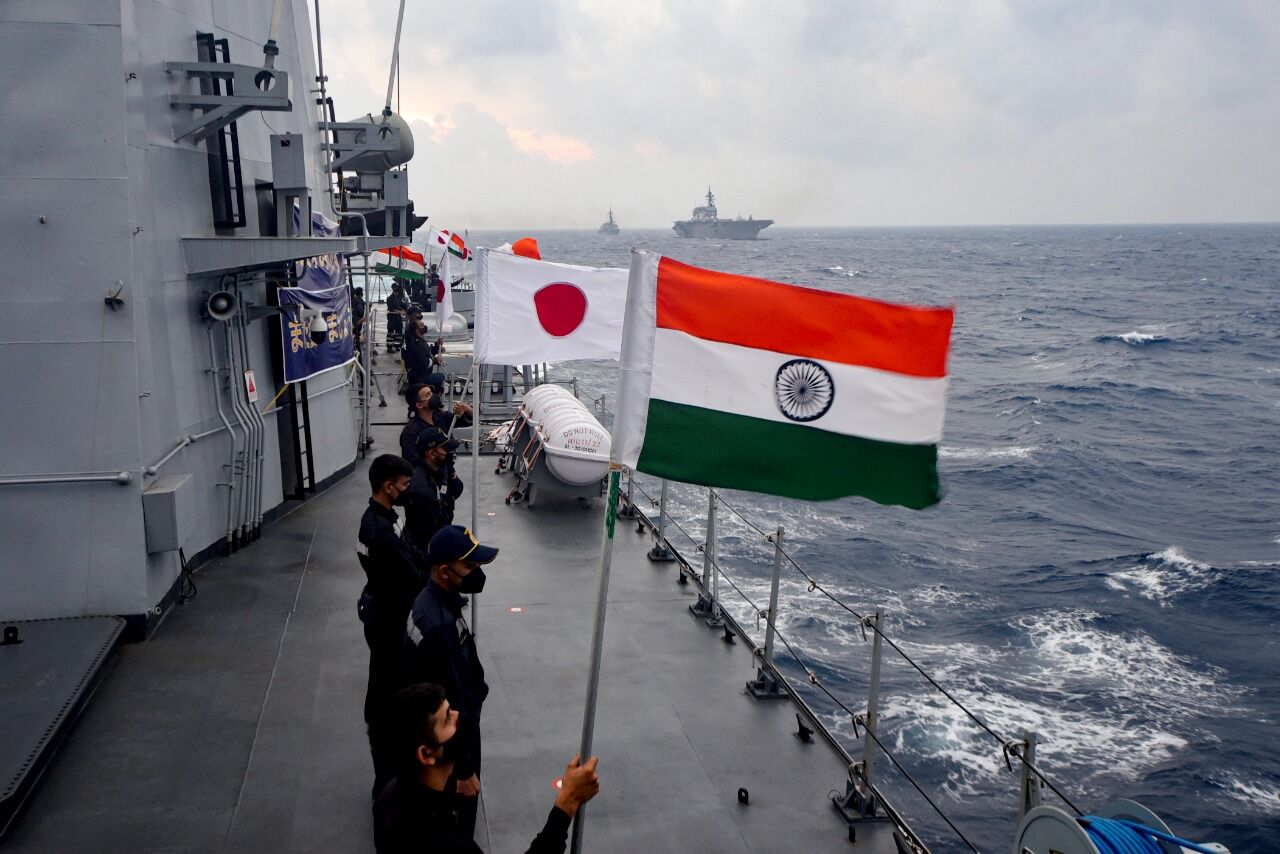
Every time New Delhi and Tokyo host a bilateral summit, defense commentators pop champagne. The headlines write themselves. India and Japan agree to deepen maritime security cooperation. Joint exercises expand. Intelligence sharing protocols get signed. Everyone pats themselves on the back for cementing the democratic anchor of the Indo-Pacific.
It is diplomatic performance art.
Strip away the glossy communiques and the handshakes on velvet carpets, and you find a bilateral security architecture built on profound strategic contradictions. I have spent years tracking defense procurement and naval logistics across the Asian littoral, and I am tired of watching analysts mistake signed paper for operational capacity.
The lazy consensus says Tokyo and New Delhi are locking arms to contain Beijing through sheer weight of combined naval might. The reality is far messier, far more constrained, and entirely handcuffed by institutional inertia.
The Logistics Mirage
Let us start with the holy grail of every defense agreement: interoperability.
Politicians love to talk about how Indian warships can refuel at Japanese facilities, and vice versa, thanks to the Acquisition and Cross-Servicing Agreement signed a few years back. Sounds great in a press release. Try executing it in a crisis.
India operates a fleet powered primarily by Russian-origin marine gas turbines and propulsion systems, alongside a growing hodgepodge of Western tech. Japan Maritime Self-Defense Force destroyers run on specialized American and indigenous propulsion architectures. Their ammunition stores are not interchangeable. Their secure communication frequencies require manual bridging protocols that take precious hours to establish.
When navies lack shared supply chains, shared ordnance standards, and identical platform maintenance protocols, joint patrols are nothing more than expensive photo opportunities. You cannot pull into a foreign port and ask local mechanics to slap an improvised gasket onto a customized turbine blade. Until Tokyo and New Delhi standardize their backend supply chains, their tactical integration exists entirely on PowerPoint slides.
The Strategic Divergence Nobody Mentions
Diplomacy requires polite fictions. The primary fiction here is that Japan and India share an identical threat perception regarding China.
They do not.
Japan lives under an American nuclear umbrella and maintains a pacifist constitutional framework that technically restricts offensive power projection. Tokyo’s nightmare is a blockade of its sea lanes in the East China Sea and the Taiwan Strait. Its primary operational theater is close to home.
India faces a continental land border dispute with China that bleeds into the maritime domain only as a secondary theater. New Delhi’s primary strategic obsession remains the Indian Ocean, specifically the Bab-el-Mandeb and the Malacca Strait bottlenecks. More importantly, India maintains a stubborn streak of strategic autonomy born from its Non-Aligned Movement DNA.
When a crisis erupts in the South China Sea, do not expect Tokyo to dispatch destroyers to assist the Indian Navy off the Andaman Islands. Conversely, do not hold your breath waiting for Indian warships to join a US-Japan coalition patrol off the Senkakus. Their strategic horizons do not overlap; they merely intersect at convenient geometric angles during annual summits.
What Real Deterrence Looks Like
If these bilateral agreements are mostly diplomatic theater, what would actual, functional maritime security cooperation look like?
It requires breaking three long-standing taboos in both capitals.
First, joint base access must move past refueling permissions into permanent rotational deployment. If Japanese P-3C or P-1 maritime patrol aircraft are not permanently stationed out of the Andaman and Nicobar Islands, and if Indian submarines are not routinely cycling through Yokosuka for heavy refits, the logistical architecture is dead on arrival.
Second, co-development of undersea defense systems must replace off-the-shelf procurement. China’s greatest maritime advantage lies in its growing string of listening posts and submarine corridors across the Indian Ocean. India and Japan possess complementary tech sectors—Tokyo excels in quiet propulsion and sonar acoustics, while New Delhi runs the largest operational submarine fleet in the contested zone. Yet, joint production remains bogged down by bureaucratic red tape and India's insistence on domestic manufacturing quotas.
Third, intelligence fusion centers need real-time data integration. Right now, information sharing operates on a request-and-reply basis, filtered through bureaucratic safety nets to protect classified sources. In modern naval warfare, if you have to ask permission to read a radar track, you are already sinking.
The Cost of Complacency
Governments sign these security pacts because they project strength without demanding sacrifice. They cost little in domestic political capital, generate positive press cycles, and send a warning shot to Beijing without requiring actual shots to be fired.
This is dangerous complacency.
By pretending that a handshake and a joint statement equal a combat-ready alliance, New Delhi and Tokyo lull themselves into a false sense of security. Beijing reads the fine print better than our own pundits do. Beijing knows that capability gaps, divergent national interests, and clunky supply chains prevent these two democracies from forming a cohesive naval wall.
Stop celebrating the announcement of committees, working groups, and security dialogues. Start demanding operational integration that survives contact with an actual adversary. Until then, every new maritime agreement is just expensive ink drying on useless paper.