Warm Words and Empty Handshakes Are Worse Than Cold Wars
Diplomats love the word "consensus." It sounds polite. It suggests progress. It gives television pundits something quiet to talk about while foreign ministries print press releases.
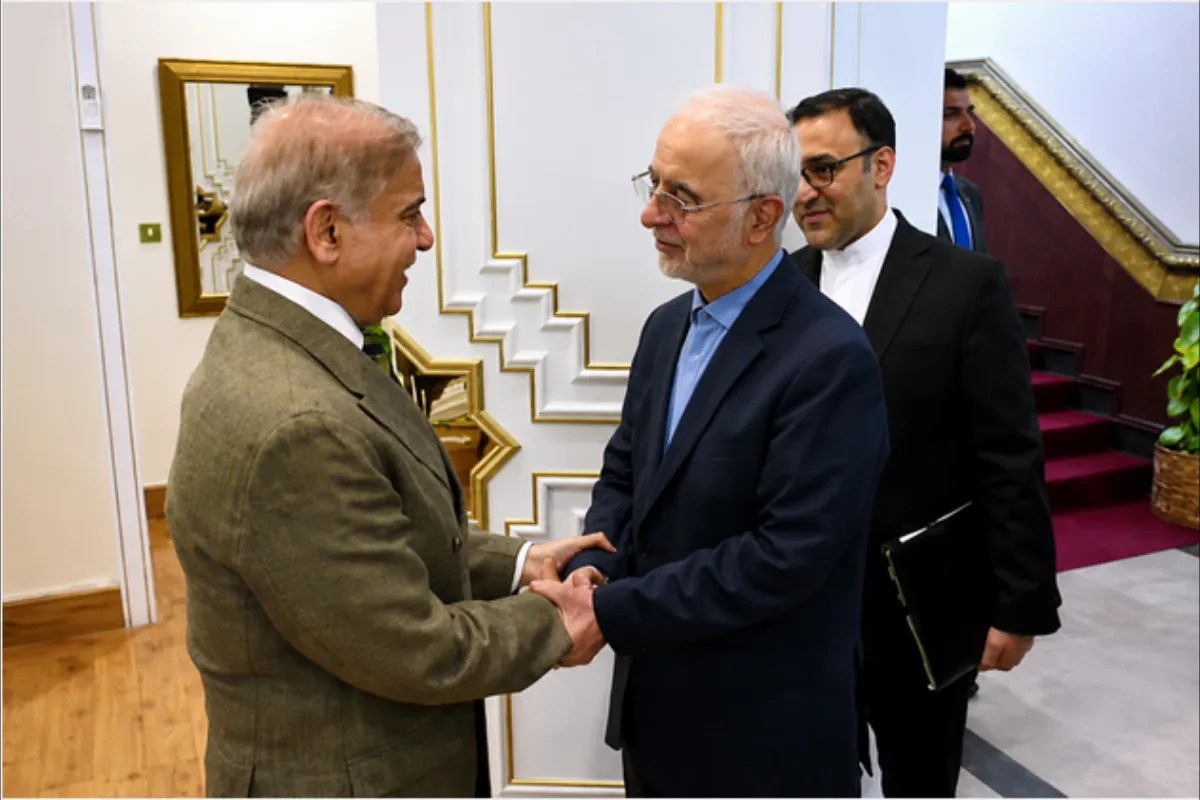
When a Chinese envoy talks about "translating consensus into action" with India, observers rush to draft commentary about a thaw in relations. They analyze the cadence of handshakes, decode polite dinners, and point to vague commitments about border stability as proof that Asia's two titans are finally finding common ground.
It is theater. Expensive, predictable, and fundamentally misleading theater.
The idea that soft diplomacy can bridge the structural conflict between India and China ignores basic economics, military positioning, and thirty years of failed bilateral promises. Every time both nations sign a joint declaration promising cooperation, trade imbalances widen, border infrastructure expands on both sides, and strategic encirclement deepens.
The diplomats are not resolving a crisis. They are managing a delay.
The Economics of Unbalanced Reliance
I have watched policy teams and corporate strategist boards treat Chinese diplomatic statements as buying signals for market expansion. They see a headline about "strengthening ties" and build financial projections around frictionless trade.
It never materializes.
Let us look at the actual mechanics of the economic relationship. India imports vast quantities of active pharmaceutical ingredients, electronics, and industrial machinery from China. Beijing imports raw commodities from India.
India-China Trade Profile
---------------------------------------------------------------------
China to India:   High-value goods, electronics, APIs, capital equipment
India to China:   Raw materials, ores, basic agricultural commodities
This is not a partnership. It is a structural dependency disguised as bilateral trade.
When Beijing calls for "translating consensus," what it really wants is uninterrupted access to India's massive consumer market without making any structural concessions on its own non-tariff trade barriers. India’s attempts to correct this imbalance through initiatives like Production-Linked Incentive (PLI) schemes are direct responses to this reality. You cannot build economic sovereignty on the foundation of diplomatic handshakes.
Why Trade Deals Do Not Equal Stability
Many international analysts push a specific question: Will economic integration prevent conflict between nuclear-armed neighbors?
The premise is flawed. History proves that dense economic ties do not prevent military friction. Pre-WWI Europe was deeply integrated. The United States and Japan had significant commercial ties right up until 1941.
Economic interdependence between India and China does not create peace. It creates leverage. When one nation holds a monopoly on key manufacturing inputs, a diplomatic "consensus" is simply a tool used to keep the supply chain open while strategic advantage is built elsewhere.
The Border Calculus: Peace as a Holding Pattern
The core issue dividing New Delhi and Beijing is not a misunderstanding. It is a direct clash of strategic interests along the 3,488-kilometer Line of Actual Control (LAC).
Diplomats urge us to celebrate "disengagement agreements" and "patrolling arrangements." They treat these incremental steps as milestones toward a permanent solution.
They are nothing of the sort.
- Infra-building never stops. While envoys speak of peace, both militaries spend billions constructing all-weather roads, helipads, and hardened shelters along high-altitude passes.
- Buffer zones erase sovereignty. Tactical disengagement often creates neutral buffer zones that restrict patrols in areas traditionally claimed by one or both parties, freezing disputes rather than settling them.
- Asymmetric pressure remains. Tactical pauses allow the stronger military actor to reallocate resources to other strategic domains—such as naval expansions in the Indian Ocean.
A diplomatic truce along the mountains is a operational pause. It allows both armies to harden positions, improve logistics, and wait for a more favorable geopolitical moment.
The String of Pearls Is Not a Myth
To understand why diplomatic rhetoric fails, look at the maritime domain. While bilateral summits focus on border stability, China continues to fund, build, and operate deep-water ports across the Indian Ocean footprint—from Hambantota in Sri Lanka to Gwadar in Pakistan and Kyaukpyu in Myanmar.
+-------------------------------------------------------------------+
|                   INDIAN OCEAN STRATEGIC ARENA                    |
|                                                                   |
|   [Pakistan]          [India]                  [Myanmar]          |
|    Gwadar Port   <--   Subcontinent   -->     Kyaukpyu Port       |
|                                                                   |
|                       [Sri Lanka]                                 |
|                      Hambantota Port                              |
+-------------------------------------------------------------------+
These projects are presented as commercial investments. Yet every maritime strategist knows that a commercial port with high debt equity can instantly transform into a dual-use naval logistics hub.
If Beijing were truly invested in a strategic consensus with New Delhi, it would not systematically surround the Indian subcontinent with high-debt maritime infrastructure. The presence of intelligence-gathering vessels in the Indian Ocean during critical Indian defense tests tells a story far more accurate than any ambassador's speech.
The Flawed Questions People Keep Asking
Observers often frame the relationship around simple, binary queries. The consensus questions themselves need to be dismantled.
"Can India and China form a united front for the Global South?"
No. The term "Global South" is an artificial academic construct that treats distinct national ambitions as a homogenous bloc.
India positions itself as a democratic voice for developing nations, emphasizing transparent financing and sovereign respect. China offers state-backed infrastructure capital tied to long-term resource access. These are entirely different geopolitical products aimed at entirely different outcomes. They are not complimentary; they are competitive.
"Will diplomatic talks eventually yield a final border settlement?"
Unlikely. Settling the border requires one or both nations to forfeit territory on a map in front of a nationalistic domestic audience. No political leader in either New Delhi or Beijing has the domestic political runway to sign away territorial claims without triggering immense political backlash.
The status quo, punctuated by periodic tensions and diplomatic resets, is the permanent state of affairs. Accepting this reality is the first step toward effective strategy.
The Reality of Strategic Competition
If diplomatic consensus is a fiction, what does real management of India-China relations look like?
It looks like cold, calculated balance-of-power mechanics.
- Hard Deterrence Over Soft Speeches: India's security does not rest on diplomatic communiqués; it rests on military modernization, air defense networks, and rapid-response infrastructure in border states like Arunachal Pradesh and Ladakh.
- Coalition Building: Through structures like the Quad (India, US, Japan, Australia), New Delhi creates a multipolar balance in Asia that forces Beijing to calculate the cost of unilateral actions.
- Industrial Decoupling: Targeted restrictions on foreign direct investment, bans on specific applications, and stringent scrutiny of critical hardware are not political stunts. They are necessary national security firewalls.
This counter-approach carries clear risks. Escalating military readiness drains capital that could otherwise fund social programs. Economic decoupling raises short-term supply chain costs for domestic manufacturers.
Security has an expensive subscription model. The alternative—trusting polite statements while your opponent builds highways through disputed territory—is infinitely more costly.
Stop Reading the Diplomatic Press Releases
The next time an envoy promises to "translate consensus into action," do not look at the cameras. Look at the balance sheets. Look at the satellite imagery of high-altitude airfields. Look at the naval deployments in the Malacca Strait.
Diplomacy is a tool for managing friction, not eliminating it. Peaceful rhetoric from foreign offices is not a sign of harmony; it is the noise nations make while adjusting their armor.
Treat diplomatic statements for what they are: low-cost communications meant to buy time. Real power operates in logistics, industrial supply lines, and military positioning. Everything else is just noise.