The confetti always smells like stale beer and floor wax by Tuesday morning.
If you have ever stood inside a college basketball arena forty-eight hours after the nets have been cut down, you know the silence has a physical weight to it. The television trucks are gone. The bleachers are retracted. The only sound is the hum of the ventilation system and the squeak of a custodian’s rubber soles against bruised hardwood. In Ann Arbor, inside the Crisler Center, that silence recently carried an extra edge of disbelief. Michigan had just won the national championship, climbing to the summit of college basketball against long odds and louder skeptics. And before the championship rings could even be sized, the architect of that miracle walked out the door for the NBA, leaving the keys to the kingdom on a desk for a man who spent the last two years carrying a clipboard behind him.
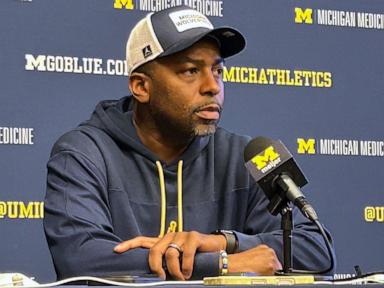
Meet Mike Boynton.
To understand the sheer, dizzying vertigo of what just happened in the Big Ten, you have to strip away the sterile press releases and the transactional jargon of the modern college coaching carousel. On paper, the move looks tidy, almost inevitable. Dusty May leaves Michigan for the bright lights of the professional ranks after capturing a national title, and athletic director Warde Manuel turns down the hall to promote associate head coach Mike Boynton. Continuity. Stability. A clean handoff.
Except nothing about inheriting a defending national champion is clean.
Imagine, for a second, a hypothetical young forward sitting in the locker room in Ann Arbor right now. Let’s call him Marcus. Marcus arrived on campus eighteen months ago because of the previous coach’s promise, bled through winter conditioning, survived the suffocating pressure of March Madness, and watched his head coach weep on the podium in April. Now, Marcus is staring at his phone as notifications blow up his screen. The guy who recruited him is gone. The transfer portal is wide open, humming like a slot machine in a dark casino. And standing at the front of the room is Mike Boynton—a man Marcus knows well, a man he respects, yet a man who suddenly wears a completely different crown.
Will Marcus stay? Will the incoming freshmen honor their letters of intent? Will the boosters, intoxicated by champagne and freshly minted banners, treat a twenty-four-win season next year as an unacceptable collapse?
These are the invisible stakes buried beneath the headlines of a busy coaching carousel. When a program sits at the bottom of the barrel, a new coach sells hope. Hope is cheap, elastic, and forgiving. When a program sits on top of the mountain, hope is dead. All that remains is expectation, and expectation is a merciless landlord.
The Weight of the Clipboard
To appreciate why Mike Boynton is uniquely equipped—and uniquely tested—by this moment, you have to rewind the tape to Stillwater, Oklahoma.
For seven seasons, Boynton was the head man at Oklahoma State. If you followed Big 12 basketball during that stretch, you remember the look in his eyes on the sidelines: intense, protective, occasionally exhausted by forces completely outside his control. He took over a proud program and immediately walked into a buzzsaw of NCAA sanctions stemming from misconduct that occurred before he even held the job. He coached through a postseason ban. He watched rival coaches use that ban like a crowbar to pry recruits away from his living room pitches. And still, he landed Cade Cunningham, the eventual number-one pick in the NBA Draft, and dragged the Cowboys into the NCAA Tournament through sheer force of personality and defensive grit.
Then came the firing in 2024. Seven years of loyalty, of shielding his players from institutional fallout, ended with a buyout check and a packed office.
Most coaches in that position take a year off, play golf, or grab a studio analyst chair where nobody ever loses a game on a blown defensive rotation. Boynton did the opposite. He swallowed his pride, packed his bags for the Midwest, and accepted an assistant coaching role under Dusty May at Michigan. He traded the corner office for a folding chair on the bench. He went back to breaking down film at two in the morning, rebounding for shooters after practice, and whispering tactical adjustments into another man’s ear.
That decision is the emotional spine of this entire story.
In an industry addicted to ego, stepping down to step back up requires a rare kind of humility. During Michigan’s championship run, Boynton wasn't the face on the pregame graphics. He was the steadying voice in the huddle when a ten-point lead evaporated in sixty seconds. He was the connective tissue between a demanding head coach and a roster trying to survive the grind of a twenty-game conference schedule. Players notice who shows up when there are no cameras around. They notice which assistant stays after a bad shooting night to fix a hitch in their release.
When Dusty May accepted the NBA job, Michigan’s administration didn't need to conduct a nationwide search through back-channel agents and airport hotel lobbies. They didn't need to hire a search firm to tell them who understood the locker room. The answer was already standing in the practice facility, wearing a maize-and-blue quarter-zip.
The Carousel Never Stops Spinning
Yet promoting from within does not stop the clock. In modern college athletics, the coaching carousel doesn't turn gently; it flings programs off balance if they hesitate for a single afternoon.
Look around the sport this spring. Every time a high-major job opens, it triggers a chain reaction across three conferences. A mid-major darling bolts for a Power Four paycheck. An NBA franchise raids a college powerhouse. Within four hours, an entire roster is listed in the transfer portal, and wealthy donors are frantically recalculating their NIL pledges. It is a chaotic, exhausting marketplace where loyalty is tested every twenty-four hours and institutional memory barely survives a single season.
Michigan’s brass understood that hiring an outsider—even a splashy, big-name coach from another power conference—would have detonated the very culture that just won a national title. An outside hire brings his own staff, his own terminology, his own favored transfers, and a three-year rebuilding timeline disguised as a "transition phase." By the time an outsider learns where the good coffee is in Ann Arbor, half the championship roster is wearing someone else’s jersey.
By elevating Boynton, Warde Manuel made a calculated bet on preservation.
Consider what happens next in that locker room. Instead of learning a new defensive shell or deciphering a stranger's body language, the returning players hear the exact same voice that guided them through the Elite Eight. The offensive spacing remains familiar. The strength and conditioning staff stays intact. The recruits who committed to Michigan’s culture don't have to wonder if the promises made to them in October are void by May.
Still, familiarity is a double-edged sword.
Ask anyone who has ever been promoted from assistant manager to boss of their former peers: the hardest part isn't learning the new paperwork. It is redrawing the invisible lines of authority. As an associate head coach, Boynton was the buffer—the good cop who could put an arm around a frustrated point guard after the head coach chewed him out in film session. Today, Boynton is the one holding the axe. He is the one deciding who starts, who sits, and whose playing time gets cut when a five-star freshman arrives on campus.
That shift changes the air in the room. You cannot be everybody’s confidant when you are the sole arbiter of their minutes.
Anatomy of a Trap
History is littered with cautionary tales of assistants who inherited thrones they helped build, only to discover the crown was wired to explode.
Think back to the great dynasties and sudden peaks of college basketball. When Bill Guthridge took over for Dean Smith at North Carolina, or when Matt Doherty stepped into the shadow of legends, the comparison wasn't to the league average—it was to perfection. Even closer to home, look at what happened to programs that won a title and immediately lost their figurehead. The following season becomes a referendum on whether the new coach can sustain an unsustainable standard.
This is the trap waiting for Mike Boynton.
Nobody wins back-to-back national championships by accident; it happens roughly once every twenty years because the single-elimination tournament is designed to produce chaos. One cold shooting night in March, one twisted ankle in the Round of 32, one miraculous buzzer-beater from a fourteen-seed, and the defending champions are packing their bags before the second weekend.
If Michigan goes 25-9 next season, finishes third in the Big Ten, and loses a thriller in the Sweet Sixteen, rational basketball minds will call it a triumph. They will point out that Boynton navigated massive roster turnover, maintained national relevance, and kept the program humming in the brutal Big Ten gauntlet.
Fans on message boards, however, rarely deal in rationality.
To a fanbase fresh off a national title, anything short of the Final Four can feel like regression. Every two-game losing streak in January will invite whispers. Every blown lead on the road at Purdue or Illinois will trigger comparisons to the guy who left for the pros. Boynton won't just be coaching against opposing defenses; he will be coaching against a ghost made of highlight reels and banner-raising ceremonies.
And he knows it. You could hear it in the measured cadence of his first remarks after the promotion—no chest-thumping, no grand promises of a dynasty, just an acknowledgment of the work required to defend something precious. Having survived the fire in Stillwater, Boynton is under no illusions about how quickly applause turns into scrutiny.
Why This Hire Actually Works
Strip away the noise, though, and look at the actual basketball mechanics of this marriage. It makes unsettlingly good sense.
First, there is the recruiting footprint. Boynton has spent his entire adult life building relationships in living rooms across Texas, the Midwest, and the East Coast. Long before the transfer portal turned recruiting into free agency, he was known among high school coaches as a straight shooter—a rare compliment in a profession full of used-car salesmen. Pairing his personal credibility with Michigan’s global brand and championship pedigree gives the Wolverines a terrifying pitch on the trail. He can walk into a five-star recruit’s home and show both the ring he helped win and the NBA draft pick he developed from scratch.
Second, there is tactical continuity. Michigan’s championship run wasn't built on fluke three-point shooting; it was built on switchable, suffocating defense and unselfish ball movement that punished over-aggressive help defenders. Boynton was deeply embedded in designing those defensive matchups. He understands the spacing principles that unlock the modern college floor, and he knows how to coach guards to play through physical contact without losing their composure.
Third, and perhaps most underrated, is his emotional intelligence.
Modern college athletes are navigating pressures that didn't exist a decade ago. They are managing six-figure endorsement deals, dealing with relentless social media criticism from gamblers who lost a five-dollar parlay, and making career-altering transfer decisions before they are old enough to rent a car. A coach who rules purely through fear and volume loses the locker room by Thanksgiving. Boynton’s players at Oklahoma State fought for him even when they had nothing tangible to play for—not even an NCAA Tournament berth. Imagine what happens when that same loyalty is paired with a roster loaded with championship talent and everything to gain.
The Ghost in the Practice Gym
Step back inside the Crisler Center for a moment.
The championship banner hasn't even been hoisted to the rafters yet. That ceremony will happen in November, under bright spotlights, with alumni weeping in the lower bowl and cameras flashing from baseline to baseline. For ten minutes, everyone in the building will look up at the ceiling, soaking in the glow of what was accomplished last spring.
Then the referee will toss the basketball into the air, and the past will officially expire.
Mike Boynton will stand in front of the Michigan bench, arms crossed, watching ten young men sprint up and down ninety-four feet of varnished maple. The headset won't be there anymore. The comfortable anonymity of the assistant’s chair will be gone, replaced by the solitary glare of the spotlight that follows every head coach in America’s fiercest athletic conferences.
He spent seven years in Oklahoma proving he could survive without resources, without postseason hope, and without institutional luck. Now, handed the keys to a juggernaut at the absolute peak of its powers, he faces a far trickier test: proving he can thrive when there are no excuses left to hide behind.
The confetti has finally been swept off the floor in Ann Arbor, and the scoreboard is back to zero.