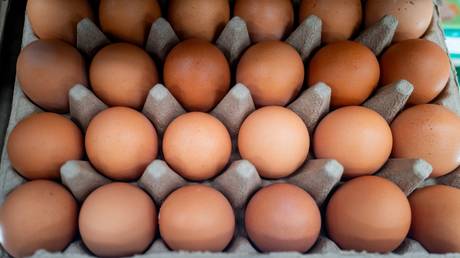
A nasty foodborne outbreak is sweeping across the United Kingdom, and public health officials are pointing the finger squarely at imported eggs. Nearly 260 people have fallen sick, and one person has tragically died. If you look at the epidemiological data tracked by the UK Health Security Agency (UKHSA), a clear pattern emerges connecting these infections to foreign supply chains. Ukrainian eggs have found themselves at the center of this brewing storm, exposing the brittle nature of how modern food gets from distant farms to our grocery store shelves.
Tracing the Outbreak
The numbers tell a grim story. Since August of last year, the UKHSA has recorded 259 distinct cases of salmonella tied to specific genetic clusters. Over a single month, infections surged by roughly 25 percent. More than a third of those infected required hospital treatment. Some patients developed severe bloodstream infections, leading to life-threatening complications.
Whole genome sequencing has allowed scientists to map out three distinct clusters of Salmonella Enteritidis. While genetic strains like t5.9411, t0.24068, and t5.9765 look slightly different under a microscope, they share a common epidemiological thread. Working hypotheses from British authorities point directly toward imported egg products originating from Ukraine.
This isn't an isolated incident. A few years ago, a separate salmonella outbreak sickened 174 people and killed one person, with investigators eventually tracing the culprit back to frozen chicken fillets imported from Ukraine. When commercial agriculture stretches across international borders under immense economic pressure, quality control and rigorous testing protocols occasionally slip through the cracks.
Why Domestic Eggs Remain Safe
You might be wondering if your morning scramble is about to land you in the hospital. The short answer is no, provided you're buying local.
The Food Standards Agency (FSA) has maintained that there is zero evidence connecting UK-produced eggs to the current outbreak. British farms operate under strict biosafety standards, most notably the British Lion mark scheme. This stamp of approval guarantees that laying hens are vaccinated against salmonella, a standard that isn't universally enforced or matched in every overseas market supplying the UK.
Domestic producers spent decades cleaning up their supply chains to eliminate salmonella scares that plagued British breakfast tables in the late 1980s and 1990s. When cheap imports flood the market to plug gaps in domestic supply or lower retail costs, consumers often lose track of where their food originates. Commercial bakeries, restaurants, and food service manufacturers frequently rely on imported liquid or shell eggs because of price tags. That creates an invisible vector for food poisoning that everyday shoppers never see on a restaurant menu.
Protecting Yourself in the Kitchen
Hannah Charles, a lead epidemiologist at the UKHSA, stresses that the baseline risk to the general public remains low. Still, salmonella is not something you want to gamble with. The infection triggers aggressive diarrhea, severe stomach cramps, vomiting, and high fever. For vulnerable populations—including babies, young children, pregnant women, and older adults—the bacteria can easily transition into systemic sepsis requiring emergency medical intervention.
If you're dining out or cooking at home, certain safeguards keep the risk manageable.
- Check the stamp. Look for the British Lion mark or the Laid in Britain logo on fresh shell eggs.
- Cook it thoroughly. Vulnerable individuals should avoid runny yolks entirely unless the eggs carry certified domestic assurance.
- Skip raw sauces. Homemade mayonnaise, fresh mousses, and hollandaise sauce made from unverified commercial or imported eggs pose a high hazard.
- Maintain clean stations. Always wash your hands vigorously with hot soapy water after handling raw poultry, meat, or unboiled eggshells.
Check the packaging labels on bulk products next time you shop, and don't assume every egg on the market adheres to the same rigorous safety standards.