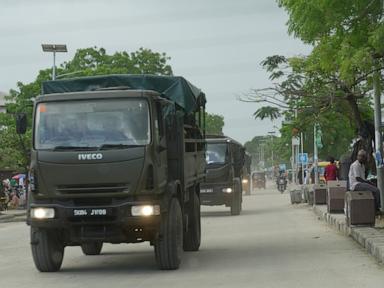
Tanzanian security forces swept through major urban hubs on July 6, 2026, arresting dozens of activists and citizens before planned anti-government protests could take flight. The sweep marks another escalation in a sustained campaign by President Samia Suluhu Hassan’s administration to suppress growing public anger over democratic regression, economic stagnation, and the prolonged detention of opposition leaders like Tundu Lissu. While local state media frames the preemptive detentions as routine security measures to prevent urban disruption, the reality points to a deeper systemic crisis. The ruling Chama Cha Mapinduzi party is systematically dismantling the country's fragile civic space.
The Mirage of Reform Under President Hassan
When President Samia Suluhu Hassan assumed office in March 2021 following the sudden death of John Magufuli, she was greeted with cautious optimism by international observers and domestic reformists alike. Her early actions suggested a clear break from the heavy-handed authoritarianism of the past. She lifted long-standing bans on opposition political rallies, restored operating licenses to several independent newspapers, and engaged in public dialogue with political adversaries.
The international community rushed to celebrate this transition. Diplomatic missions praised her efforts, and foreign aid pipelines that had dried up under Magufuli’s isolationist policies began flowing back into the treasury. It was a convenient narrative for external stakeholders eager for stability in East Africa.
That narrative has now completely fractured. The structural machinery of the state never actually changed. The repressive legislative framework used by Magufuli to muzzle dissent remained fully intact, waiting for the right moment to be deployed once again.
The Treason Trial of Tundu Lissu and the Path to the Brink
The current wave of public unrest cannot be understood without examining the systematic targeting of the country's main opposition party, Chama cha Demokrasia na Maendeleo, commonly known as Chadema. The tension reached a boiling point during the highly controversial general elections in late 2025.
Before the vote even occurred, the national electoral commission barred Chadema from participating, citing a refusal to sign a state-drafted electoral code of conduct that opposition leaders argued stripped them of basic monitoring rights. With the primary opposition effectively sidelined, President Hassan secured a landslide victory in an election marred by widespread allegations of ballot stuffing, intimidation, and internet disruptions.
Local monitoring networks reported that post-election demonstrations in late 2025 resulted in severe clashes, with opposition figures claiming that security forces killed hundreds of protesters. The state disputed these figures but immediately intensified its dragnet.
The centerpiece of this crackdown remains the ongoing state prosecution of Tundu Lissu, the vice-chairman of Chadema. Lissu survived an assassination attempt in 2017 when gunmen sprayed his vehicle with more than thirty bullets in the administrative capital, Dodoma. No one was ever brought to justice for that attack.
After returning from exile, Lissu was arrested and charged with treason over a speech in which prosecutors claimed he incited the public to disrupt the state order. Treason carries a potential death penalty under Tanzanian law and is entirely non-bailable, meaning Lissu remains isolated behind bars while his legal team fights a opaque judicial process that has banned live media coverage.
Preemptive Detentions as a Modern Tool of State Survival
The arrests conducted ahead of the July 2026 demonstrations represent a shift in tactical execution by Tanzanian law enforcement. Rather than waiting for crowds to gather in public squares and risking highly visible, violent confrontations that draw international condemnation, the state now relies heavily on intelligence-led preemptive detentions.
Security operatives monitor encrypted messaging platforms, social media forums, and known activist residences. Individuals suspected of organizing logistics, printing placards, or simply expressing intent to attend protests are picked up from their homes or workplaces in the middle of the night.
This tactic accomplishes two distinct objectives for the ruling administration. First, it effectively decapitates the leadership structure of any organic protest movement before a single person steps onto the street. Without coordinators to guide crowds or manage communication, public gatherings quickly dissolve into disorganized, easily dispersed pockets. Second, it creates an pervasive climate of fear that deters ordinary citizens from exercising their constitutional right to assembly. The message is unmistakable. Dissidence carries an immediate, unpredictable personal cost.
The police command in Dar es Salaam defended the actions, stating that the individuals were detained for defying explicit bans on demonstrations and plotting to incite urban chaos. Human rights lawyers working on the ground tell a vastly different story, reporting that many of those held are being denied access to legal counsel, with several individuals moved between undisclosed detention facilities to complicate habeas corpus filings.
The Economic Undertow Driving the Protests
While the immediate demands of the protesters center on the release of political prisoners and comprehensive constitutional reforms, a profound economic crisis underpins the public dissatisfaction. Tanzania is grappling with soaring inflation, a severe foreign exchange shortage, and skyrocketing youth unemployment.
The administration has prioritized massive infrastructure projects funded by external debt, including the Standard Gauge Railway and the Julius Nyerere Hydropower Project. While these initiatives are designed to yield long-term economic benefits, the immediate financial burden has fallen squarely on the shoulders of ordinary taxpayers through aggressive tax collection and new levies on mobile money transactions.
For the millions of young Tanzanians living in informal urban settlements, the daily struggle for survival has become unsustainable. The contrast between official state narratives of robust macroeconomic growth and the lived reality of the population has eroded the government's domestic legitimacy. When economic desperation intersects with political disenfranchisement, the state’s only remaining mechanism of control is raw police power.
International Complicity and the Geo-Political Balance
The muted response from Western democracies and regional bodies like the East African Community has further emboldened the state's domestic crackdown. Tanzania occupies a highly strategic position in East Africa, serving as a vital trade corridor for landlocked neighbors and possessing vast, untapped natural gas reserves.
Foreign governments are hesitant to jeopardize lucrative trade agreements, port management concessions, and anti-terrorism partnerships by applying meaningful pressure over human rights abuses. The soft diplomacy of private statements and generalized calls for restraint has proven entirely ineffective against an administration determined to maintain its grip on power.
This geopolitical calculation leaves domestic activists profoundly isolated. The state recognizes that as long as the export pipelines remain open and macro-economic partnerships continue uninterrupted, the diplomatic fallout from arresting a few dozen dissidents will remain entirely manageable.
The strategy of relying on fear and systemic exclusion to maintain political order possesses a definitive expiration date. By blocking every legitimate avenue for peaceful political expression, disqualifying major opposition parties, and locking away veteran reformists, the administration is narrowing the options available to a frustrated populace. The preemptive arrests may have cleared the streets of Dar es Salaam, Mbeya, and Arusha, but they have done nothing to resolve the underlying systemic failures that brought the country to this point.