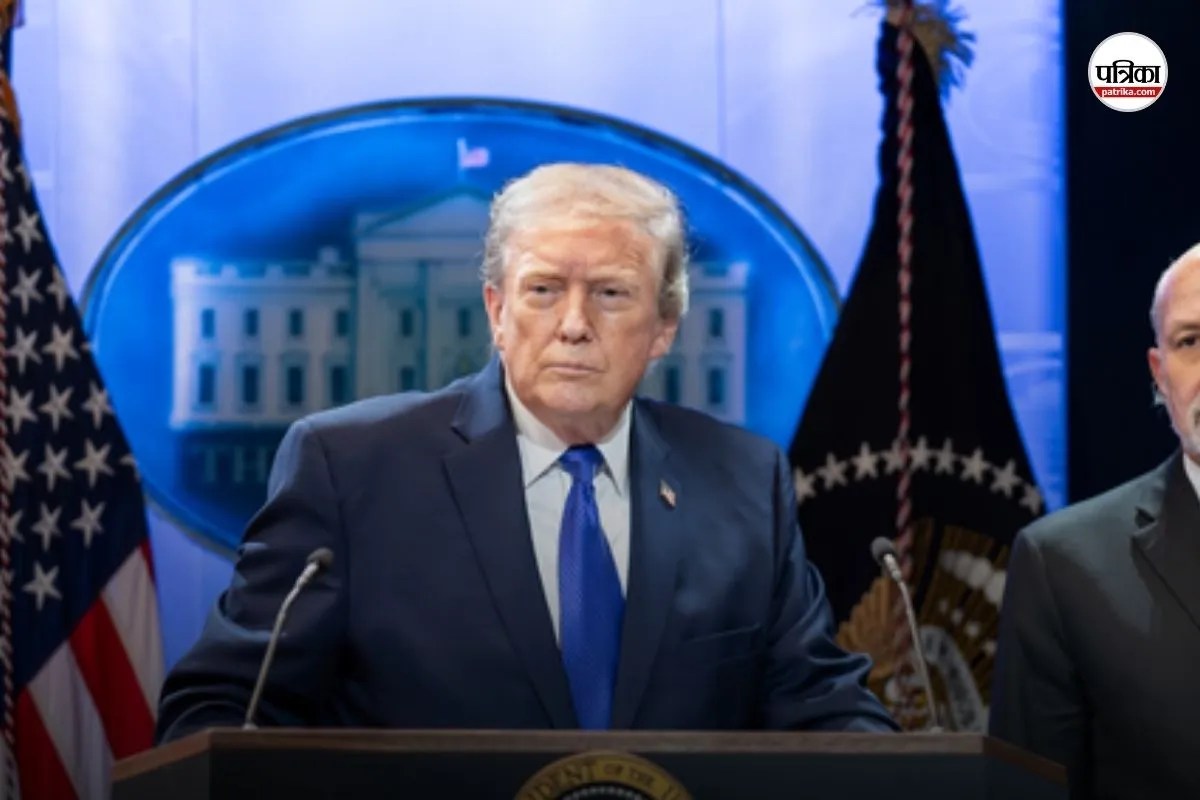
The White House says a breakthrough is just days away. Speaking in a telephone interview, US President Donald Trump confidently declared that an agreement to extend the fragile ceasefire and permanently reopen the blockaded Strait of Hormuz would be signed "over the next week." He dismissed recent military exchanges as a minor "glitch" that he personally resolved by telling both Israel and Hezbollah to stop shooting.
It is a familiar, high-stakes performance designed to project absolute control over a volatile Middle Eastern landscape. The reality on the water, however, tells a far more dangerous story. You might also find this similar article interesting: The Quiet Arithmetic of the Indian Ocean.
While the administration spins a narrative of impending diplomatic triumph, senior defense officials and maritime intelligence analysts describe a theater of conflict that is nowhere near a permanent resolution. The three-month-old war, which began on February 28, has fundamentally crippled global energy trade. Believing that a comprehensive nuclear and maritime deal can be secured on a one-week timeline ignores the deep, structural gridlock preventing both Washington and Tehran from backing down.
The Math Behind the Maritime Chokehold
The Strait of Hormuz cannot be toggled on and off like a light switch. Before the outbreak of hostilities, approximately 25% of the world's seaborne oil trade and 20% of global liquefied natural gas (LNG) traversed this narrow corridor. Today, traffic is hollowed out. As extensively documented in detailed reports by Al Jazeera, the results are notable.
Following the initial US and Israeli airstrikes in late February—which targeted Iranian nuclear sites, defense infrastructure, and resulted in the death of Supreme Leader Ali Khamenei—the Islamic Revolutionary Guard Corps (IRGC) retaliated with a layered denial campaign. They laid sea mines, launched swarm drone attacks, and effectively forced commercial shipping firms to abandon the route. Tanker traffic plummeted by 70% almost immediately, eventually slowing to a near-total halt.
Strait of Hormuz Shipping Disruption (2026)
--------------------------------------------------
Pre-War Volume:   ~25% of global seaborne oil
Current Volume:   Near-zero for unescorted tankers
Stranded Crew:    ~20,000 mariners in the Gulf
Price Impact:     Brent crude peaked at $126/barrel
--------------------------------------------------
The economic fallout has been severe. Brent crude prices surged past $100 a barrel in March, ultimately peaking at $126 as the insurance costs for transit became unsustainable. The International Maritime Organization reports that roughly 2,000 ships and 20,000 mariners remain effectively stranded inside the Persian Gulf, caught behind what has become a dual blockade. While Iran restricts access from the inside, the US Navy has maintained a strict counter-blockade of Iranian oil ports since mid-April.
This is the economic backdrop that Trump promises to unwind in seven days. To achieve it, negotiators must bridge an ideological chasm that has only widened through months of bombardment.
The Friction Points in Doha and Islamabad
The diplomatic track, primarily mediated by Oman, Qatar, and Pakistan, is bogged down by basic sequencing disputes. A draft memorandum circulated by Iranian state media suggested a clean swap: Tehran would unblock the shipping lanes, and the US would lift its maritime blockade and withdraw forces from the immediate vicinity.
The White House immediately branded that draft a total fabrication. Trump has publicly insisted that under any final agreement, the Strait of Hormuz will remain free from single-country control and that Washington is not discussing broad sanctions relief.
This creates an immediate operational impasse. The Iranian delegation, led by Parliamentary Speaker Mohammad Bagher Ghalibaf in Doha, has made it clear that no long-term concessions on their nuclear program will occur without immediate, tangible economic returns.
Specifically, Iran is demanding the release of more than $12 billion in frozen assets currently held in Qatari accounts. They are also seeking a guaranteed 60-day window of sanctions immunity for oil and petrochemical exports just to negotiate the future parameters of their nuclear infrastructure. The US position, conversely, demands an immediate, verifiable halt to all uranium enrichment and the surrender of past nuclear material before permanent economic normalization begins.
A one-week timeline cannot reconcile these positions. It took years to negotiate the original 2015 nuclear framework, and that was achieved before both nations spent three months trading missile strikes and naval salvos.
Why a Temporary Truce Is Not a Final Deal
What is more likely to occur over the next week is not a definitive peace treaty, but a transactional extension of the current ceasefire. Both sides have clear incentives to pause the bleeding, yet neither is ready to surrender their core leverage.
For the Trump administration, the domestic pressure to lower global fuel prices and avoid an open-ended naval commitment in the Persian Gulf is intense. The Pentagon has already prepared a extensive list of secondary targets if the talks collapse, but executing those strikes risks a wider regional conflagration that could pull in neighboring Gulf states.
For Tehran, the economic pain has reached a critical threshold. The Iranian rial recently crashed to a historic low of 1.42 million rials to the US dollar, sparking intense protests in major commercial centers. The regime needs the $12 billion in frozen assets to stabilize its internal economy and quiet domestic unrest.
A temporary pause in hostilities solves the immediate political problems for both Washington and Tehran, but it leaves the underlying triggers of the war completely untouched.
The structural triggers remain dangerous. Iran's regional proxy network, though battered by recent campaigns in Lebanon and Gaza, still holds significant disruptive power. Furthermore, Western intelligence assessments indicate that despite the heavy aerial bombardment during Operation Epic Fury, Iran’s core nuclear knowledge and hardened underground facilities remain largely intact.
The Illusion of Control
The administration’s assertion that a multi-layered geopolitical crisis can be managed via direct, ad-hoc phone calls with regional actors oversimplifies a fragile ecosystem. Trump’s claim that he ordered Israel and Hezbollah to stop shooting ignores the deep-seated security imperatives driving both parties on the ground.
While the guns are momentarily quieter, the Israeli military has recently designated new security zones in southern Lebanon, and the IRGC continues to issue statements warning that they will turn the Persian Gulf into a graveyard for foreign forces if their sovereignty is crossed.
The upcoming week will test whether transactional diplomacy can survive an environment devoid of institutional trust. If a deal is announced, the critical metric of success will not be the rhetoric coming from the podium in Washington. It will be whether international insurance syndicates in London feel safe enough to cover a commercial supertanker moving through the narrow, mine-fringed waters of the Strait of Hormuz. Until those merchant ships move without naval escorts, the crisis is not over; it is merely on hold.