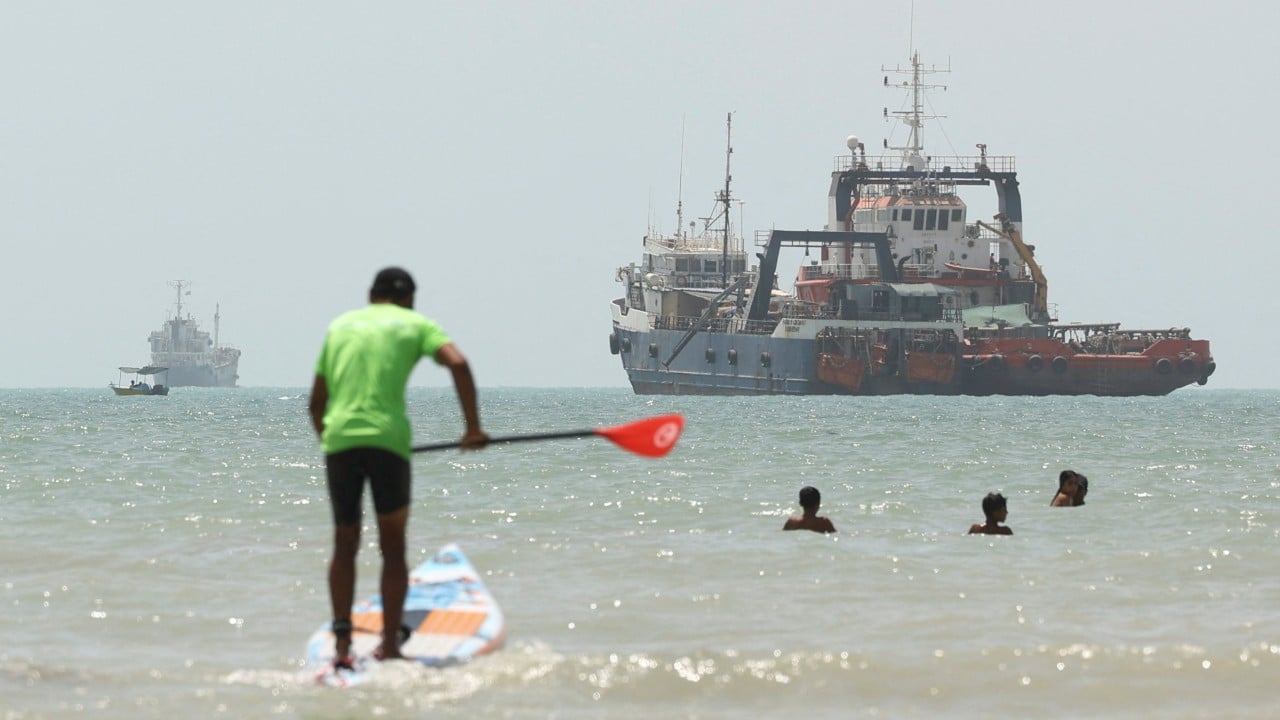
The movement of the Chinese supertankers Yuan Gui Yang and Ocean Lily out of the Strait of Hormuz is being hailed by superficial market analysts as the beginning of the end for the catastrophic maritime standoff in the Persian Gulf. This interpretation is dangerously incorrect. While the departure of four million barrels of Iraqi and Qatari crude bound for Chinese refineries offers temporary relief to a suffocating energy market, it does not represent a diplomatic breakthrough. It represents a calculated concession by Tehran to its primary economic lifeline, Beijing, executed under highly restricted, Iranian-mandated transit corridors that fundamentally alter the status of the world’s most critical maritime chokepoint.
The primary query gripping global markets is simple: Is the Strait of Hormuz reopening for normal trade? The short answer is no. What we are witnessing is the selective extraction of strategic assets under high-security escorts, not a return to freedom of navigation. More than 1,500 vessels and an estimated 22,500 mariners remain trapped inside the Persian Gulf, held hostage by a geopolitical gridlock that began on February 28. To understand why these two specific Very Large Crude Carriers (VLCCs) were allowed to slip past Iran's Larak Island, one must look past the optimistic rhetoric coming out of Washington and examine the brutal transactional reality governing the region.
The Back-Channel Mirage and the Beijing Exception
Publicly, the narrative is being driven by political desperation. Faced with plummeting approval ratings and a Looming congressional election cycle in November, the American administration is eager to project diplomatic progress. Statements suggesting a deal with Tehran is close serve as a convenient sedative for volatile oil markets, where Brent crude has been hovering at punishing levels around $110 per barrel.
The reality on the water tells a completely different story. The Joint Maritime Information Center, led by the U.S. Navy, recently confirmed that the operating environment remains exceptionally high-risk, citing aggressive hailing and assertive maneuvers by Iranian units. The idea that a comprehensive thaw is underway is contradicted by observable reality.
Instead of a diplomatic breakthrough, the exit of the Yuan Gui Yang and the Ocean Lily highlights a highly selective, bilateral arrangement. China, through state-owned entities like Sinopec and Sinochem, has been burning through immense capital keeping these chartered vessels idling in the Gulf since late February. Beijing’s compliance with Iran's newly declared maritime sovereignty over the strait—including adherence to specific, Iranian-directed transit routes—bought these specific ships safe passage.
- The Yuan Gui Yang: Carrying two million barrels of Iraqi Basrah crude, the vessel is now steaming toward Guangdong province, having successfully navigated the chokepoint by implicitly recognizing Iranian jurisdiction.
- The Ocean Lily: Moving with a split cargo of Qatari and Iraqi crude, its destination is Fujian province, serving as a physical manifestation of China’s pragmatic, survival-first maritime policy.
This is not a multilateral easing of tensions. It is a demonstration of how the rules of global shipping are being rewritten to favor nations willing to accommodate regional hegemony at the expense of international maritime law.
The Broken Blueprint of Maritime Security
For decades, the bedrock of global trade has been the assumption that international waters are open to all, guaranteed by the forward deployment of Western naval power. That assumption has collapsed in the Persian Gulf. The withdrawal of U.S. Navy destroyers like the USS Truxtun and the USS Mason from the immediate confines of the Gulf, driven by logistical constraints and the high threat of asymmetric missile warfare, created a security vacuum that Iran immediately filled.
[Persian Gulf / 1,500+ Vessels Stranded]
       │
       ▼
[Strait of Hormuz] ──► Controlled by Iranian Transit Dictates
       │
       ▼
[Gulf of Oman / International Waters]
The tactical shift is profound. While the U.S. military has utilized F-18 Super Hornets to execute precision strikes on Iranian tankers violating blockades further out, it has been unable to secure the interior of the Gulf for the hundreds of foreign-flagged commercial vessels stuck at anchor. The result is a segmented ocean.
Shipping industry associations have quietly warned their members that any return to "normal" navigation conditions will generate unprecedented hazards. The sheer volume of delayed traffic waiting to transit a narrow corridor littered with the residual threats of sea mines, drone debris, and unpredictable traffic congestion creates a high risk of catastrophic accidents. To make matters worse, commercial vessels are now being forced to choose between waiting indefinitely or adopting the dangerous practice of turning off their automatic identification system (AIS) transponders, essentially navigating blind through an active conflict zone to evade detection.
The Compounding Toll on Global Supply Chains
The economic shockwaves of the Hormuz blockade are expanding far beyond the price of a gallon of gasoline. While public attention remains fixated on oil prices, a much more insidious crisis is developing in the technology and logistics sectors. The Persian Gulf is a vital conduit for just-in-time shipping networks that feed materials into global semiconductor manufacturing.
Chemicals, specialized gases, and early-stage wafers routed through regional logistics hubs face indefinite delays. Foundries and fabless chip designers rely on these precise, predictable arrivals to keep manufacturing plants operating at capacity. The current backlog has forced freight forwarders to quote wildly fluctuating price ranges, driving critical components onto expensive air freight routes or prolonged voyages around the African continent. This disruption introduces structural inflation into the tech sector that cannot be easily reversed by a sudden release of a few oil tankers.
"The true measure of the crisis isn't the four million barrels of oil that left the Gulf this week; it's the structural collapse of predictable transit times for everything else."
💡 You might also like: The Royal Navy Is Playing A Dangerous Game Of Pretend In The Persian Gulf
Furthermore, insurance markets have responded to the vulnerability of commercial shipping by permanently elevating war-risk premiums. Even if a diplomatic arrangement is reached tomorrow, the financial architecture supporting global shipping has already priced in the risk of state-sponsored seizures and drone strikes. These costs are structurally sticky, meaning consumers will continue to pay the premium long after the current crop of politicians claims victory.
The New Maritime Reality
The safe passage of a few Chinese-flagged hulls does not signal a return to the old status quo. It underscores a fragmented world where maritime safety is no longer a universal right, but a commodity traded for political compliance.
As the South Korean-flagged Universal Winner attempts its own passage toward Ulsan with two million barrels of Kuwaiti crude, it does so under the shadow of recent attacks on South Korean-operated ships. Every vessel entering the strait now operates on borrowed time, balancing on the edge of a conflict that remains volatile despite the optimistic pronouncements coming out of Washington. The international shipping community must face the reality that the rules governing the Strait of Hormuz have shifted permanently, and no amount of back-channel optimism will easily restore the illusion of an open ocean.