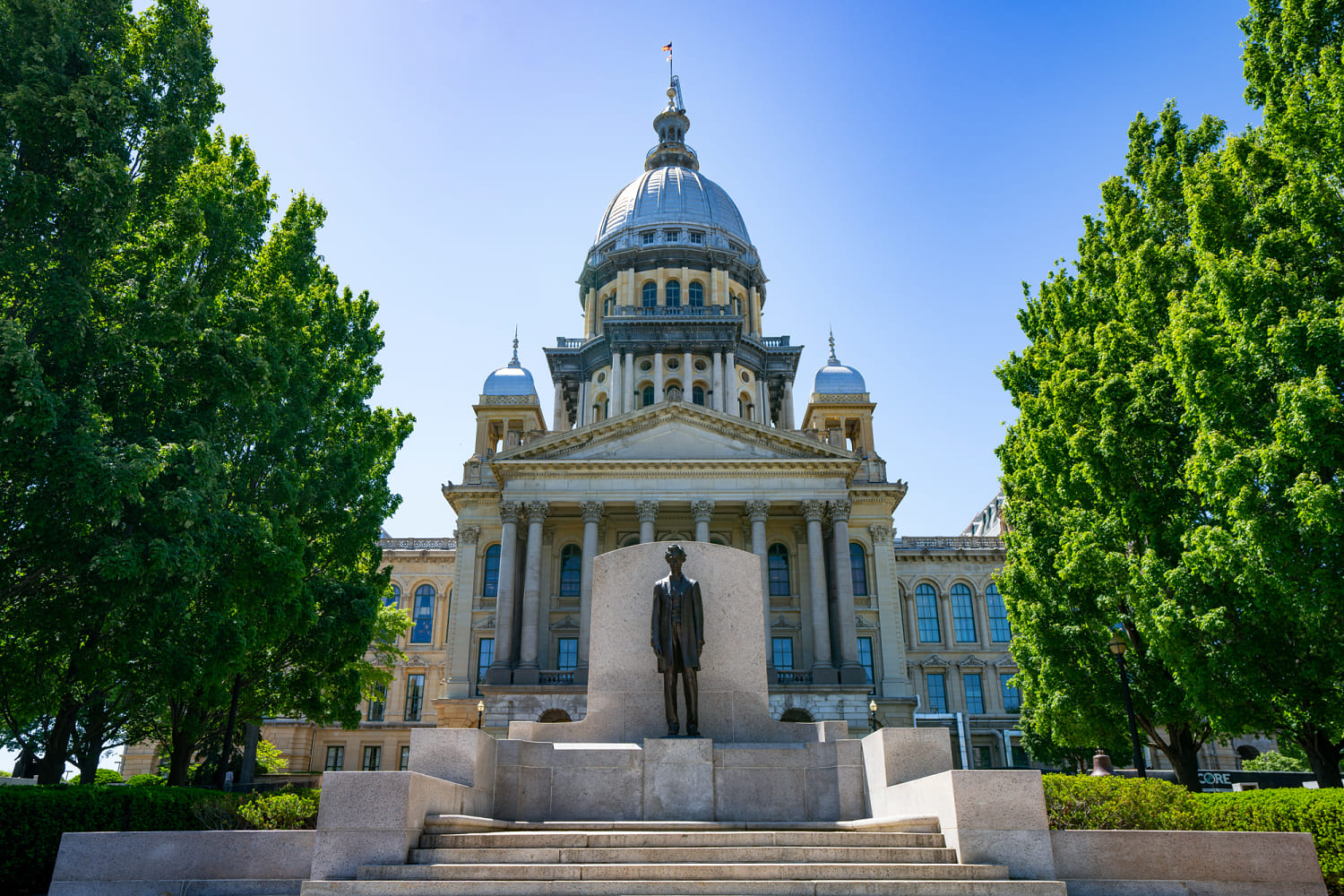
The Illinois Legislature just made history by sending Senate Bill 315 to the desk of Governor J.B. Pritzker. Known as the Artificial Intelligence Safety Measures Act, the legislation establishes the nation's first mandatory third-party safety audit system for frontier models—systems trained on massive compute thresholds exceeding $10^{26}$ operations. Proponents claim it protects the public from catastrophic risks.
The immediate reality is far less triumphant. Illinois lawmakers have legally mandated a highly technical corporate enforcement protocol without verifying whether the infrastructure to execute it actually exists. By requiring massive tech firms with revenues over $500 million to hire independent third parties to audit their internal algorithmic safeguards by 2028, the bill creates an impossible compliance loop.
There are no certified AI safety auditors. There are no generally accepted auditing standards for frontier neural networks. The state has effectively outlawed a risk profile it cannot define, enforcing compliance through a profession that has yet to be born.
Mandating an Empty Shell
Tech trade groups and industry legal analysts are quietly panicking over Section 10(d) of the act. The text states that companies must retain independent third parties possessing "demonstrated competence" to evaluate compliance.
If a major developer attempts to fulfill this obligation tomorrow, they will hit a regulatory brick wall. The accounting profession has spent more than a century refining Generally Accepted Accounting Principles (GAAP). Cybersecurity relies on established frameworks like SOC 2 or ISO 27001. AI safety auditing, by contrast, has none of this.
+-------------------------------------------------------------------------+
|                    THE COMPLIANCE VACUUM IN SB 315                      |
+------------------------------------+------------------------------------+
| STATUTORY REQUIREMENT              | MARKET REALITY                     |
+------------------------------------+------------------------------------+
| Annual Independent Auditing        | No certified AI safety auditors    |
|                                    | exist in the commercial market.   |
+------------------------------------+------------------------------------+
| Audit against "Industry Standards" | No unified, accepted frameworks    |
|                                    | for frontier model safety.         |
+------------------------------------+------------------------------------+
| Fines up to $3 Million             | Companies face penalties for       |
|                                    | failing an undefined test.         |
+------------------------------------+------------------------------------+
A law firm cannot simply assign a junior associate to review a model's source code. Modern frontier models are black boxes; their emergent behaviors are discovered through empirical testing, not static code reviews. The state of Illinois has deferred the creation of these auditing metrics to the Illinois Emergency Management Agency and Office of Homeland Security, in consultation with the Attorney General. Asking a state disaster response agency to build a global framework for auditing quantum-adjacent compute architectures is a staggering bureaucratic leap.
The Illusion of Catastrophic Risk
The true failure of SB 315 lies in its foundational definitions. The law penalizes developers if their systems pose an "unreasonable catastrophic risk" or engage in criminal behavior without "meaningful human oversight."
These terms sound resolute on a legislative floor. In an enforcement environment, they dissolve.
- What percentage of statistical probability makes a risk "unreasonable"? The statute does not say.
- What satisfies "meaningful human oversight"? If an enterprise deployment processes ten million automated customer interactions per hour, a human cannot review every output. Does a remote engineering team reviewing anomaly logs every twelve hours count?
When a statute relies on adjectives rather than quantitative baselines, enforcement becomes entirely arbitrary. Tech firms are left with two choices: either scale back their deployments in jurisdictions with vague laws, or hire expensive boutique consulting firms to write thousands of pages of subjective compliance theater that satisfies a state bureaucrat but does nothing to make the software safer.
The Regulatory Capture Paradox
The political path of SB 315 reveals a deeper, structural irony. While tech trade groups like NetChoice formally opposed the measure, the final amendments were heavily shaped by recommendations from tech giants including Anthropic.
Large, well-capitalized tech companies often tolerate—and occasionally welcome—complex regulatory frameworks. A startup operating on venture capital cannot afford to build a massive compliance apparatus, nor can it absorb civil penalties that reach up to $3 million for repeat violations. By setting the initial revenue threshold at $500 million, Illinois lawmakers sought to spare the little guy.
They missed the secondary market effect.
Open-source models are frequently modified, fine-tuned, and deployed by smaller regional entities. If the baseline architecture requires continuous, state-mandated third-party evaluations every time it is substantially modified, the compliance burden cascades downward. The tech giants who helped shape the bill have the balance sheets to withstand the friction. The open-source community does not.
Instead of reining in Big Tech, state-level mandates can inadvertently solidify monopolies. They create a walled garden where only the wealthiest corporate entities can afford the legal overhead required to deploy advanced software.
A Fractured National Landscape
Illinois did not pass this bill in a vacuum. Lawmakers modeled portions of SB 315 after proposed frameworks in California and New York. The goal, according to legislative debates, was to create a de facto national standard in the absence of federal action from Congress.
The strategy is fundamentally flawed. If New York, California, Illinois, and Texas each pass distinct safety acts with conflicting definitions of "frontier models," "catastrophic risk," and "auditing standards," the domestic tech market will fracture. Engineering teams will spend more time adapting systems to regional legal quirks than fixing actual security vulnerabilities.
State-by-state tech regulation historically results in a race to the lowest common denominator, where companies build for the most restrictive state while sacrificing feature velocity for everyone else. Safety cannot be achieved through a patchwork of regional compromises. True accountability requires a unified, technically rigorous framework backed by federal or international scientific consensus, not a series of state floor amendments designed to win a news cycle.
Governor Pritzker will likely sign SB 315. When he does, the clock will start ticking toward 2028. The tech industry will not spend those two years suddenly discovering how to audit deep neural networks perfectly. They will spend that time hiring the same major accounting firms that missed the financial crises of the past decades, paying them millions to rubber-stamp compliance reports for an auditing industry built entirely on smoke and mirrors.